-
Use Cases
-
Resources
-
Pricing
1750
From the mid-18th century, before batteries existed, experimenters used Leyden jars to store electrical charge. These devices provided an important means of accumulating and releasing static electricity during early electrical research.
Image source: Leyden jar
1791
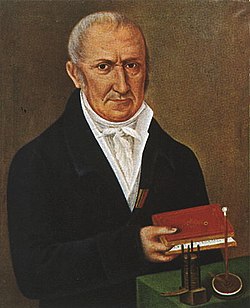
Alessandro Volta verified his hypothesis through experiments and published the results in 1791. This work contributed to the scientific foundation for the later development of electrochemical batteries.
Image source: Alessandro Volta
1800 - 1900
Batteries provided the main source of electricity before the development of electric generators and electrical grids around the end of the 19th century. They powered experiments, communications, and early electrical equipment.
1800
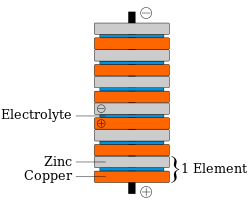
In 1800, Alessandro Volta invented the first true battery, the voltaic pile. It stored and released charge through a chemical reaction rather than through the physical accumulation of static electricity.
Image source: Voltaic pile
1812
The Zamboni pile of 1812 was a high-voltage dry battery. Although it could produce high voltage, it was capable of delivering only minute currents.
Image source: Zamboni pile
1835
In 1835, English inventor William Sturgeon solved a problem known as local action. He found that amalgamated zinc, whose surface had been treated with mercury, did not suffer from this unwanted reaction.
Image source: William Sturgeon
1836
In 1836, John Frederic Daniell invented the Daniell cell. It used a copper pot filled with copper sulfate solution, an unglazed earthenware container filled with sulfuric acid, and a zinc electrode.
Image source: Daniell cell
1837
In 1837, Guy's Hospital physician Golding Bird developed a version of the Daniell cell using a plaster of Paris barrier to keep the solutions separate.
1838
In 1838, Liverpool instrument maker John Dancer invented the porous-pot version of the Daniell cell. The porous vessel helped separate the cell's chemical solutions while allowing ionic conduction.
1839
Welshman William Robert Grove invented the Grove cell in 1839. The cell became an important 19th-century source of electrical current for scientific and practical applications.
1842
In 1842, German scientist Johann Christian Poggendorff overcame problems involving the separation of the electrolyte and depolarizer by using a porous earthenware pot.
1859
The Poggendorff cell was sometimes called the Grenet cell because of the work of Eugène Grenet around 1859. It used dilute sulfuric acid as the electrolyte and chromic acid as the depolarizer.
1866
In 1866, Georges Leclanché invented a battery with a zinc anode and a manganese dioxide cathode wrapped in porous material and immersed in a jar of ammonium chloride solution.
1886
In 1886, Carl Gassner obtained a German patent for a variant of the Leclanché cell. It became known as the dry cell because it did not contain a free liquid electrolyte.
Image source: Dry cell
1887
In parallel with Gassner's work, Wilhelm Hellesen developed his own dry-cell design in 1887. Dry construction made batteries more portable and convenient than cells containing free liquid.
1887
In 1887, Sakizō Yai of Japan developed a dry battery. He later patented the design in 1892.
Nov 1887
In November 1887, Carl Gassner obtained U.S. patent 373,064 for the same dry-cell device he had patented in Germany.
1892
Sakizō Yai received a patent for his Japanese dry-battery design in 1892, formalizing the technology's protection and development.
1893
At the 1893 World's Columbian Exposition, Sakizō Yai's dry battery commanded considerable international attention, highlighting the growing importance of portable dry-cell technology.
1893
In 1893, Sakizō Yai's dry battery was exhibited at the World's Columbian Exposition. The battery attracted considerable international attention.
1896
The first mass-produced dry-cell model was the Columbia dry cell, first marketed by the National Carbon Company in 1896.
1955
Research tasked with extending the life of zinc–carbon batteries was conducted in Ontario and, by 1955, at the National Carbon Company Parma Research Laboratory in Cleveland, Ohio.
Image source: Zinc–carbon battery
1959
The zinc–carbon battery improvements developed through the research program were put on the market in 1959.
1859 - 2026
The basic principle of the lead–acid battery has not changed since 1859. Later designs improved construction and performance while retaining the same fundamental electrochemical system.
1859
In 1859, Gaston Planté invented the lead–acid battery, the first battery that could be recharged by passing a reverse current through it. Its rechargeable chemistry became foundational for later energy-storage systems.
1881
In 1881, Camille Alphonse Faure invented an improved lead–acid battery. His design used a lead grid lattice into which lead oxide paste was pressed to form a plate.
1899
In 1899, Swedish scientist Waldemar Jungner invented the nickel–cadmium battery. It used nickel and cadmium electrodes in potassium hydroxide solution and was the first battery to use an alkaline electrolyte.
1899
Waldemar Jungner patented a nickel–iron battery in 1899, the same year as his nickel–cadmium patent. He found it inferior to the cadmium counterpart and did not develop it further at that time.
Image source: Nickel–iron battery
1901
After many experiments, and probably borrowing from Jungner's earlier design, he patented an alkaline-based nickel–iron battery in 1901.
1910
The nickel–cadmium battery was commercialized in Sweden in 1910, bringing Jungner's rechargeable alkaline technology into practical commercial use.
1946
The nickel–cadmium battery reached the United States in 1946 after its earlier commercialization in Sweden.
1950 - 2000
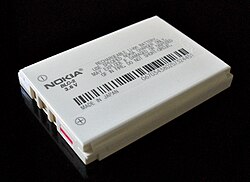
The introduction of nickel- and lithium-based batteries in the latter half of the 20th century made innumerable portable electronic devices feasible, from powerful flashlights to mobile phones.
Image source: Electric battery
1989
The first consumer-grade nickel–metal hydride batteries for smaller applications appeared on the market in 1989. They developed as a variation of the 1970s nickel–hydrogen battery.
Image source: Nickel–metal hydride battery
1912
Experimentation with lithium batteries began in 1912 under American physical chemist Gilbert N. Lewis. Commercial lithium batteries, however, would not reach the market until the 1970s.
1970 - 1979
Although lithium-battery experimentation began in 1912, commercial lithium batteries did not come to market until the 1970s, eventually leading to the lithium-ion battery era.
Image source: Lithium-ion battery
1980
In 1980, American chemist John B. Goodenough discovered the lithium cobalt oxide cathode, while Moroccan research scientist Rachid Yazami discovered the graphite anode used with a solid electrolyte.
Image source: Lithium-ion battery
1981
In 1981, Japanese chemists Tokio Yamabe and Shizukuni Yata discovered a novel nano-carbonaceous polyacene material and found it highly effective as an anode in a conventional liquid electrolyte.
1985
A research team managed by Akira Yoshino of Asahi Chemical in Japan built the first lithium-ion battery prototype in 1985. It was a rechargeable and more stable version of the lithium battery.
1991
Sony commercialized the lithium-ion battery in 1991, helping establish a rechargeable technology with the energy density and portability needed for modern electronic devices.
1997
In 1997, the lithium polymer battery was released by Sony and Asahi Kasei. Its polymer-based construction offered another approach to rechargeable lithium battery design.
Image source: Lithium polymer battery
2019
In 2019, John Goodenough, Stanley Whittingham, and Akira Yoshino were awarded the Nobel Prize in Chemistry for their development of lithium-ion batteries.
2023
High costs and concerns about mineral extraction associated with lithium chemistry renewed interest in sodium-ion battery development. Early electric-vehicle product launches using the technology appeared in 2023.
Or browse the full history timeline directory, with more than 2,500 topics.
This History of Batteries timeline was generated with the help of AI, using information found on the internet.
We work hard to keep these timelines accurate, but mistakes do get through. If you spot one, email us at [email protected] and we'll fix it for future visitors.
Generate yours with AI or build it from scratch, for free.
Export your timeline, add your own events, edit or remove AI-generated events, and much more
No credit card required.
Cancel anytime.
Cancel anytime.
You can create an unlimited number of timelines with up to 10 events on each one, customize how they look, export them to PDF, PNG, PowerPoint, CSV, and Excel, and share them with a link. Paid plans raise the event limit and add features like spreadsheet imports and collaborators.
Yes. You can cancel your subscription from your account page at any time, and you will not be charged again. Your subscription stays active for the rest of the period you already paid for.
Yes. We will email you a reminder before the annual renewal, and we will also email you a receipt.
Yes. You can email us within 15 days of any payment, and we will issue you a full refund.
Check out our pricing docs or send us an email anytime: [email protected].