-
Use Cases
-
Resources
-
Pricing
The history of electricity traces humanity's journey from observing static phenomena in antiquity to harnessing electrical power for modern civilization. Key milestones include Franklin's lightning experiments, Volta's battery, Faraday's electromagnetic induction, Edison's practical lighting systems, Tesla and Westinghouse's alternating current, and the electrification of the world. More Less
1600
% complete
English physician William Gilbert published 'De Magnete', a foundational study of magnetism and static electricity. He coined the Latin term 'electricus' meaning 'amber-like', distinguishing electrical attraction from magnetic attraction and establishing electricity as a subject of serious scientific study.
Image source: De Magnete
1660
% complete
German scientist Otto von Guericke constructed a rotating sulfur globe that produced static electricity when rubbed, the first friction-based electrostatic generator. His device allowed scientists to generate and study electric charges systematically for the first time.
Image source: Otto von Guericke
Jun 15, 1752
% complete
Benjamin Franklin famously flew a kite during a thunderstorm, demonstrating that lightning is a form of electricity. The experiment led to his invention of the lightning rod and helped establish the concept of positive and negative electrical charge.
Image source: Kite experiment
1780
% complete
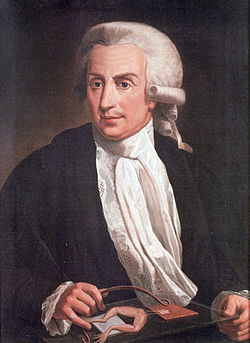
Italian physician Luigi Galvani observed that frog legs twitched when touched by metal instruments, which he attributed to 'animal electricity'. His work sparked debate with Alessandro Volta and laid groundwork for the study of bioelectricity.
Image source: Luigi Galvani
1800
% complete
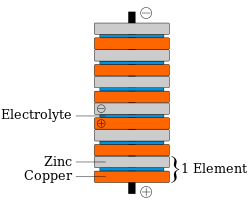
Alessandro Volta invented the voltaic pile, the first true battery capable of producing a continuous electric current. Stacked discs of zinc and copper separated by brine-soaked cardboard provided scientists with a reliable source of steady current for experimentation.
Image source: Voltaic pile
1807
% complete
Using powerful voltaic batteries at the Royal Institution, Humphry Davy used electrolysis to isolate sodium and potassium, and later calcium, magnesium, and other elements. His work demonstrated electricity's power to decompose chemical compounds.
Image source: Humphry Davy
1820 - 1827
% complete
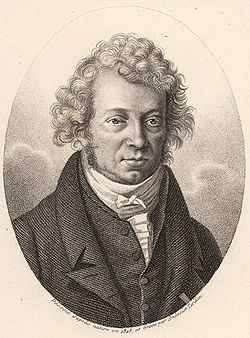
Building on Ørsted's discovery, André-Marie Ampère developed mathematical laws describing the forces between current-carrying conductors. His work established the science of electrodynamics, and the ampere unit of current is named in his honor.
Image source: André-Marie Ampère
Apr 21, 1820
% complete
Danish physicist Hans Christian Ørsted noticed that a compass needle deflected near a current-carrying wire, revealing that electric currents produce magnetic fields. This discovery unified electricity and magnetism and launched the field of electromagnetism.
Image source: Hans Christian Ørsted
Sep 3, 1821
% complete
Michael Faraday demonstrated that a current-carrying wire rotates around a magnet, creating the first device converting electrical energy into continuous motion. This homopolar motor was the ancestor of all modern electric motors.
Image source: Homopolar motor
1827
% complete
German physicist Georg Simon Ohm published 'Die galvanische Kette', describing the relationship between voltage, current, and resistance. Ohm's law became one of the most fundamental principles in electrical engineering.
Image source: Ohm's law
Aug 29, 1831
% complete
Michael Faraday discovered that a changing magnetic field induces an electric current in a nearby conductor. Electromagnetic induction became the operating principle behind generators, transformers, and virtually all modern electrical power production.
Image source: Electromagnetic induction
1865
% complete
James Clerk Maxwell published 'A Dynamical Theory of the Electromagnetic Field', presenting equations showing that light is an electromagnetic wave. Maxwell's theory unified electricity, magnetism, and optics into a single framework.
Image source: Maxwell's equations
1887
% complete
Heinrich Hertz generated and detected radio waves in laboratory experiments, confirming Maxwell's prediction that electromagnetic waves travel through space. His discoveries paved the way for radio, television, and wireless communication.
Image source: Heinrich Hertz
May 24, 1844
% complete
Samuel Morse transmitted the message 'What hath God wrought' from Washington, D.C. to Baltimore over an experimental telegraph line. The telegraph revolutionized long-distance communication and created the first practical use of electricity for information transfer.
Image source: Samuel Morse
Jul 27, 1866
% complete
After earlier failed attempts, the ship Great Eastern successfully laid a durable telegraph cable across the Atlantic Ocean, enabling nearly instantaneous communication between Europe and North America for the first time.
Image source: Transatlantic telegraph cable
Oct 22, 1879
% complete
Thomas Edison demonstrated a long-lasting incandescent lamp using a carbon filament, creating the first commercially practical electric light bulb. Edison's Menlo Park laboratory also developed complete lighting systems to bring electric light into homes and businesses.
Image source: Incandescent light bulb
1880 - 1892
% complete
A fierce commercial rivalry pitted Thomas Edison's direct current systems against George Westinghouse's alternating current systems. AC ultimately prevailed because transformers made it easy to transmit power efficiently over long distances, shaping modern power grids.
Image source: War of the currents
Sep 4, 1882
% complete
Thomas Edison's Pearl Street Station in Manhattan began supplying direct current (DC) electricity to customers in lower New York City. It was the world's first central power station, serving about 59 customers and illuminating Wall Street.
Image source: Pearl Street Station
1888
% complete
Nikola Tesla patented the alternating current (AC) induction motor, a simple, rugged design without brushes or commutators. Licensed by George Westinghouse, it became essential to the adoption of AC power systems worldwide.
Image source: Induction motor
May 1, 1893 - Oct 30, 1893
% complete
George Westinghouse, using Tesla's AC system, illuminated the Chicago World's Fair with nearly 100,000 lamps. The dazzling display publicly demonstrated the safety and superiority of alternating current to millions of visitors.
Image source: World's Columbian Exposition
Nov 16, 1896
% complete
The Edward Dean Adams Power Plant at Niagara Falls began transmitting AC electricity 26 miles to Buffalo, New York. It was the first large-scale hydroelectric power plant and proved that distant cities could be powered from remote energy sources.
Image source: Adams Power Plant Transformer House
May 11, 1935
% complete
President Franklin D. Roosevelt established the Rural Electrification Administration to bring electricity to American farms, where fewer than 11 percent had power. Within two decades, rural electrification rates rose above 90 percent, transforming agricultural life.
Image source: Rural Utilities Service
Jun 27, 1954
% complete
The Soviet Union's Obninsk Nuclear Power Plant became the first nuclear reactor connected to an electrical grid, delivering about 5 megawatts of power. It inaugurated the atomic age of electricity generation.
Image source: Obninsk Nuclear Power Plant
1897
% complete
J.J. Thomson identified cathode rays as streams of tiny negatively charged particles, later named electrons. His discovery revealed the fundamental carrier of electricity and opened the era of subatomic physics.
Image source: J. J. Thomson
Dec 12, 1901
% complete
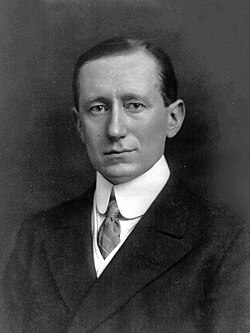
Guglielmo Marconi received a radio signal sent from Cornwall, England at St. John's, Newfoundland, demonstrating wireless telegraphy across the Atlantic. Radio soon transformed global communication, navigation, and entertainment.
Image source: Guglielmo Marconi
1909 - 1910
% complete
Robert Millikan's oil drop experiment precisely measured the elementary electric charge of the electron. The result confirmed the quantized nature of electric charge and earned Millikan the Nobel Prize in Physics in 1923.
Image source: Oil drop experiment
Dec 23, 1947
% complete
At Bell Labs, John Bardeen, Walter Brattain, and William Shockley demonstrated the point-contact transistor, the first solid-state amplifier. Transistors replaced bulky vacuum tubes, enabling miniaturized electronics, computers, and the digital age.
1958 - 1959
% complete
Jack Kilby at Texas Instruments and Robert Noyce at Fairchild Semiconductor independently invented the integrated circuit, placing multiple transistors on a single chip of semiconductor material. Microchips became the foundation of modern computing and electronics.
Image source: Integrated circuit
Nov 19, 1969
% complete
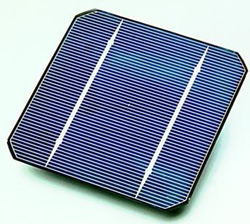
NASA's Apollo missions relied on photovoltaic solar panels to power spacecraft and satellites, demonstrating the reliability of solar electricity beyond Earth. Solar technology, first developed at Bell Labs in 1954, entered mainstream use through the space program.
Image source: Solar cell
Nov 15, 1971
% complete
Intel released the 4004, the first commercially available microprocessor, packing a complete CPU onto a single chip. This breakthrough enabled personal computers and launched the exponential growth described by Moore's law.
Image source: Intel 4004
1986 - 1987
% complete
Georg Bednorz and K. Alex Müller discovered superconductivity in ceramic materials at temperatures far higher than previously achieved, followed by YBCO compounds superconducting above liquid nitrogen temperature. These discoveries raised hopes for lossless power transmission and powerful magnets.
Image source: High-temperature superconductivity
1991
% complete
Wind power expanded rapidly in the 1990s, with large wind farms such as Denmark's Vindeby offshore project and California's Altamont Pass feeding significant electricity into national grids. Wind became one of the fastest-growing sources of renewable electricity.
Image source: Wind farm
1991
% complete
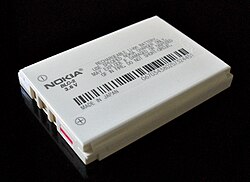
Sony released the first commercial lithium-ion battery, based on research by John Goodenough, Akira Yoshino, and others. Lightweight and rechargeable, lithium-ion batteries enabled portable electronics, laptops, smartphones, and eventually electric vehicles.
Image source: Lithium-ion battery
2008
% complete
Tesla Motors began deliveries of the Roadster, the first highway-legal production electric car powered by lithium-ion batteries with over 200 miles of range. Its success spurred automakers worldwide to invest heavily in electric vehicles.
Image source: Tesla Roadster (first generation)
Or browse the full history timeline directory, with more than 2,000 topics.
This History of Electricity timeline was generated with the help of AI, using information found on the internet.
We work hard to keep these timelines accurate, but mistakes do get through. If you spot one, email us at [email protected] and we'll fix it for future visitors.
Generate yours with AI or build it from scratch, for free.
Export your timeline, add your own events, edit or remove AI-generated events, and much more
No credit card required.
Cancel anytime.
Cancel anytime.
You can create an unlimited number of timelines with up to 10 events on each one, customize how they look, export them to PDF, PNG, PowerPoint, CSV, and Excel, and share them with a link. Paid plans raise the event limit and add features like spreadsheet imports and collaborators.
Yes. You can cancel your subscription from your account page at any time, and you will not be charged again. Your subscription stays active for the rest of the period you already paid for.
Yes. We will email you a reminder before the annual renewal, and we will also email you a receipt.
Yes. You can email us within 15 days of any payment, and we will issue you a full refund.
Check out our pricing docs or send us an email anytime: [email protected].