-
Resources
-
Pricing
This timeline traces how bookmarks evolved from simple manuscript markers into decorative objects, practical reading tools, and digital features in modern browsers and apps. More Less
Build a timeline like this one in minutes, for free. Start Yours →
200
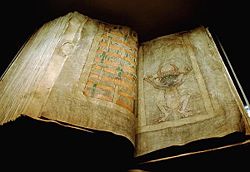
As Christians increasingly adopted the codex, rather than the scroll, readers needed ways to return to particular pages. Attached slips, cords, and projecting strips became practical aids in navigating biblical and liturgical manuscripts.
Image source: Codex
600
Medieval manuscripts often incorporated parchment tongues or narrow strips cut from the binding structure. These durable markers could remain permanently attached and were especially useful in books used for repeated reading and worship.
Image source: Manuscript
1000
Monastic and luxury bookbinders began using textile strips, including silk and woven ribbons, as flexible page markers. Their use connected bookmarks with the growing refinement of medieval binding and manuscript decoration.
Image source: Bookbinding
1150
The 12th-century Eadwine Psalter illustrates the sophisticated navigation needs of medieval readers. Its multiple textual versions and liturgical use exemplify why attached markers and other reference aids were valuable in large religious manuscripts.
Image source: Eadwine Psalter
1200
From the 13th century, readers increasingly combined bookmarks with marginal notes, running headers, decorated initials, and subject indexes. Together, these devices made lengthy scholastic, legal, and theological books easier to consult.
Image source: Manuscript culture
1230
Compact Paris Bibles produced for university students and itinerant preachers encouraged efficient navigation. Their standardized chapters and frequent use helped normalize the expectation that readers could quickly return to marked passages.
Image source: Paris Bible
1300
Books of Hours became widely owned devotional books in late medieval Europe. Owners used ribbons, tabs, and inserted slips to mark prayers and feast days, helping establish bookmarks as everyday personal accessories.
Image source: Book of hours
1455
Johannes Gutenberg's printing of the Bible demonstrated the transformative potential of movable type. As printed books became more plentiful, inexpensive, and portable, demand grew for separate, reusable devices to mark pages.
Image source: Gutenberg Bible
1500
Printers and binders increasingly supplied books with silk or linen ribbons attached to the spine. Bound-in ribbons were especially common in devotional, reference, and finely bound volumes because they could mark a page without falling out.
Image source: Bookmark
1517
The Reformation encouraged personal Bible reading, catechisms, and the circulation of pamphlets and printed religious texts. Frequent consultation of scripture and polemical works increased the practical value of reliable page markers.
Image source: Reformation
1600
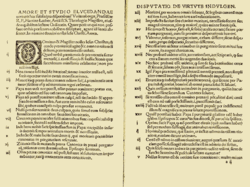
Readers in the 17th century commonly marked books with scraps of paper, fabric, leather, feathers, and playing cards. These improvised bookmarks reveal that page marking was widespread even when a book had no built-in ribbon.
Image source: Reading
1700
The expansion of private libraries and print culture made books central to domestic life, education, and scholarship. Owners increasingly treated bookmarks as useful possessions and sometimes decorated them to match their books or interests.
Image source: History of libraries
1750
By the 18th century, English usage clearly recognized bookmark as a word for an object placed in a book to identify a reader's place. The terminology reflected the normalization of the practice in print-oriented society.
1800
Mechanized papermaking and advances in printing sharply reduced the cost of paper goods. These changes made it practical to manufacture disposable and promotional bookmarks rather than relying only on handmade or bound-in markers.
Image source: History of paper
1830
Compulsory schooling, public libraries, and rising literacy expanded the number of regular readers. Bookmarks became ordinary tools for students, commuters, and library users, not merely specialized accessories for wealthy book owners.
Image source: Literacy
1850
Woven silk bookmarks became fashionable Victorian gifts and souvenirs. They could display commemorative messages, portraits, religious imagery, or elaborate patterns, while their narrow form made them especially suited to bound books.
1850
The first detached and collectible bookmarkers began to appear in the 1850s, and historical bookmarks are sometimes collected with other paper ephemera.
1860
Businesses began distributing bookmarks advertising publishers, booksellers, hotels, medicines, banks, and consumer products. Their low production cost and useful format made them an effective form of nineteenth-century promotional material.
Image source: Advertising
1870
The expansion of rail travel and tourism created a market for souvenir bookmarks featuring monuments, resorts, exhibitions, and picturesque places. Visitors could bring home a lightweight keepsake that also served a practical purpose.
Image source: Souvenir
1880
By the 1880s, printed markers made of stiff paper or cardboard began to appear in significant numbers.
1890 - 1910
Art Nouveau's flowing lines, floral motifs, and stylized lettering influenced commercially produced bookmarks around the turn of the 20th century. Their narrow format provided an inexpensive way to circulate fashionable graphic design.
Image source: Art Nouveau
May 1, 1893 - Oct 31, 1893
The 1893 World's Columbian Exposition in Chicago generated a large range of commemorative printed ephemera, including bookmarks. Exposition bookmarks linked reading culture with mass advertising, national celebration, and souvenir collecting.
Image source: World's Columbian Exposition
1900 - 1915
Arts and Crafts ideals encouraged hand embroidery, leatherwork, metalwork, and decorative paper crafts. Bookmarks became approachable projects for hobbyists and a place to apply handcrafted design to an everyday reading object.
Image source: Arts and Crafts movement
1914 - 1918
During World War I, patriotic and charitable organizations used postcards, cards, and bookmarks to promote enlistment, relief work, remembrance, and fundraising. Such objects combined propaganda and commemoration with a practical use.
Image source: World War I
1920
Public libraries increasingly distributed bookmarks with opening hours, borrowing rules, reading advice, and promotional messages. The format allowed libraries to reach readers inside the books they borrowed.
Image source: Library
1935
The growth of inexpensive paperbacks brought books to wider audiences and encouraged casual reading in transit and at home. Readers often used separate paper bookmarks because many paperback editions lacked durable attached ribbons.
Image source: Paperback
1939 - 1945
Governments, publishers, and organizations used bookmarks during World War II to promote patriotism, censorship goals, war bonds, conservation, and charitable causes. Their portability made them suitable for distributing short messages to civilian readers.
Image source: Propaganda in World War II
1960
Schools, libraries, and literacy campaigns adopted colorful bookmarks as prizes and educational materials. Slogans such as reading challenges and quotations helped transform the object into a recurring tool of reading promotion.
Image source: National Book Trust
1990
Magnetic bookmarks, made from folded card or plastic with small magnets that grip a page, became widely available in the late 20th century. They were less likely to fall out than loose slips and became popular gifts and promotional items.
2000
In the 21st century, bookmarks remain widely produced in paper, metal, leather, wood, fabric, and plastic. Independent artists, museums, libraries, publishers, and online marketplaces continue to sell them as useful gifts, souvenirs, and collectible designs.
1993
As the World Wide Web developed, browsers introduced features that let users save a web address for later retrieval. Digital bookmarks transferred the basic concept of marking a place from printed pages to online documents.
Image source: Web browser
Oct 13, 1994
Netscape Navigator helped make web browsing accessible to a mass audience and popularized persistent saved-page lists. Its bookmark feature established terminology and interaction patterns that influenced later browsers.
Image source: Netscape Navigator
Aug 16, 1995
Microsoft Internet Explorer used the term Favorites for saved web links. The feature brought digital bookmarking to a huge Windows user base and made organized lists of online destinations a standard browser function.
Image source: Internet Explorer
Sep 2003
Delicious, originally called del.icio.us, popularized social bookmarking: users saved links online, organized them with tags, and shared them with others. It shifted bookmarking from a private browser feature toward a networked web service.
Image source: Delicious (website)
Aug 2007
Read It Later, later renamed Pocket, made it easy to save articles and web pages for later reading across devices. Its tagging, offline access, and synchronization extended bookmarking beyond simple address storage.
Image source: Pocket (service)
2008
Cloud synchronization allowed users to keep bookmark collections consistent across multiple computers and later phones and tablets. This development made bookmarks portable and reduced dependence on a single local browser installation.
2010
The widespread adoption of smartphones made browser bookmarks and read-later lists part of everyday mobile computing. Users increasingly expected saved pages to follow them between desktop, tablet, and phone.
Image source: Mobile browser
Mar 2010
Pinterest, launched in 2010, organized saved web images and links as visual boards. It broadened the meaning of bookmarking by combining personal collections, discovery, recommendation, and social sharing.
Image source: Pinterest
2015
Major browsers introduced or expanded reading-list features that separated temporary articles from long-term bookmarks. This distinction reflected the growing volume of online information and the need to manage saved content by purpose.
Build a timeline like this one in minutes, for free. Start Yours →
Or browse the full history timeline directory, with more than 2,500 topics.
This History of Bookmarks timeline was generated with the help of AI, using information found on the internet.
We work hard to keep these timelines accurate, but mistakes do get through. If you spot one, email us at [email protected] and we'll fix it for future visitors.
Generate yours with AI or build it from scratch, for free.
Export your timeline, add your own events, edit or remove AI-generated events, and much more
No credit card required.
15-day money-back guarantee.
You can create an unlimited number of timelines with up to 10 events on each one, customize how they look, export them to PDF, PNG, PowerPoint, CSV, and Excel, and share them with a link. Timelines made with Timeline Maker AI keep every event the generator created, and you can add up to 5 events of your own. Paid plans remove the event limit, add spreadsheet imports and hide Preceden's branding, and the higher-priced plan also adds collaborators, a custom logo and a custom domain.
Yes. You can cancel your subscription from your account page at any time, and you will not be charged again. Your subscription stays active for the rest of the period you already paid for.
Yes. We email you a reminder 15 days before your annual renewal, and we email you a receipt after every payment.
Yes. You can email us within 15 days of any payment, and we will issue you a full refund.
Check out our pricing docs or send us an email anytime: [email protected].