-
Use Cases
-
Resources
-
Pricing
Delhi, one of the oldest continuously inhabited cities in the world, has served as a political and cultural hub for over two millennia. Its history spans legendary ancient kingdoms, the rise of seven historic cities, the powerful Delhi Sultanate, the grandeur of Mughal emperors, British colonial control, and its eventual role as the capital of independent India. The city's layered heritage is reflected in its monuments like the Red Fort, Qutub Minar, Humayun's Tomb, and Jama Masjid. More Less
1200 BCE
% complete
Around c.1200 BCE, the region was inhabited by people of the Painted Grey Ware culture, which corresponds to the Vedic Period.
Image source: Painted Grey Ware culture
400 BCE
% complete
The legendary ancient city of Indraprastha is mentioned in the ancient Indian epic Mahabharata, probably compiled between the 3rd century BCE and the 3rd century CE, with the oldest preserved parts not much older than around 400 BCE. A long-standing tradition identifies the legendary city with the village Indarpat, which survived until the early 20th century within the Purana Qila.
Image source: Indraprastha
700
% complete
The recorded history of Delhi begins with the 8th century Tomar Rajput dynasty. Anangpal Tomar established the Tomar Dynasty of Delhi in the early 8th century and built his capital at the Anangpur village in Haryana.
Image source: Tomaras of Delhi
1052
% complete
Anangpal Tomar founded Delhi in 1052. A VS 1383 inscription in the Delhi Museum confirms the founding of Delhi by the Tomars.
Image source: Anangpal Tomar
1180
% complete
The Rajput Chahamana (Chauhan) kings of Ajmer conquered Lal Kot in 1180 and renamed it Qila Rai Pithora.
1966
% complete
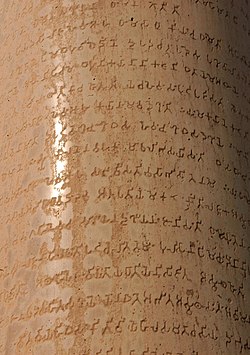
In 1966, an inscription of the Mauryan Emperor Ashoka (273-236 BCE) was discovered near Sriniwaspuri. Two sandstone pillars inscribed with the edicts of Ashoka had been brought to Delhi by Firuz Shah Tughluq in the 14th century and already exist in the city.
Image source: Edicts of Ashoka
1192
% complete
The Chauhan king Prithviraj III was defeated in 1192 by Muhammad Ghori in the Second Battle of Tarain, solidifying Muslim presence in northern India and shattering Rajput power in the Indo-Gangetic Plain.
Image source: Second Battle of Tarain
1206 - 1526
% complete
From 1206, Delhi became the capital of the Delhi Sultanate under the Slave Dynasty, beginning a period of sultanate rule that would last for over three centuries.
Image source: Delhi Sultanate
1398
% complete
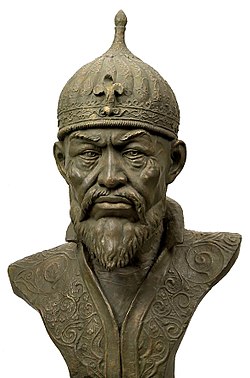
In 1398, Timur Lang invaded India on the pretext that the Muslim sultans of Delhi were too tolerant of their Hindu subjects.
Image source: Timur
Dec 18, 1398
% complete
After defeating the armies of Nasiruddin Mahmud of Tughlaq dynasty on 15 December 1398, Timur entered Delhi on 18 December 1398. The city was sacked, destroyed, and left in ruins, and over 100,000 war prisoners were killed as well.
Image source: Sack of Delhi (1398)
1526 - 1557
% complete
The early Mughal Emperors Babur (1526–1530) and Humayun (1530–1540, restored 1556–57) ruled from Agra, unlike the preceding Delhi Sultans. During the 16th century, the city declined as the Mughal capital was shifted.
Image source: Humayun
1526
% complete
In 1526, following the First Battle of Panipat, Zahiruddin Babur, the former ruler of Fergana, defeated the last Afghan Lodi sultan Ibrahim Lodi, ending the Delhi Sultanate and founding the Mughal dynasty which ruled from Delhi, Agra and Lahore.
Image source: First Battle of Panipat
1540 - 1545
% complete
In the mid-16th century there was an interruption in the Mughal rule of India as Sher Shah Suri defeated Humayun and forced him to flee to Persia. After Sher Shah Suri's death in 1545, his son Islam Shah took the reins of north India from Delhi.
Image source: Sher Shah Suri
1556 - 1605
% complete
Akbar, the third and greatest Mughal emperor (1556–1605), continued to rule from Agra, resulting in a decline in the fortunes of Delhi.
Image source: Akbar
Oct 7, 1556
% complete
Meanwhile in 1553 the Hindu Hemu had become Prime Minister and Chief of Army of Adil Shah. After defeating Akbar's army on 7 October 1556 at the Tughlaqabad fort area in the Battle of Delhi, Hemu acceded to the Delhi throne and established Hindu Raj in North India for a brief period, taking the title 'Vikramaditya' at his coronation in Purana Qila, Delhi.
Image source: Battle of Tughlaqabad
1639 - 1648
% complete
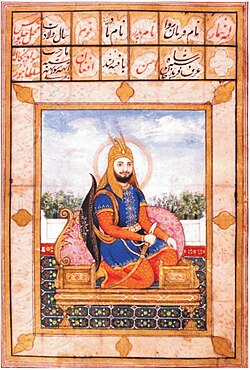
In the mid-17th century, the Mughal Emperor Shah Jahan (1628–1658) built the city that sometimes bears his name Shahjahanabad, the seventh city of Delhi that is now commonly known as the old city or old Delhi.
Image source: Old Delhi
1648
% complete
After the fall of the Delhi Sultanate, the Mughals ruled from Agra, Sikri and Lahore, but the city once again became the capital in 1648 during the rule of Shah Jahan. The city served as the capital of the later Mughal Empire from 1638 onward, when Shah Jahan transferred the capital back from Agra, and remained the capital until the fall of the empire.
Image source: Shah Jahan
1658 - 1707
% complete
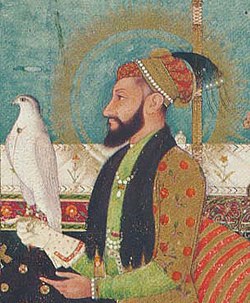
Aurangzeb (1658–1707) crowned himself as emperor in Delhi in 1658 at the Shalimar garden ('Aizzabad-Bagh) with a second coronation in 1659.
Image source: Aurangzeb
1739
% complete
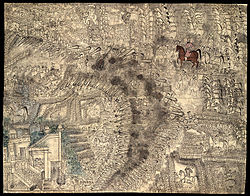
In 1739, the Mughal Empire lost the huge Battle of Karnal in less than three hours against the numerically outnumbered but militarily superior Persian army led by Nader Shah during his invasion, after which he completely sacked and looted Delhi, followed by a massacre lasting 2 days, killing over 30,000 civilians and carrying away immense wealth including the Peacock Throne, the Daria-i-Noor, and Koh-i-Noor.
Image source: Battle of Karnal
1680
% complete
After 1680, the Mughal Empire's influence declined rapidly as the Hindu Maratha Empire rose to prominence.
1737
% complete
In 1737, Bajirao I marched towards Delhi with a huge army, demonstrating the growing power of the Marathas against the declining Mughal Empire.
Image source: Bajirao I
1752
% complete
A treaty signed in 1752 made the Marathas the protector of the Mughal throne at Delhi.
Image source: Maratha Empire
1753
% complete
In 1753, Jat ruler Suraj Mal attacked Delhi, further weakening Mughal authority over the city.
Image source: Suraj Mal
Jan 1757
% complete
Ahmad Shah Durrani invaded North India for the fourth time in early 1757. He entered Delhi in January 1757 and kept the Mughal emperor under arrest.
Image source: Ahmad Shah Durrani
Aug 1757 - 1803
% complete
In August 1757, the Marathas once again attacked Delhi, decisively defeating Najib-ud-Daula and his Rohilla Afghan army in the Battle of Delhi (1757). The Marathas captured Delhi and continued to control it until 1803.
Image source: Battle of Delhi (1757)
1761
% complete
Ahmad Shah Durrani conquered Delhi in 1761, after the Third Battle of Panipat in which the Marathas were decisively defeated.
Image source: Third Battle of Panipat
1783
% complete
Under the leadership of Jassa Singh Ahluwalia and Baghel Singh, Delhi was briefly conquered by the Sikh Empire in early 1783 in the Battle of Delhi (1783).
Image source: Battle of Delhi (1783)
1803
% complete
In 1803, during the Second Anglo-Maratha War, the forces of the British East India Company defeated the Maratha forces in the Battle of Delhi (1803), ending Maratha rule over the city. Delhi was captured by the British East India Company.
Image source: Battle of Delhi (1803)
1857
% complete
The Indian Rebellion of 1857 sought to end Company Rule in India and declared Bahadur Shah II the Emperor of India.
Image source: Indian Rebellion of 1857
1857
% complete
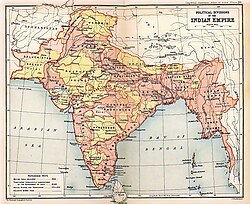
Delhi passed into the direct control of the British Government in 1857 after the Indian Rebellion of 1857, and the remaining Mughal territories were annexed as a part of British India.
Image source: British Raj
Jun 8, 1857
% complete
However, the British returned and laid siege to Delhi on 8 June 1857, ultimately recapturing the city from rebel forces.
Image source: Siege of Delhi
1911
% complete
Calcutta was the capital of British India till 1911, but in 1911 at the Delhi Durbar of 1911, held at the Coronation Park, King George V announced the shifting of the capital to Delhi, the last inner city of Delhi designed by Edwin Lutyens.
Image source: Delhi Durbar
1931
% complete
New Delhi, designed by the British architect Edwin Lutyens, was inaugurated in 1931 after its construction was delayed due to World War I.
Image source: New Delhi
1956
% complete
The States Reorganisation Act, 1956 created the Union Territory of Delhi from its predecessor, the Chief Commissioner's Province of Delhi.
Image source: States Reorganisation Act, 1956
1967
% complete
After 1967, relations between Hindus and Muslims deteriorated to the level that there was a significant uptick in the number of riots and other disruption of civil life in Delhi.
Image source: Delhi
1991
% complete
The Constitution (Sixty-ninth Amendment) Act, 1991 declared the Union Territory of Delhi to be formally known as the National Capital Territory of Delhi.
Image source: Delhi
Feb 2020
% complete
The 2020 Delhi riots took place in February 2020 in Northeast Delhi during protests against the Citizenship Amendment Act.
Image source: 2020 Delhi riots
2026
% complete
In the 2026 Delhi Jantar Mantar Protests, students across Delhi participated in protests over issues including exam transparency, paper leaks, high coaching fees, and admission policies.
Image source: 2026 Delhi Jantar Mantar protests
Or browse the full history timeline directory, with more than 2,000 topics.
This History of Delhi timeline was generated with the help of AI, using information found on the internet.
We work hard to keep these timelines accurate, but mistakes do get through. If you spot one, email us at [email protected] and we'll fix it for future visitors.
Generate yours with AI or build it from scratch, for free.
Export your timeline, add your own events, edit or remove AI-generated events, and much more
No credit card required.
Cancel anytime.
Cancel anytime.
You can create an unlimited number of timelines with up to 10 events on each one, customize how they look, export them to PDF, PNG, PowerPoint, CSV, and Excel, and share them with a link. Paid plans raise the event limit and add features like spreadsheet imports and collaborators.
Yes. You can cancel your subscription from your account page at any time, and you will not be charged again. Your subscription stays active for the rest of the period you already paid for.
Yes. We will email you a reminder before the annual renewal, and we will also email you a receipt.
Yes. You can email us within 15 days of any payment, and we will issue you a full refund.
Check out our pricing docs or send us an email anytime: [email protected].