-
Use Cases
-
Resources
-
Pricing
3600 BCE
Ancient knucklebones, usually the ankle bones of sheep or goats, were used in the Near East and Mediterranean for games, divination, and random selection. Their four uneven faces provided the conceptual and physical foundation for later dice.
2500 BCE
Archaeological discoveries from the Indus Valley Civilization include small cubical objects marked with numerical patterns. These are among the earliest known true six-sided dice and demonstrate that standardized randomizing objects existed in South Asia thousands of years ago.
Image source: Dice
2000 BCE
Cubical dice made from materials such as bone, ivory, and faience were used in ancient Egypt by the second millennium BCE. Their presence in tombs and settlements indicates that dice served both recreational and ritual purposes.
1800 BCE
Mesopotamian societies used astragali and other marked objects in games and divination. Cuneiform-era cultural practices helped connect random outcomes with religious interpretation, a relationship that remained important throughout antiquity.
600 BCE
Six-sided dice were known in ancient China by the first millennium BCE. Chinese examples were made from bone, pottery, or other durable materials and were used in games and forms of chance.
500 BCE
In classical Greece, astragaloi were thrown singly or in groups for games, wagers, and fortune-telling. Literary and artistic evidence shows that knucklebones were familiar objects in everyday life and mythology.
100 BCE
Romans distinguished irregular knucklebones, called tali, from regular cubical dice, called tesserae. Both were used for gambling, gaming, and divination, despite repeated legal and moral criticism of gambling.
79 CE
The destruction of Pompeii preserved numerous gaming artifacts, including bone and ivory dice. These objects show the widespread popularity of dice play in Roman domestic, commercial, and military settings.
Image source: Pompeii
100 CE
In his satires, Juvenal described gambling culture and the use of dishonest or loaded dice. His observations illustrate both the popularity of dice games and the long-standing problem of manipulating supposedly random equipment.
500 CE
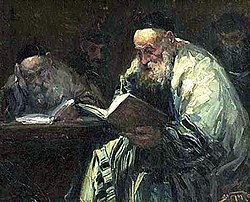
Rabbinic discussions compiled in the Talmud address gamblers, games of chance, and the legal or ethical status of people who make a living through gambling. Dice consequently appear in early religious and legal debates about chance.
Image source: Talmud
1928 - 1934
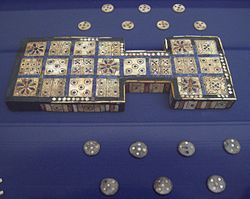
Leonard Woolley's excavations at Ur uncovered ancient race-game boards and tetrahedral dice dating from the third millennium BCE. The finds, made public during the excavation campaign, provided important evidence for the early history of random game mechanics.
Image source: Royal Game of Ur
800 CE
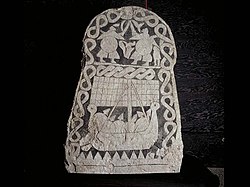
Archaeological sites across Scandinavia have produced bone dice associated with board games such as tafl. These finds show that dice-based play was embedded in Viking-age household, trading, and burial cultures.
Image source: Viking Age
1283
Commissioned by Alfonso X of Castile, the Libro de los juegos catalogued chess, tables, and dice games. Its illustrations and explanations are among the most important medieval records of gaming practices.
Image source: Libro de los juegos
1300
By the late Middle Ages, specialized dice makers and urban craft organizations operated in European cities. Regulations addressed materials, dimensions, workmanship, and fair marking, reflecting the commercial importance of dice.
1387 - 1400
Geoffrey Chaucer's Canterbury Tales refers to gambling and dice as familiar features of medieval social life. The literary references reveal contemporary anxieties about cheating, vice, and the economic consequences of chance.
Image source: The Canterbury Tales
1500
Renaissance interest in proportion, geometry, and probability encouraged closer attention to the construction of fair dice. Dice remained popular gambling tools while also becoming objects through which mathematicians considered randomness.
Image source: Renaissance
1564
Gerolamo Cardano's Liber de ludo aleae, written around 1564, systematically analyzed wagers involving dice. Although published later, the work was an early mathematical treatment of probability and recognized the importance of counting equally likely outcomes.
Image source: Gerolamo Cardano
1612
Galileo Galilei composed a short analysis of a dice question concerning why some totals occur more often than others when several dice are thrown. His explanation helped clarify the difference between individual face probabilities and combinations of outcomes.
Image source: Galileo Galilei
1654
Blaise Pascal and Pierre de Fermat exchanged letters about dividing stakes in an interrupted dice game. Their 1654 correspondence is conventionally treated as a founding moment of modern probability theory.
1657
Christiaan Huygens published De ratiociniis in ludo aleae, the first printed book devoted to probability. Its examples used dice and gambling to establish mathematical methods for expectation and fair wagers.
Image source: Christiaan Huygens
1660
The newly founded Royal Society encouraged experimental and mathematical investigations of games of chance. Dice problems became useful demonstrations of counting, frequency, and the emerging scientific study of uncertainty.
Image source: Royal Society
1708 - 1713
Pierre Rémond de Montmort's work on games of chance developed combinatorial methods for dice, cards, and related problems. Its expanded 1713 edition helped make probability a recognized mathematical subject.
1718
Abraham de Moivre's The Doctrine of Chances presented influential methods for calculating probabilities in repeated trials, including dice problems. It helped establish mathematical probability as a practical analytical discipline.
1733
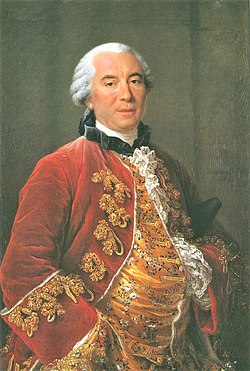
Buffon's work on probability helped popularize the idea that repeated trials stabilize around predictable frequencies. Dice provided an intuitive model for this relationship between randomness in individual throws and regularity in large samples.
Image source: Georges-Louis Leclerc, Comte de Buffon
1800
The American casino game craps evolved from the older English and French dice game hazard. Its core rules use wagers on the outcomes of rolls of two dice and became especially associated with New Orleans and later American gambling venues.
1876
Charles Dodgson, better known as Lewis Carroll, published a famous analysis of unusual dice and the comparison of sums. The discussion became an enduring example of how nonstandard dice can produce counterintuitive probabilities.
Image source: Lewis Carroll
1935
Parker Brothers' 1935 commercial edition of Monopoly used two dice to determine movement around the board. The game made dice-based movement one of the most recognizable mechanics in mass-market tabletop gaming.
Image source: Monopoly (game)
1954
Charles S. Roberts's Tactics helped launch the modern commercial board-wargame industry. Dice were used to resolve combat and uncertainty, establishing a design pattern that influenced later strategy games.
1956
The commercial release of Yahtzee in 1956 popularized a simple combination of luck, rerolling, and set collection. Its success demonstrated the enduring appeal of dice as accessible family-game components.
1974
The publication of Dungeons & Dragons introduced generations of players to a complete set of polyhedral dice, including the iconic twenty-sided die. Dice became central randomizers for combat, exploration, character abilities, and narrative outcomes.
Image source: Dungeons & Dragons
1975
Games Workshop, founded in 1975, helped expand hobby gaming and the market for specialized dice through role-playing, science-fiction, and fantasy products. Custom symbols, colors, and shapes increasingly became part of game identity.
Image source: Games Workshop
1980
Tabletop role-playing and strategy games popularized notation such as d6, d20, and 3d6. This compact system specifies the number and type of dice rolled and became common in rules writing, probability analysis, and online gaming tools.
1990
As the public Internet expanded, websites and chat systems began offering digital dice rollers for remote tabletop play. Software-generated rolls made dice games easier to conduct across distance while raising new questions about trust and randomness.
1998
Random.org began providing random numbers derived from atmospheric noise. Although not a physical dice system, it offered a widely used online alternative for generating outcomes intended to be less predictable than simple software pseudorandom sequences.
2000
The Sims used hidden random processes and probability-driven events to model everyday life, helping bring tabletop-style uncertainty into a major computer game. Its success reflected the broader migration of dice-like mechanics into digital systems.
Image source: The Sims
2005
The Dice Tower, founded by Tom Vasel in 2005, became an influential source of board-game reviews and discussion. Its name reflects the renewed visibility of dice and tabletop culture during the modern board-game renaissance.
1900
Advances in molding and machining made regular polyhedral dice increasingly practical outside specialized mathematical use. Shapes such as tetrahedra, octahedra, and dodecahedra broadened the range of possible random-number systems.
1970
Modern casinos adopted tightly controlled dice production, inspection, and retirement procedures. Transparent materials, precision edges, serial markings, and frequent replacement help reduce tampering and preserve confidence in casino games.
1976
Electronic random-number devices began appearing in the 1970s as integrated circuits and light-emitting displays became affordable. These products translated the familiar dice experience into buttons, lights, and digital outcomes.
2010
Affordable 3D printers enabled hobbyists and small businesses to design and manufacture unusual dice with custom geometry, symbols, and materials. Digital fabrication greatly expanded personalization beyond conventional mass-produced dice.
Image source: 3D printing
Or browse the full history timeline directory, with more than 2,500 topics.
This History of Dice timeline was generated with the help of AI, using information found on the internet.
We work hard to keep these timelines accurate, but mistakes do get through. If you spot one, email us at [email protected] and we'll fix it for future visitors.
Generate yours with AI or build it from scratch, for free.
Export your timeline, add your own events, edit or remove AI-generated events, and much more
No credit card required.
Cancel anytime.
Cancel anytime.
You can create an unlimited number of timelines with up to 10 events on each one, customize how they look, export them to PDF, PNG, PowerPoint, CSV, and Excel, and share them with a link. Paid plans raise the event limit and add features like spreadsheet imports and collaborators.
Yes. You can cancel your subscription from your account page at any time, and you will not be charged again. Your subscription stays active for the rest of the period you already paid for.
Yes. We will email you a reminder before the annual renewal, and we will also email you a receipt.
Yes. You can email us within 15 days of any payment, and we will issue you a full refund.
Check out our pricing docs or send us an email anytime: [email protected].