
-
Use Cases
-
Resources
-
Pricing
Final Fantasy is a Japanese role-playing game (JRPG) franchise created by Hironobu Sakaguchi and developed by Square Enix. First released in 1987, it became one of the best-selling video game series of all time, known for its innovative gameplay, memorable characters, sweeping orchestral music by composers like Nobuo Uematsu, and cinematic storytelling across dozens of mainline entries and spin-offs. More Less
1987
% complete
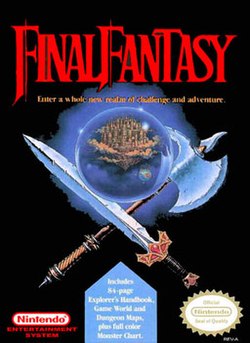
In 1987, Square designer Hironobu Sakaguchi chose to create a new fantasy role-playing game for the cartridge-based NES, drawing inspiration from Enix's Dragon Quest, Nintendo's The Legend of Zelda, and Origin Systems's Ultima series.
Image source: Final Fantasy (video game)
1995
% complete
In 1995, Square showed an interactive SGI technical demonstration of Final Fantasy VI for the then next generation of consoles, previewing the series' move to 3D.
Image source: Final Fantasy VI
1997 - Oct 2003
% complete
Kazushige Nojima became the series' primary scenario writer from Final Fantasy VII until his resignation in October 2003; he has since formed his own company, Stellavista.
2001
% complete
The release of the Nintendo GameCube, which used optical disc media, in 2001 caught the attention of Square regarding future platform choices.
Image source: GameCube

2001
% complete
Sakaguchi served as a producer for subsequent games until he left Square in 2001, ending his direct involvement with the franchise he created.
Image source: Hironobu Sakaguchi
2003
% complete
In 2003, Uematsu co-founded The Black Mages, an instrumental rock group independent of Square that has released albums of arranged Final Fantasy tunes.
Image source: Nobuo Uematsu
Nov 2004
% complete
Nobuo Uematsu was the primary composer of the Final Fantasy series until his resignation from Square Enix in November 2004.
2015
% complete
In 2015, Sakaguchi explained that the team wanted a title that would abbreviate to 'FF', which would sound good in Japanese, clarifying the origin of the series' name.
Dec 18, 1987
% complete
The first installment of the series was released in Japan on December 18, 1987. It launched a franchise that would grow to 16 numbered main entries and become one of gaming's most influential series.
1988
% complete
Final Fantasy II, released in 1988 in Japan, has been bundled with the original Final Fantasy in several re-releases over the years.
Image source: Final Fantasy II
1990
% complete
Final Fantasy was released in Japan in 1987 and in North America in 1990, introducing Western audiences to the landmark role-playing game.
1990
% complete
The last of the NES installments, Final Fantasy III, was released in Japan in 1990; it remained exclusive to the country until a Nintendo DS remake was published worldwide starting in 2006.
Image source: Final Fantasy III
1991
% complete
Final Fantasy IV was released in 1991; it was published in North America as Final Fantasy II due to numbering differences between regions at the time.
Image source: Final Fantasy IV
1992
% complete
Final Fantasy V, released in 1992 in Japan, was the first game in the series to spawn a sequel: a short anime series, Final Fantasy: Legend of the Crystals.
Image source: Final Fantasy V
1994
% complete
Final Fantasy VI was released in Japan in 1994, titled Final Fantasy III in North America, concluding the series' run on the Super Famicom era.
1997
% complete
In 1997, Final Fantasy VII moved away from two-dimensional graphics to three-dimensional computer graphics with polygonal characters on pre-rendered backgrounds, and became the best-selling game in the franchise with over 14.4 million copies sold worldwide.
Image source: Final Fantasy VII
1999
% complete
Final Fantasy VIII was published in 1999 and was the first to consistently use realistically proportioned characters and feature a vocal piece as its theme music.
Image source: Final Fantasy VIII
2000
% complete
Final Fantasy IX, released in 2000, returned to the series' roots by revisiting a more traditional Final Fantasy setting, rather than the modern worlds of VII and VIII.
Image source: Final Fantasy IX
2006
% complete
Final Fantasy XII, published in 2006 for PlayStation 2, includes real-time battles in large, interconnected playfields and uses half as many polygons as Final Fantasy X in exchange for advanced textures and lighting.
Image source: Final Fantasy XII
Mar 2006 - Jul 2007
% complete
The first MMORPG in the series reached over 200,000 active daily players in March 2006 and over half a million subscribers by July 2007.
Image source: Final Fantasy XI
2009
% complete
In 2009, Final Fantasy XIII was released in Japan, and in North America and Europe the following year, for PlayStation 3 and Xbox 360. Its world was later explored through two sequels creating the series' first official trilogy.
Image source: Final Fantasy XIII
2010
% complete
Final Fantasy XIV, a MMORPG, was released worldwide on Microsoft Windows in 2010, but received heavy criticism at launch, prompting Square Enix to rerelease it as Final Fantasy XIV: A Realm Reborn in 2013.
Image source: Final Fantasy XIV (2010 video game)
2023
% complete
The sixteenth mainline entry, Final Fantasy XVI, was released in 2023 for PlayStation 5, continuing the series' tradition of numbered installments.
Image source: Final Fantasy XVI
1989
% complete
The first spin-off media was the novelization of Final Fantasy II in 1989, which was later followed by a manga adaptation of Final Fantasy III in 1992.
1992
% complete
A manga adaptation of Final Fantasy III was published in 1992, following the 1989 novelization of Final Fantasy II as early expanded media for the series.
1994
% complete
The four 30-minute episodes of this OVA sequel to Final Fantasy V were released in Japan in 1994 and later in the United States by Urban Vision in 1998.
Image source: Final Fantasy: Legend of the Crystals
2001
% complete
In 2001, Square Pictures released its first feature film, Final Fantasy: The Spirits Within, which is set on a future Earth invaded by alien life forms.
Image source: Final Fantasy: The Spirits Within
2001
% complete
A 25-episode anime television series, Final Fantasy: Unlimited, was released in 2001 based on the common elements of the franchise.
Image source: Final Fantasy: Unlimited
2005
% complete
In 2005, Final Fantasy VII: Advent Children, a feature-length direct-to-DVD CGI film, and Last Order: Final Fantasy VII, a non-canon OVA, were released as part of the Compilation of Final Fantasy VII.
Image source: Final Fantasy VII: Advent Children
2007
% complete
Monty Oum released a fan-made web series of CG action films called Dead Fantasy in 2007 that features Final Fantasy and Dead or Alive characters fighting in battle royale-style brawls.
Image source: Monty Oum
2012
% complete
The Final Fantasy Trading Card Game is produced by Square Enix and Hobby Japan, first released in Japan in 2012 with an English version in 2016.
1992
% complete
In 1992, Nintendo's Shigeru Miyamoto noted Final Fantasy's impact on Japanese role-playing games, stating its 'interactive cinematic approach' emphasizing presentation and graphics was becoming 'the most common style' of Japanese RPG.
1996
% complete
In 1996, Next Generation staff ranked the series collectively as the 17th best game of all time, speaking very highly of its audiovisuals and stories.
Sep 9, 1999
% complete
Within two days of its North American release on September 9, 1999, Final Fantasy VIII became the top-selling video game in the United States and held the position for more than three weeks.
2000
% complete
The series saw a steady increase in total sales; it sold 25 million units by 2000, on its way to reaching 100 million units in 2011.
2004
% complete
Bronze medalists Alison Bartosik and Anna Kozlova performed their synchronized swimming routine at the 2004 Summer Olympics to music from Final Fantasy VIII.
2006
% complete
The series was awarded a star on the Walk of Game in 2006, making it the first franchise to win a star on the event, as other winners were individual games rather than franchises.
Image source: Walk of Game
2006
% complete
Twelve Final Fantasy games appeared in Famitsu's 2006 'Top 100 Favorite Games of All Time', four of which were in the top ten.
Nov 6, 2006
% complete
By November 6, 2006—one week after its release—Final Fantasy XII had shipped approximately 1.5 million copies in North America.
2007
% complete
Edge magazine writers were critical of the series' expansion in 2007, questioning how many of the related games with 'Final Fantasy' in their titles lived up to the franchise's reputation for quality.
2009
% complete
The 2009 Guinness World Records Gamer's Edition listed Final Fantasy XII at number 8 and Final Fantasy VII at number 20 among the top 50 console games.
Image source: Guinness World Records
2011
% complete
The Final Fantasy series reached 100 million units sold in 2011, reflecting decades of steady growth in global popularity.
Mar 2025
% complete
By March 2025, the Final Fantasy series surpassed cumulative global physical and digital sales of 200 million units across its many releases.
2003
% complete
In 2003, the Final Fantasy series' first sub-sequel, Final Fantasy X-2, was released, marking a new direction for the franchise's storytelling.
Image source: Final Fantasy X-2
2006 - 2007
% complete
Enhanced 3D remakes of Final Fantasy III and IV were released in 2006 and 2007 respectively, bringing classic titles to worldwide audiences via the Nintendo DS.
2009
% complete
Dissidia Final Fantasy was released in 2009, a fighting game featuring heroes and villains from the first ten games of the main series. It was followed by a prequel in 2011, a sequel in 2015, and a mobile spin-off in 2017.
Image source: Dissidia Final Fantasy
2020
% complete
The first installment of the Final Fantasy VII Remake project was released on the PlayStation 4 in 2020, reimagining the beloved 1997 classic.
Image source: Final Fantasy VII Remake
2022
% complete
In 2022, Square Enix released Stranger of Paradise: Final Fantasy Origin with Team Ninja, an action RPG set in an alternate reality based on the original Final Fantasy, exploring the origins of Chaos and the four Warriors of Light.
Image source: Stranger of Paradise: Final Fantasy Origin
2025
% complete
In 2025, Wizards of the Coast released Magic: The Gathering sets based on Final Fantasy—encompassing every mainline entry at the time—as part of its Universes Beyond collaborations.
Image source: Magic: The Gathering
Or browse the full history timeline directory, with more than 2,000 topics.
This History of Final Fantasy timeline was generated with the help of AI, using information found on the internet.
We work hard to keep these timelines accurate, but mistakes do get through. If you spot one, email us at [email protected] and we'll fix it for future visitors.
Generate yours with AI or build it from scratch, for free.
Export your timeline, add your own events, edit or remove AI-generated events, and much more
No credit card required.
Cancel anytime.
Cancel anytime.
You can create an unlimited number of timelines with up to 10 events on each one, customize how they look, export them to PDF, PNG, PowerPoint, CSV, and Excel, and share them with a link. Paid plans raise the event limit and add features like spreadsheet imports and collaborators.
Yes. You can cancel your subscription from your account page at any time, and you will not be charged again. Your subscription stays active for the rest of the period you already paid for.
Yes. We will email you a reminder before the annual renewal, and we will also email you a receipt.
Yes. You can email us within 15 days of any payment, and we will issue you a full refund.
Check out our pricing docs or send us an email anytime: [email protected].