
-
Use Cases
-
Resources
-
Pricing
The History of Gambia traces the West African nation's journey from early settlements along the Gambia River, through the era of the Mali and Songhai Empires, European colonization beginning with the Portuguese in the 15th century, British colonial rule, and its independence in 1965 under Dawda Jawara. The country experienced a military coup in 1994 led by Yahya Jammeh, followed by a democratic transition in 2017 when Adama Barrow took office. More Less
1000
From around the first millennium, Mande-speaking agriculturalists settled in the region along the Gambia River, establishing villages and laying the cultural foundations of what would later become The Gambia.
Image source: History of the Gambia

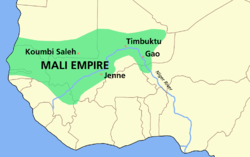
1300
The Mali Empire extended its control over much of the Gambia River valley, integrating the region into one of West Africa's wealthiest trading empires.
Image source: Mali Empire
1537 - 1867
The Mandinka Kaabu Empire rose as a powerful regional state controlling territory on both sides of the Gambia River after the decline of Mali's western provinces.
Image source: Kaabu

1455
Portuguese explorers, including Venetian navigator Alvise Cadamosto sailing for Portugal, reached the Gambia River, beginning European contact and trade with local kingdoms.
1651
Courlanders and then English merchants built a fortified post on an island in the Gambia River, which became a key hub for the Atlantic slave trade under the name James Island (now Kunta Kinteh Island).
Image source: Kunta Kinteh Island

1664
The English Crown chartered the Royal African Company to manage trade, especially in enslaved people, along the Gambia River, deepening British commercial involvement in the region.
Image source: Royal African Company

1700 - 1800
Throughout the eighteenth century, the Gambia River was a major corridor in the Atlantic slave trade, with thousands of captives shipped from ports like James Island to the Americas.
Image source: Atlantic slave trade

1795
Scottish explorer Mungo Park began his journey inland from the Gambia River, producing influential accounts of West Africa's interior that stimulated European interest in the region.
Image source: Mungo Park (explorer)

1816
British forces founded Bathurst on Banjul Island as a base against the slave trade; it grew into the principal town and later capital of The Gambia.
Image source: Banjul

1819
After Britain abolished the slave trade, the Royal Navy patrolled West African waters, intercepting slave ships near the Gambia and resettling freed Africans locally.
Image source: Blockade of Africa

This History of Gambia timeline was generated with the help of AI, using information found on the internet.
We work hard to keep these timelines accurate, but mistakes do get through. If you spot one, email us at [email protected] and we'll fix it for future visitors.
Generate yours with AI or build it from scratch, for free.


