-
Use Cases
-
Resources
-
Pricing
The Republic of the Congo, located in Central Africa, was colonized by France in the late 19th century as part of French Equatorial Africa. It gained independence in 1960 and experienced decades of political instability, Marxist rule, and civil wars. Since the late 1990s, Denis Sassou Nguesso has dominated its politics amid oil-driven economic development. More Less
1400
% complete
According to oral traditions the Kingdom of Kongo was established in around 1400 when King Lukeni lua Nimi conquered the kingdom of Kabunga and established Mbanza Kongo as its capital.
Image source: Kingdom of Kongo
1482 - 1483
% complete
Captain Diogo Cão, sailing southwards on the uncharted Congo River, discovered the mouth of the river and became the first European to encounter the Kingdom of Kongo.
Image source: Diogo Cão
May 3, 1491
% complete
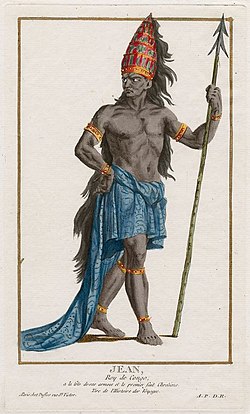
With Christianity easily accepted by the local nobility, king Nzinga a Nkuwu was baptized as João I, becoming the first Christian Kongolese king.
Image source: João I of Kongo
1506 - 1543
% complete
After his father's death in 1506, Nzinga Mbemba succeeded him and ruled as King Afonso I until 1543. Many churches were built in Mbanza during this period, including the impressive Kulumbimbi Cathedral erected between 1491 and 1534.
Image source: Afonso I of Kongo
1580 - 1640
% complete
Portugal's position in Europe suffered a major change when the Kingdoms of Spain and Portugal were united by a personal union under King Philip, creating the Iberian Union which lasted until 1640.
Image source: Iberian Union
Oct 25, 1665
% complete
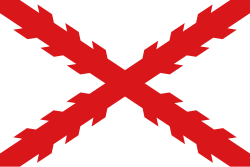
During this battle an estimated 20,000 Kongolese fought against the Portuguese, who won thanks to the early death in battle of the Kongolese king. The defeat weakened the kingdom severely.
Image source: Battle of Mbwila
1684
% complete
Baptised around 1684 as Dona Béatrice, Kimpa Vita was raised Catholic and being very pious became a nun, seeing visions of St. Anthony and founding a religious movement in the Kingdom of Kongo.
Image source: Kimpa Vita
1888
% complete
The Kingdom of Kongo had been reduced to a small enclave in the north of Angola, and with King Pedro V it finally accepted becoming a vassal of the Portuguese in 1888.
1914
% complete
The Portuguese abolished the Kingdom of Kongo after the revolt of the Kongolese people in 1914, ending centuries of royal rule.
1879
% complete
The French explorer Pierre Savorgnan de Brazza, born in Rome in 1852, arrived on the north bank of the Congo River and began exploring the region for France.
Image source: Pierre Savorgnan de Brazza
Sep 10, 1880
% complete
Traveling via the rivers Ogooué and Lefini, de Brazza arrived in the kingdom of the Téké where he signed a treaty with King Makoko establishing French control over the region, making his capital soon afterwards at the village of Mfoa, later called Brazzaville.
Image source: Tio Kingdom
Aug 1, 1886
% complete
The first name given officially to the new French colony was the Colony of Gabon and Congo.
Image source: French Congo
1889
% complete
The French government allowed the establishment of Concessionary Companies to circumvent the economic non-discrimination provisions of the Treaty of Berlin and maximize revenue drawn from underpopulated regions under their control. Most had gone bankrupt by 1930.
Apr 30, 1891
% complete
The colony was renamed the Colony of French Congo, consisting of Gabon and Middle Congo, the name the French gave to Congo-Brazzaville at that time.
1892 - 1896
% complete
An uprising started in 1892 with the murder of the French administrator Laval and ended with the killing by the French of its leader in 1896.
Nov 15, 1908
% complete
The Belgian parliament annexed the neighboring Congo Free State as the Belgian Congo, the reign of Leopold II over the Congo having been discredited.
Image source: Belgian Congo
Jan 15, 1910
% complete
The colony was renamed French Equatorial Africa (Afrique Équatoriale Française or AEF), now also including Chad and Oubangui-Chari, nowadays the Central African Republic.
Image source: French Equatorial Africa
1911
% complete
Parts of the colony, known as the New Cameroon territories, were ceded to the German Empire in exchange for German recognition of France's rights to Morocco.
Image source: Neukamerun
1916
% complete
German rule lasted only five years; the New Cameroon territories were seized back by France in 1916 after the fall of German forces in Kamerun.
1921 - 1934
% complete
The construction of the 511 km long Chemin de Fer Congo-Océan between Brazzaville and Pointe-Noire is said to have cost the lives of around 23,000 locals and a few hundred Europeans.
Image source: Congo–Ocean Railway
1926
% complete
Born in 1899 in Mandzakala, Matsoua joined the French customs administration in Brazzaville in 1919 before moving to France. In Paris he formed the Association des Originaires de l'A.E.F., demanding an end to colonial abuses.
Image source: André Matsoua
1940
% complete
Because of his support for De Gaulle, Félix Eboué, born in 1884 in French Guiana and a descendant of African slaves, became Governor-General of the AEF in 1940, the first non-white to achieve this position in French colonial history.
Image source: Félix Éboué
Aug 28, 1940
% complete
After Pétain surrendered to Germany on June 22, 1940, troops loyal to De Gaulle took control of Chad, Cameroon and Middle Congo within three days. Brazzaville became the capital of Free France in Africa, governed by De Gaulle's Conseil de défense de l'Empire set up on October 27, 1940.
Image source: Free France
Jan 30, 1944 - Feb 8, 1944
% complete
Organized by Governor-General Félix Eboué together with René Pleven for the De Gaulle government, the conference set out the new direction of French colonial policies after World War II, leading to the abolition of forced labor and the code de l'indigénat.
Image source: Brazzaville Conference
Nov 21, 1945
% complete
Born in Libreville in 1903 and a member of the royal family of Loango, Jean-Félix Tchicaya became one of the first African leaders elected to the French parliament, gaining great prestige at home. He later co-founded the RDA in 1946 and the Parti Progressiste Africain in 1947.
Oct 27, 1946
% complete
The Brazzaville Conference led to the new French constitution of the Fourth Republic, approved on October 27, 1946, and to the election of the first Equatorial African members of Parliament in Paris.
Image source: French Fourth Republic
1957
% complete
Although French geologists had established in 1926 the presence of oil and gas in the country, in 1957 near Pointe Indienne the Societé des Pétroles de l'Afrique Equatoriale Françaises found exploitable offshore oil and gas reserves.
Image source: Economy of the Republic of the Congo
Mar 31, 1957
% complete
In the parliamentary elections, Tchicaya aligned himself with his erstwhile enemy, the radical Jacques Opangault, to continue playing a leading role in Congolese political life. A High Commissioner of the République replaced the Governor-General.
1958
% complete
The defection of Georges Yambot from the African Socialist Movement (MSA) to Youlou's UDDIA helped Abbé Fulbert Youlou become prime minister in 1958.
Image source: Fulbert Youlou
Nov 28, 1958
% complete
Congo-Brazzaville gained autonomy, establishing the Republic of the Congo with Brazzaville replacing Pointe-Noire as the country's capital.
Image source: Republic of the Congo
Feb 16, 1959
% complete
A revolt organized by Opangault and his MSA erupted in clashes along tribal lines between Southerners supporting Youlou and people from the North loyal to the MSA.
Aug 15, 1960
% complete
On July 12, 1960, France agreed to full independence for the Congo. On August 15, 1960, the Republic of the Congo became an independent country and Fulbert Youlou became its first President.
1963 - 1968
% complete
Under the 1963 constitution, Massamba-Débat was elected president for a five-year term and named Pascal Lissouba prime minister. His socialist-leaning government pursued Africanising policies.
Image source: Alphonse Massamba-Débat
Aug 13, 1963 - Aug 15, 1963
% complete
After Youlou announced the formation of a one-party state with only one legal trade union on August 6, 1963, trade unions revolted on August 13. The uprising, named after the French July Revolution of 1830, toppled Youlou and brought Alphonse Massamba-Débat to power.
Image source: Les Trois Glorieuses
Aug 1968
% complete
Massamba-Débat's government ended when Captain Marien Ngouabi and other army officers toppled the government in a bloodless coup. After consolidation under the National Revolutionary Council, Ngouabi assumed the presidency on December 31, 1968.
Image source: Marien Ngouabi
Mar 18, 1977
% complete
President Marien Ngouabi was assassinated, leading to Joachim Yhombi-Opango taking power before he too was removed from office on February 5, 1979 by the Central Committee of the PCT amid accusations of corruption.
Feb 5, 1979 - 1992
% complete
The PCT designated Colonel Denis Sassou Nguesso, previously Vice President and Defense Minister, as leader after removing Yhombi-Opango. He ruled the Marxist-Leninist state for over a decade until the transition to multi-party democracy.
Image source: Denis Sassou Nguesso
1991 - Aug 1992
% complete
Ending decades of one-party Marxist rule, Congo's national conference of 1991 laid out a transition agenda culminating in August 1992 with multi-party parliamentary and presidential elections.
Aug 31, 1992
% complete
Sassou Nguesso conceded defeat, and Professor Pascal Lissouba was inaugurated as Congo's new president, marking the completion of the democratic transition.
Image source: Pascal Lissouba
Nov 1992 - Feb 1994
% complete
Lissouba dissolved the National Assembly in November 1992, calling new elections for May 1993. Congolese democracy faced severe trials, but in February 1994 all parties accepted the decisions of an international board of arbiters and the risk of large-scale insurrection subsided.
Jun 5, 1997 - Oct 1997
% complete
As presidential elections approached, tensions between the Lissouba and Sassou Nguesso camps mounted. On June 5, 1997, government forces surrounded Sassou Nguesso's home in Mpila attempting arrests, sparking civil war. Sassou Nguesso emerged victorious and returned to power.
Image source: Republic of the Congo Civil War (1997–1999)
Jan 1998
% complete
The Sassou Nguesso regime held a National Forum for Reconciliation to determine the nature and duration of the transition period, though fighting with armed opposition resumed in late 1998.
Nov 1999 - Dec 1999
% complete
In November and December 1999, the government signed agreements with representatives of many, though not all, of the rebel groups, easing the conflict.
Jan 2002
% complete
A new constitution granted the president new powers and extended his term to seven years, while introducing a new bicameral assembly.
Image source: Constitution of the Democratic Republic of the Congo
2002
% complete
Sassou won elections in 2002 with an implausible 90% or so of the votes, consolidating his grip on power.
Image source: 2002 Republic of the Congo presidential election
Jul 2009
% complete
Denis Sassou Nguesso was re-elected for a further seven-year term at the presidential election in July 2009.
2015
% complete
In 2015, Sassou changed the constitution to run in the 2016 election, extending his long rule.
Apr 2016
% complete
The constitutional changes led to a revival of the Ninja rebels who launched attacks against the army in April 2016, causing around 80,000 people to flee their homes.
Image source: Ninja (militia)
Dec 2017
% complete
A ceasefire deal was signed in December 2017, bringing an end to renewed hostilities between the Ninja rebels and government forces.
Image source: Congolese Civil War
Or browse the full history timeline directory, with more than 2,000 topics.
This History of Republic of the Congo timeline was generated with the help of AI, using information found on the internet.
We work hard to keep these timelines accurate, but mistakes do get through. If you spot one, email us at [email protected] and we'll fix it for future visitors.
Generate yours with AI or build it from scratch, for free.
Export your timeline, add your own events, edit or remove AI-generated events, and much more
No credit card required.
Cancel anytime.
Cancel anytime.
You can create an unlimited number of timelines with up to 10 events on each one, customize how they look, export them to PDF, PNG, PowerPoint, CSV, and Excel, and share them with a link. Paid plans raise the event limit and add features like spreadsheet imports and collaborators.
Yes. You can cancel your subscription from your account page at any time, and you will not be charged again. Your subscription stays active for the rest of the period you already paid for.
Yes. We will email you a reminder before the annual renewal, and we will also email you a receipt.
Yes. You can email us within 15 days of any payment, and we will issue you a full refund.
Check out our pricing docs or send us an email anytime: [email protected].