-
Use Cases
-
Resources
-
Pricing
The Republic of Venice was a sovereign state and maritime empire centered on the city of Venice in northeastern Italy. Founded in the late 7th century, it grew into a dominant Mediterranean trading power through its navy, commerce, and diplomacy. Known as 'La Serenissima,' Venice thrived for over a millennium as a major center of trade, art, and culture before falling to Napoleon Bonaparte in 1797. More Less
Mar 25, 421
% complete
According to legend, Venice was founded at noon on March 25, 421, with the dedication of the church of San Giacomo on the islet of Rialto. Refugees fleeing barbarian invasions on the Italian mainland settled in the lagoons of the northern Adriatic, laying the foundations for what would become one of history's most remarkable maritime republics.
Image source: Republic of Venice
697
% complete
Paolo Lucio Anafesto was traditionally elected as the first Doge (Duke) of Venice in 697, establishing the office that would lead the Republic for over a thousand years. The Doge served as the supreme authority of Venice, though his power would later be carefully constrained by aristocratic councils.
Image source: Doge of Venice
840
% complete
The Pactum Lotharii, signed between Venice and Emperor Lothair I, formally recognized Venetian independence and defined its borders. This agreement marked an important step in Venice's emergence as a distinct political entity between the Byzantine and Frankish spheres of influence.
921
% complete
Venice began issuing its own coinage in the early 10th century, asserting economic independence. The ability to mint money reflected the city's growing commercial importance and laid the groundwork for the later ducat, which would become one of the most trusted currencies in medieval Europe.
Image source: Venetian lira
1143
% complete
Around 1143, Venice formalized its communal government, creating institutions such as the Council of Wise Men (Consiglio dei Savi) to advise the Doge. This development marked the evolution of Venice into a sophisticated republican state governed by its patriciate.
1297
% complete
The Serrata ('closure') of the Great Council restricted membership to hereditary patrician families, effectively freezing the Venetian aristocracy. This constitutional reform stabilized the Republic's government and created one of the most durable political systems in European history.
Image source: Great Council of Venice
1310
% complete
Following the failed Tiepolo conspiracy, Venice created the Council of Ten, a secretive body charged with protecting the state from internal subversion. With powers of surveillance and swift justice, it became one of the most feared and effective security institutions in Europe.
Image source: Council of Ten
992
% complete
In 992, Byzantine Emperor Basil II granted Venice a chrysobull granting commercial privileges in exchange for naval assistance against Dalmatian pirates. Venice gradually asserted control over the Adriatic coast, beginning its transformation into a regional maritime power.
Image source: Dalmatia
1004
% complete
The marriage alliance between the Orseolo family and the Byzantine imperial house symbolized Venice's rising prestige. Under Pietro II Orseolo, Venice secured dominance over the Adriatic and expanded trade links with Constantinople and the eastern Mediterranean.
Image source: Pietro II Orseolo
1082
% complete
Emperor Alexios I Komnenos granted Venice extensive trading privileges throughout the Byzantine Empire in return for naval aid against the Normans. These privileges allowed Venetian merchants to dominate commerce in Constantinople and the eastern Mediterranean, fueling the city's phenomenal growth.
Image source: Byzantine–Venetian treaty of 1082
1204
% complete
Following the Fourth Crusade, Venice purchased and claimed the island of Crete, establishing the Kingdom of Candia. The island became a vital hub for Venetian trade with the East and remained under Venetian rule for more than four centuries.
Image source: Kingdom of Candia
1271 - 1295
% complete
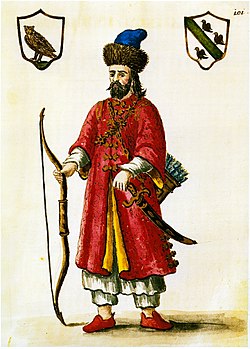
Venetian merchant Marco Polo traveled along the Silk Road to the court of Kublai Khan in China, returning home in 1295 after nearly 24 years abroad. His account, 'The Travels of Marco Polo,' captivated European readers and inspired later explorers, cementing Venice's reputation as a gateway to the East.
Image source: Marco Polo
1284
% complete
Venice introduced the gold ducat in 1284, which maintained its weight and purity virtually unchanged for over 500 years. The ducat became the standard coin of international commerce from the Mediterranean to Northern Europe, underscoring Venice's role as the financial capital of the medieval world.
Image source: Ducat
1339 - 1420
% complete
Beginning with Treviso in 1339 and accelerating in the early 15th century, Venice conquered a substantial mainland empire in northeastern Italy, including Padua, Verona, Vicenza, and Friuli. The Terraferma provided grain, timber, and manpower, making Venice a major Italian territorial power as well as a maritime one.
Image source: Domini di Terraferma
1096
% complete
Venice participated in the First Crusade by providing fleets to support crusader forces. The republic used the crusading movement to expand its commercial network, gaining trading privileges in the newly established Crusader states of the Levant.
Image source: First Crusade
Apr 12, 1204
% complete
Under Doge Enrico Dandolo, Venice diverted the Fourth Crusade to Constantinople, leading to the brutal sack of the Byzantine capital. Venice gained vast territories and islands across the Aegean, including Crete, transforming itself into a colonial empire and the dominant Mediterranean sea power.
Image source: Sack of Constantinople
1256 - 1270
% complete
Venice fought Genoa in the War of Saint Sabas, a conflict sparked by disputes over property in Acre in the Levant. The war marked the beginning of a long rivalry between the two maritime republics for dominance of Mediterranean trade routes.
Image source: War of Saint Sabas
Sep 8, 1298
% complete
Genoa inflicted a crushing defeat on the Venetian fleet at Curzola in the Adriatic, capturing thousands of sailors, including Marco Polo. Despite the defeat, Venice recovered quickly, and the rivalry with Genoa continued for decades until Venice ultimately prevailed.
Image source: Battle of Curzola
1378 - 1381
% complete
In the War of Chioggia, Genoa and its allies nearly brought Venice to its knees, even occupying the lagoon town of Chioggia. Through desperate resistance, Venice blockaded and defeated the Genoese forces, securing final victory in the centuries-long rivalry between the two maritime republics.
Jul 12, 1470
% complete
Sultan Mehmed II captured the strategic Venetian island of Euboea (Negroponte) after a fierce siege, dealing a severe blow to Venice's eastern empire. The loss signaled the beginning of relentless Ottoman pressure on Venetian possessions in the Aegean.
Image source: Siege of Negroponte (1470)
1499 - 1503
% complete
Venice suffered significant naval defeats against the Ottomans, including the Battle of Zonchio, the first major naval battle involving gunpowder weapons. The war cost Venice several Aegean possessions, including Modon and Koron, key 'eyes' of the Republic in the eastern Mediterranean.
Image source: Ottoman–Venetian War (1499–1503)
1508 - 1516
% complete
Pope Julius II assembled the League of Cambrai with France, Spain, and the Holy Roman Empire to dismember Venice's mainland empire. Though initially catastrophic, Venice skillfully exploited divisions among its enemies and recovered nearly all its Terraferma territories by 1516.
Image source: War of the League of Cambrai
Oct 7, 1571
% complete
The Holy League, led by Venice and Spain, decisively defeated the Ottoman fleet at Lepanto off western Greece. The victory, celebrated across Christendom, halted Ottoman naval expansion in the Mediterranean and became one of the most celebrated episodes in Venetian history.
Image source: Battle of Lepanto
1684 - 1699
% complete
Under Doge Francesco Morosini, Venice allied with the Holy League against the Ottomans and conquered the Peloponnese (Morea). The Treaty of Karlowitz confirmed these gains, representing Venice's last major territorial expansion and military success.
Image source: Morean War
1421 - 1440
% complete
The Ca' d'Oro ('House of Gold'), built along the Grand Canal for the Contarini family, exemplified Venetian Gothic architecture at its height. Its ornate marble facade, once gilded, reflected the immense wealth and artistic sophistication of Renaissance Venice.
Image source: Ca' d'Oro
1469
% complete
John of Speyer introduced printing to Venice in 1469, and the city soon became the publishing capital of Europe. Aldus Manutius founded the Aldine Press, producing portable octavo editions of the classics and inventing italic type, spreading humanist learning across the continent.
Image source: Aldus Manutius
1483
% complete
Giovanni Bellini was appointed painter to the Signoria of Venice in 1483. His luminous use of color and oil technique transformed Venetian painting and influenced generations of artists, including Giorgione, Titian, and the broader Venetian school.
Image source: Giovanni Bellini
1516 - 1576
% complete
Titian dominated Venetian art for over half a century, serving the Republic and patrons across Europe, including Emperor Charles V. His mastery of color and brushwork defined the Venetian Renaissance and profoundly influenced Western painting.
Image source: Titian
1588 - 1591
% complete
Antonio da Ponte's stone Rialto Bridge, spanning the Grand Canal at Venice's commercial heart, was completed in 1591. It replaced earlier wooden structures and remains one of the most iconic architectural landmarks of the city.
Image source: Rialto Bridge
1750 - 1780
% complete
In the 18th century, Venice reinvented itself as a city of carnival, casinos, opera, and hedonism, immortalized by figures like Giacomo Casanova. Painters such as Canaletto and Tiepolo captured the city's fading splendor, attracting Grand Tour visitors from across Europe.
Image source: Giacomo Casanova
1570 - 1571
% complete
Despite the triumph at Lepanto, Venice lost the rich island of Cyprus to the Ottoman Empire after the fall of Famagusta in 1571. The heroic defense of Famagusta by Marcantonio Bragadin, who was flayed alive after surrendering, became legendary as a symbol of Venetian sacrifice.
Image source: Ottoman–Venetian War (1570–1573)
1629 - 1631
% complete
A devastating plague swept through northern Italy, killing roughly a third of Venice's population. In response, Venice built the Basilica di Santa Maria della Salute as an offering of thanks for the plague's end; the epidemic marked a turning point in the city's demographic and economic decline.
Image source: 1629–1631 Italian plague
1645 - 1669
% complete
After a grueling 21-year war centered on the epic siege of Candia (Heraklion), Venice ceded Crete to the Ottoman Empire. The longest siege in history drained Venetian resources and ended more than four centuries of Venetian rule over the island.
Image source: Cretan War (1645–1669)
May 12, 1797
% complete
Napoleon Bonaparte's forces invaded Venetian territory, and the Great Council voted to dissolve the Republic on May 12, 1797, ending over 1,100 years of independence. The last Doge, Ludovico Manin, abdicated, and Venice passed first to French and then Austrian control, closing one of history's most extraordinary chapters.
Image source: Fall of the Republic of Venice
Or browse the full history timeline directory, with more than 2,000 topics.
This Republic of Venice timeline was generated with the help of AI, using information found on the internet.
We work hard to keep these timelines accurate, but mistakes do get through. If you spot one, email us at [email protected] and we'll fix it for future visitors.
Generate yours with AI or build it from scratch, for free.
Export your timeline, add your own events, edit or remove AI-generated events, and much more
No credit card required.
Cancel anytime.
Cancel anytime.
You can create an unlimited number of timelines with up to 10 events on each one, customize how they look, export them to PDF, PNG, PowerPoint, CSV, and Excel, and share them with a link. Paid plans raise the event limit and add features like spreadsheet imports and collaborators.
Yes. You can cancel your subscription from your account page at any time, and you will not be charged again. Your subscription stays active for the rest of the period you already paid for.
Yes. We will email you a reminder before the annual renewal, and we will also email you a receipt.
Yes. You can email us within 15 days of any payment, and we will issue you a full refund.
Check out our pricing docs or send us an email anytime: [email protected].