-
Use Cases
-
Resources
-
Pricing
The Weimar Republic was Germany's democratic government from 1918 to 1933, established after World War I and the abdication of Kaiser Wilhelm II. Named after the city of Weimar where its constitution was drafted, it faced immense challenges including war reparations, hyperinflation, political extremism, and economic depression, ultimately collapsing when Adolf Hitler and the Nazi Party came to power in 1933. More Less
Nov 3, 1918 - Nov 11, 1918
% complete
Mutinies among sailors at Kiel sparked a nationwide revolution that toppled the German Empire. Workers' and soldiers' councils formed across Germany, Kaiser Wilhelm II abdicated, and the path was opened for a democratic republic.
Image source: German Revolution of 1918–1919
Nov 11, 1918
% complete
Germany signed an armistice with the Allies in a railway carriage at Compiègne, ending fighting on the Western Front. The new government under Friedrich Ebert accepted harsh terms, and the 'stab-in-the-back' myth soon took hold among nationalists.
Image source: Armistice of 11 November 1918
Feb 6, 1919
% complete
The newly elected constituent assembly met in Weimar, chosen partly because Berlin was too unstable. It drafted the constitution for the new German state that would bear the city's name.
Image source: Weimar National Assembly
Jun 28, 1919
% complete
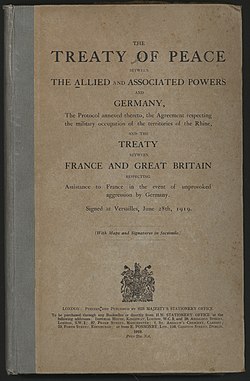
Germany signed the peace treaty imposing territorial losses, military restrictions, war guilt clause, and heavy reparations. The treaty was deeply resented by Germans and became a lasting burden on the young republic's legitimacy.
Image source: Treaty of Versailles
Aug 11, 1919
% complete
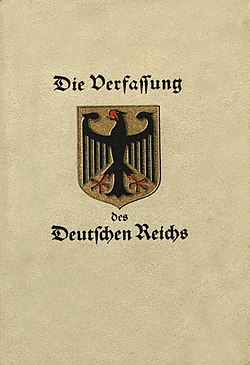
The constitution established a federal parliamentary democracy with universal suffrage, proportional representation, and fundamental rights. Its Article 48 emergency powers would later be exploited to undermine democracy itself.
Image source: Weimar Constitution
Sep 8, 1926
% complete
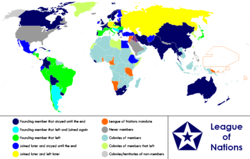
Following the Locarno Treaties, Germany was admitted to the League of Nations with a permanent seat on the Council, marking its return to great-power diplomacy under Foreign Minister Stresemann.
Image source: League of Nations
Jan 5, 1919 - Jan 15, 1919
% complete
Communists led by Karl Liebknecht and Rosa Luxemburg attempted to overthrow the provisional government in Berlin. The revolt was crushed by the Freikorps, and both leaders were murdered, deepening divisions between the left and the republic.
Image source: Spartacist uprising
Mar 13, 1920 - Mar 17, 1920
% complete
Right-wing militants and Freikorps units attempted to overthrow the government and install Wolfgang Kapp as chancellor. A general strike called by trade unions paralyzed the putschists, forcing their collapse within days.
Image source: Kapp Putsch
Jun 24, 1922
% complete
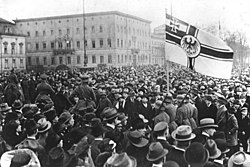
Foreign Minister Walther Rathenau, a Jewish industrialist who negotiated the Treaty of Rapallo, was assassinated by right-wing extremists. His murder shocked the nation and prompted laws protecting the republic.
Image source: Walther Rathenau
Apr 26, 1925
% complete
After President Friedrich Ebert's death, Paul von Hindenburg, a monarchist war hero, won the presidential election. His election signaled growing conservative influence over the republic.
Image source: 1925 German presidential election
Oct 3, 1929
% complete
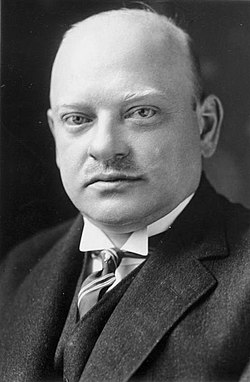
The death of Foreign Minister Stresemann removed the republic's most capable statesman and champion of reconciliation with the Western powers, weakening moderate politics just as crisis loomed.
Image source: Gustav Stresemann
Mar 27, 1930 - May 30, 1932
% complete
Chancellor Heinrich Brüning relied increasingly on Article 48 emergency decrees to govern without parliamentary majorities, eroding democratic norms and setting a precedent for authoritarian rule.
Image source: Heinrich Brüning
Jul 20, 1932
% complete
Chancellor Franz von Papen deposed the elected Social Democratic government of Prussia by emergency decree, dismantling a key pillar of republican resistance to Nazism.
Image source: 1932 Prussian coup d'état
Apr 12, 1919
% complete
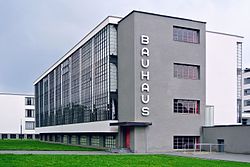
Walter Gropius founded the Bauhaus art and design school, which fused crafts and fine arts into a revolutionary modernist aesthetic. It became one of the most influential design movements of the twentieth century.
Image source: Bauhaus
1924 - 1929
% complete
Weimar cinema flourished with expressionist masterpieces like Metropolis and Nosferatu, and UFA studios made Berlin one of Europe's film capitals, showcasing the era's creative experimentation.
Image source: Cinema of Germany
Jul 29, 1921
% complete
Hitler assumed leadership of the fledgling National Socialist German Workers' Party, transforming it into a vehicle for his ultranationalist and antisemitic ideology and beginning its climb toward power.
Image source: Adolf Hitler's rise to power
Nov 8, 1923 - Nov 9, 1923
% complete
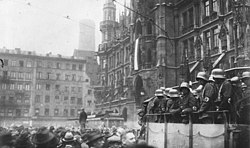
Hitler and the Nazi Party attempted to seize power in Bavaria. The coup collapsed after a shootout with police, and Hitler was imprisoned, during which he wrote Mein Kampf.
Image source: Beer Hall Putsch
Sep 14, 1930
% complete
In the Reichstag election, the Nazis surged from 12 to 107 seats, becoming the second-largest party as voters punished the mainstream parties for the Depression.
Image source: 1930 German federal election
Jul 31, 1932
% complete
The Nazis won 230 seats and 37 percent of the vote, becoming the largest party in the Reichstag, though still short of a majority.
Image source: July 1932 German federal election
Jan 30, 1933
% complete
President Hindenburg appointed Adolf Hitler chancellor in a coalition government, believing he could be controlled. Within weeks, Hitler began dismantling the democratic state.
Image source: Hitler cabinet
Feb 27, 1933
% complete
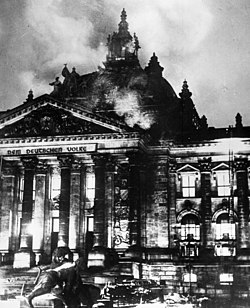
A fire destroyed the Reichstag building, which the Nazis blamed on communists. Hitler used the ensuing panic to push through the Reichstag Fire Decree suspending civil liberties.
Image source: Reichstag fire
Mar 22, 1933
% complete
The Nazi regime established Dachau near Munich to imprison political opponents, marking the beginning of the concentration camp system that would become central to Nazi terror.
Image source: Dachau concentration camp
Mar 23, 1933
% complete
The Reichstag passed the Enabling Act, allowing Hitler's government to enact laws without parliamentary consent, effectively granting him dictatorial powers and ending parliamentary democracy.
Image source: Enabling Act of 1933
May 2, 1933
% complete
Stormtroopers seized union offices across Germany and arrested labor leaders, replacing independent unions with the Nazi-controlled German Labour Front and crushing workers' organizations.
Image source: German Labour Front
Jun 30, 1934 - Jul 2, 1934
% complete
Hitler purged the SA leadership and other political rivals in a wave of extrajudicial killings, consolidating his power and winning the loyalty of the army.
Image source: Night of the Long Knives
Aug 2, 1934
% complete
Upon President Hindenburg's death, Hitler merged the offices of president and chancellor, assuming absolute power as Führer and formally ending the Weimar Republic.
Image source: Paul von Hindenburg
Nov 15, 1923
% complete
The German mark became virtually worthless, wiping out savings and destabilizing society. Prices doubled within hours at the peak before the introduction of the Rentenmark stabilized the currency.
Image source: Hyperinflation in the Weimar Republic
Nov 20, 1923
% complete
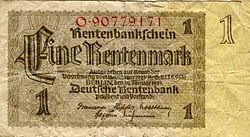
Currency reform under Gustav Stresemann and Hjalmar Schacht replaced the worthless mark, ending hyperinflation and restoring confidence in the German economy.
Image source: Rentenmark
Aug 30, 1924
% complete
An international agreement restructured German reparations payments and provided American loans, fueling economic recovery and ushering in the 'Golden Twenties.'
Aug 31, 1929
% complete
The Young Plan reduced Germany's total reparations burden and set a final payment schedule. Right-wing parties campaigned against it, gaining momentum even as it eased financial pressure.
Image source: Young Plan
Oct 29, 1929
% complete
The American stock market collapse cut off loans to Germany, triggering mass unemployment, bank failures, and economic despair that radicalized millions of voters.
Image source: Great Depression
Or browse the full history timeline directory, with more than 2,000 topics.
This Weimar Republic timeline was generated with the help of AI, using information found on the internet.
We work hard to keep these timelines accurate, but mistakes do get through. If you spot one, email us at [email protected] and we'll fix it for future visitors.
Generate yours with AI or build it from scratch, for free.
Export your timeline, add your own events, edit or remove AI-generated events, and much more
No credit card required.
Cancel anytime.
Cancel anytime.
You can create an unlimited number of timelines with up to 10 events on each one, customize how they look, export them to PDF, PNG, PowerPoint, CSV, and Excel, and share them with a link. Paid plans raise the event limit and add features like spreadsheet imports and collaborators.
Yes. You can cancel your subscription from your account page at any time, and you will not be charged again. Your subscription stays active for the rest of the period you already paid for.
Yes. We will email you a reminder before the annual renewal, and we will also email you a receipt.
Yes. You can email us within 15 days of any payment, and we will issue you a full refund.
Check out our pricing docs or send us an email anytime: [email protected].