-
Resources
-
Pricing
The history of gloves traces how hand coverings evolved from practical protection into symbols of status, fashion, profession, hygiene, and athletic performance. More Less
Build a timeline like this one in minutes, for free. Start Yours →
900 - 1905
The listed history shows gloves serving multiple purposes across time: liturgical cleanliness and ceremony, royal burial, aristocratic fashion, specialized craftsmanship, practical civilian dress, and concealment of fingerprints.
1800 - 1899
Mainly during the 19th century, Berlin gloves became a generic or trade name for washable, thin white cotton gloves.
1800 - 1899
Thin white Berlin gloves were often worn by servants, including butlers and waiters, as part of their professional civilian dress.
1800 - 1899
The affordable, washable Berlin glove was also worn by less well-off people in civilian life during the 19th century.
1905
In 1905, The Law Times made one of the first references to criminals using gloves to hide fingerprints.
Image source: Fingerprint
1905
The Law Times stated that, in the future, when a burglar went burgling, a pair of gloves would be a necessary part of the outfit because gloves could conceal fingerprints.
900
The liturgical use of gloves is not traced beyond the beginning of the 10th century. Their introduction may have reflected a desire to keep the hands clean for the holy mysteries, although another explanation connects them with the increasing ceremonial pomp of Carolingian bishops.
900
The development of liturgical gloves has been associated by some historians with the growing ceremonial display surrounding Carolingian bishops.
1000
From the Frankish kingdom, the custom of wearing gloves in liturgical settings spread southward toward Rome.
1050
Liturgical gloves are first recorded in Rome during the earlier half of the 11th century, indicating the custom had entered Roman ecclesiastical practice.
1189 - 1774
The burial of Henry II in 1189 and the later opening of Edward I's tomb in 1774 provide two documented examples of gloves associated with medieval English kings in death.
1189
Matthew of Paris recorded that Henry II of England was buried in 1189 wearing his coronation robes, a golden crown, and gloves on his hands.
Image source: Henry II of England
1200 - 1225
The early 13th-century Ancrene Wisse, written as guidance for anchoresses, treated worldly accoutrements such as fashionable gloves as inappropriate for holy women.
Image source: Ancrene Wisse
1774
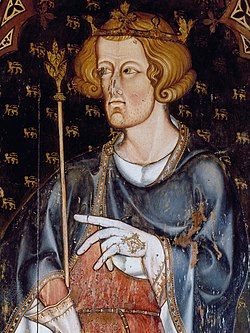
Gloves were found on the hands of King Edward I when his tomb was opened in 1774, further documenting the association between gloves and royal funerary dress.
Image source: Edward I of England
1797
When the tomb of King John was opened in 1797, gloves were found on his hands, providing physical evidence of their use in royal burial practices.
Image source: John, King of England
1200 - 1299
During the 13th century, gloves began to be worn by ladies as a fashion ornament rather than solely for protection or ceremonial purposes.
1200 - 1299
A Paris corporation or guild of glovers, known as the gantiers, existed from the 13th century, showing the early organization of glove manufacture and trade.
1294
A sumptuary law promulgated in Bologna in 1294 targeted samite gloves as part of efforts to restrain luxury and vanity.
1300 - 1399
Glove workers were already organized during the 14th century, continuing the development of specialized craft structures in the industry.
1440
By 1440, English glovers had become members of the Dubbers or Bookbinders Guild, where they remained before securing a separate institutional identity.
1500 - 1599
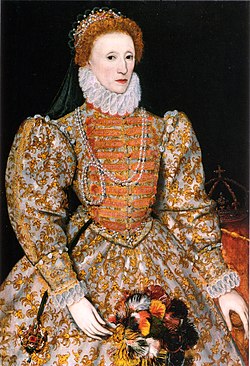
Gloves reached their greatest elaboration in the 16th century. Queen Elizabeth I set a fashion for richly embroidered and jewelled gloves and used them conspicuously in courtly audiences.
Image source: Elizabeth I
1500 - 1599
Parisian glovers developed into gantiers parfumeurs, combining glove production with the perfuming of leather using scented oils and animal-derived substances.
1500 - 1599
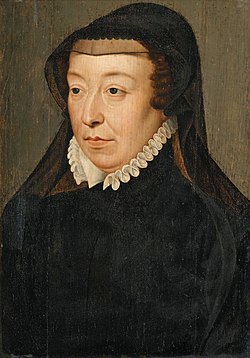
In Paris, scented leather gloves became associated with the court of Catherine de Medici. Their perfume could come from oils, musk, ambergris, and civet.
Image source: Catherine de' Medici
1558 - 1603
Elizabeth I put gloves on and took them off during audiences to draw attention to her hands, turning glove display into a deliberate element of royal presentation.
1558 - 1603
During the reign of Elizabeth I, English glovers formed their own guild instead of continuing as members of the Dubbers or Bookbinders Guild.
1560
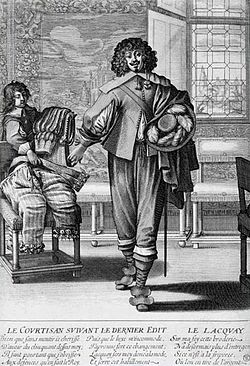
A Roman sumptuary law of 1560 targeted perfumed gloves, reflecting official concern about luxury accessories and ostentatious consumption.
Image source: Sumptuary law
1592
The 1592 Ditchley portrait of Elizabeth I features the queen holding leather gloves in her left hand, recording the importance of gloves in her visual representation.
1600 - 1699
In the 17th century, gloves made from soft chicken skin became fashionable, adding a distinctive material to the period's expanding range of luxury gloves.
1613
The Glovers' Company was incorporated in 1613, formalizing the separate guild identity that English glovers had developed during Elizabeth I's reign.
1656
Although perfumed gloves had been introduced at the court of Catherine de Medici, the trade was not specifically recognized until a royal brevet issued in 1656.
Build a timeline like this one in minutes, for free. Start Yours →
Or browse the full history timeline directory, with more than 2,500 topics.
This History of Gloves timeline was generated with the help of AI, using information found on the internet.
We work hard to keep these timelines accurate, but mistakes do get through. If you spot one, email us at [email protected] and we'll fix it for future visitors.
Generate yours with AI or build it from scratch, for free.
Export your timeline, add your own events, edit or remove AI-generated events, and much more
No credit card required.
15-day money-back guarantee.
You can create an unlimited number of timelines with up to 10 events on each one, customize how they look, export them to PDF, PNG, PowerPoint, CSV, and Excel, and share them with a link. Timelines made with Timeline Maker AI keep every event the generator created, and you can add up to 5 events of your own. Paid plans remove the event limit, add spreadsheet imports and hide Preceden's branding, and the higher-priced plan also adds collaborators, a custom logo and a custom domain.
Yes. You can cancel your subscription from your account page at any time, and you will not be charged again. Your subscription stays active for the rest of the period you already paid for.
Yes. We email you a reminder 15 days before your annual renewal, and we email you a receipt after every payment.
Yes. You can email us within 15 days of any payment, and we will issue you a full refund.
Check out our pricing docs or send us an email anytime: [email protected].