-
Resources
-
Pricing
The history of handbags traces how practical pouches evolved into fashionable, cultural, and status-defining accessories. More Less
Build a timeline like this one in minutes, for free. Start Yours →
3350 BC
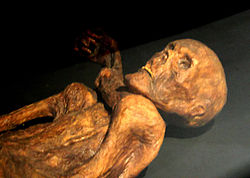
A pouch discovered with the remains of Ötzi the Iceman is regarded as the oldest known purse, dating to the period when he lived between 3350 and 3105 BC.
3350 BC - 3105 BC
The remains of Ötzi included a small handbag or pouch, providing evidence of an early personal carrying accessory.
Image source: Ötzi
2686 BCE - 2160 BCE
Early examples of handbag-like bags were uncovered in Egyptian burial sites dating from approximately 2686 to 2160 BCE.
2686 BCE - 2160 BCE
The Egyptian examples were made of leather, demonstrating the early use of durable animal hide for carrying bags.
2686 BCE - 2160 BCE
The early Egyptian bags had two straps or handles, allowing them to be carried or suspended from a stick.
2686 BCE - 2160 BCE
The construction of the early Egyptian bags enabled them to be carried directly or hung from a stick.
1600 - 1699
In the seventeenth century, young girls were taught embroidery as a skill considered necessary for marriage.
1600 - 1699
Embroidery instruction also enabled girls to create very beautiful handbags, linking decorative needlework with personal accessories.
1700 - 1899
The incorporation of pockets into men’s trousers provided built-in storage for personal possessions and reduced the need for men to carry handbags.
1700 - 1899
During the eighteenth and nineteenth centuries, men’s trousers replaced breeches, and pockets were incorporated into their loose, heavy material.
1775 - 1799
By the late eighteenth century, European fashions were moving toward slender handbag shapes.
1775 - 1799
The slender forms adopted in late-eighteenth-century Europe were inspired by the silhouettes associated with Ancient Greece and Rome.
1800 - 1999
Nineteenth- and twentieth-century men’s trousers and coats commonly contained plentiful pockets for possessions such as pipes, matches, and knives.
1800 - 1999
Men’s pockets were frequently mended by their wives, reflecting their regular use and role in everyday clothing.
1841
In 1841, Doncaster industrialist and confectionery entrepreneur Samuel Parkinson ordered a set of traveling cases and trunks.
1841
After noticing that his wife’s purse was too small and made from material unsuitable for travel, Parkinson insisted on a traveling case or bag for her personal belongings.
1841 - 1865
The traveling-bag commission helped establish the context for H. J. Cave’s promotion and production of handbags in the nineteenth century.
1865 - 2012
Although it focused on trunks after 1865, H. J. Cave continued making occasional handbags for royalty, celebrities, and special occasions.
1865
After 1865, H. J. Cave ceased actively promoting handbags and concentrated instead on trunks.
1900 - 1950
Pocketbook became another term for a woman’s handbag and was especially common in the United States during the mid-twentieth century.
2012
The Queen’s 2012 Diamond Jubilee was identified as the most recent special occasion for which H. J. Cave made one of its occasional handbags.
1900 - 1999
As handbags grew into the mainstream during the twentieth century, they became increasingly prominent personal accessories.
1900 - 1999
During the twentieth century, handbags changed from purely practical objects into symbols of their owners’ wealth and worth in society.
1900 - 1939
In the early twentieth century, Sigmund Freud argued that purses were sexually suggestive because their structure symbolized female genitalia and sexuality.
Image source: Sigmund Freud
1900 - 1950
Kissing locks were popular on handbags during the early to mid-twentieth century.
1950 - 2026
Kissing locks remain popular with vintage collectors and continue to appear in retro handbag designs.
1984
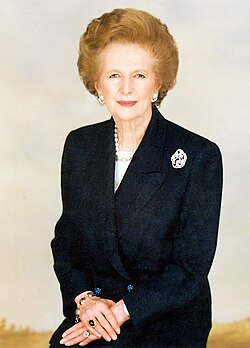
Thatcher’s handbag was made of dark blue leather in mock-croc style and was given to her by friends for her birthday in 1984.
1984 - 2013
Margaret Thatcher’s handbag became associated with her political authority; Charles Moore later wrote that it became “the sceptre of her rule.”
Image source: Margaret Thatcher
2010
H. J. Cave resumed handbag production in 2010 after its long period of concentrating primarily on trunks.
2011
As of 2011, the global trade in men’s bags and small leather goods was estimated at $4 billion per year.
2011
Ilene Hochberg Wood owns the largest privately held purse collection, totaling more than 3,000 handbags.
2011
The most expensive handbag in Ilene Hochberg Wood’s collection is valued at $110,000.
2012
As of 2012, sales of men’s accessories, including holdall bags, were increasing in North America.
2014
In 2014, the auction house Christie’s started a department dedicated to handbags.
Jun 2015
At a Christie’s handbag sale in Hong Kong in June 2015, a pink crocodile-skin Hermès Birkin bag made in 2014 sold for a then-record £146,000.
Image source: Birkin bag
May 2017
In May 2017, Christie’s Hong Kong sold a white crocodile-skin Hermès Birkin bag featuring 10.23 carats of diamonds for HK$2.9 million, or £293,000, setting a world record.
Jun 2017
In June 2017, Christie’s held its first sale devoted exclusively to handbags.
Image source: Christie's
Build a timeline like this one in minutes, for free. Start Yours →
Or browse the full history timeline directory, with more than 2,500 topics.
This History of Handbags timeline was generated with the help of AI, using information found on the internet.
We work hard to keep these timelines accurate, but mistakes do get through. If you spot one, email us at [email protected] and we'll fix it for future visitors.
Generate yours with AI or build it from scratch, for free.
Export your timeline, add your own events, edit or remove AI-generated events, and much more
No credit card required.
15-day money-back guarantee.
You can create an unlimited number of timelines with up to 10 events on each one, customize how they look, export them to PDF, PNG, PowerPoint, CSV, and Excel, and share them with a link. Timelines made with Timeline Maker AI keep every event the generator created, and you can add up to 5 events of your own. Paid plans remove the event limit, add spreadsheet imports and hide Preceden's branding, and the higher-priced plan also adds collaborators, a custom logo and a custom domain.
Yes. You can cancel your subscription from your account page at any time, and you will not be charged again. Your subscription stays active for the rest of the period you already paid for.
Yes. We email you a reminder 15 days before your annual renewal, and we email you a receipt after every payment.
Yes. You can email us within 15 days of any payment, and we will issue you a full refund.
Check out our pricing docs or send us an email anytime: [email protected].