-
Resources
-
Pricing
The history of horseshoes traces how people developed hoof protection for working, military, and sporting horses, leading to modern farriery. More Less
Build a timeline like this one in minutes, for free. Start Yours →
400 BC
The Etruscan tomb containing four bronze horseshoes was dated to approximately 400 BC, providing early archaeological evidence associated with horseshoe-like hoof protection.
Image source: Etruscan civilization
400 - 499
A complete horseshoe with nails was found in the tomb of the Frankish King Childeric I at Tournai, Belgium.
Image source: Childeric I
400 - 499
The horseshoe found in Childeric I’s tomb was notable because it was complete and included nails, illustrating an early nailed horseshoe.
1897
In 1897, four bronze horseshoes with what appear to be nail holes were discovered in an Etruscan tomb dated to around 400 BC.
900 - 999
The superstition surrounding horseshoes acquired a Christian dimension through a legend about the tenth-century saint Dunstan, who worked as a blacksmith before becoming Archbishop of Canterbury.
Image source: Dunstan
900 - 999
According to the legend associated with horseshoe superstition, Dunstan practiced blacksmithing before his later career as Archbishop of Canterbury.
900 - 999
The saint Dunstan later became Archbishop of Canterbury, a role central to the Christian version of the horseshoe legend.
1000 AD
Around 1000 AD, cast bronze horseshoes with nail holes became common in Europe.
1000 AD
The European horseshoes that became common around 1000 AD were cast from bronze and incorporated holes for nails.
1096 - 1270
Written references to horseshoes became frequent during the Crusading period, from 1096 to 1270.
1096 - 1270
By the time of the Crusades, horseshoes were widespread and were frequently mentioned in written sources.
Image source: Crusades
1200 - 1299
By the 13th century, iron horseshoes were being forged in large quantities.
1200 - 1299
By the 13th century, horseshoes could be purchased ready made rather than being produced individually for every horse.
1200 - 1399
The 13th and 14th centuries brought widespread manufacturing of iron horseshoes, strengthening the role of iron in hoof protection.
1400 - 1499
Over the centuries, a castle amassed a large collection of horseshoes, with the oldest examples dating from the 15th century.
1400 - 1499
The oldest horseshoes in the castle collection date from the 15th century, providing material evidence for the continuing history of horseshoe use.
1500 - 1599
Hot shoeing, the process of shaping a heated horseshoe immediately before placing it on a horse, became common in the 16th century.
1751
A treatise titled No Foot, No Horse was published in England in 1751, reflecting the importance of hoof care and horseshoes.
1225
Zhao Rukuo’s account implies that horses in China did not yet commonly use metal horseshoes when Zhu Fan Zhi was completed.
1225
Zhao Rukuo wrote in Zhu Fan Zhi, finished in 1225, that Arabian and Persian horses used metal horseshoes.
1271 - 1571
Although iron horseshoes became more common in Yuan China, iron horseshoes generally did not become common for another three centuries.
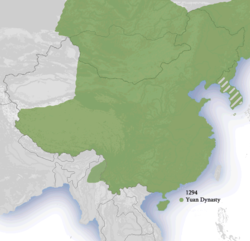
1271 - 1368
Iron horseshoes became common in China during the Yuan dynasty, which lasted from 1271 to 1368.
Image source: Yuan dynasty
1271
After the establishment of the Yuan dynasty in 1271, iron horseshoes became more common in northern China.
1271
The rise of the Yuan dynasty was followed by increased use of iron horseshoes in northern China.
1800 - 1899
Canadian marsh horseshoes helped horses avoid sinking into soft intertidal mud while working on dikes.
1800 - 1899
In mid-19th-century Canada, marsh horseshoes were used during dike-building projects.
1835
The 1835 patent was the first U.S. patent for a machine specifically described as capable of manufacturing horseshoes.
1835
Henry Burden’s patented machine was capable of making up to 60 horseshoes per hour, representing a major increase in manufacturing capacity.
1835
In 1835, Henry Burden received the first U.S. patent for a horseshoe manufacturing machine.
1847
The 1847 horseshoe-machine patent did not provide information about the machine’s throughput or its advantage over earlier designs.
1847
Another U.S. patent for a “Horshoe-machine” was granted in 1847.
Build a timeline like this one in minutes, for free. Start Yours →
Or browse the full history timeline directory, with more than 2,500 topics.
This History of Horseshoes timeline was generated with the help of AI, using information found on the internet.
We work hard to keep these timelines accurate, but mistakes do get through. If you spot one, email us at [email protected] and we'll fix it for future visitors.
Generate yours with AI or build it from scratch, for free.
Export your timeline, add your own events, edit or remove AI-generated events, and much more
No credit card required.
15-day money-back guarantee.
You can create an unlimited number of timelines with up to 10 events on each one, customize how they look, export them to PDF, PNG, PowerPoint, CSV, and Excel, and share them with a link. Timelines made with Timeline Maker AI keep every event the generator created, and you can add up to 5 events of your own. Paid plans remove the event limit, add spreadsheet imports and hide Preceden's branding, and the higher-priced plan also adds collaborators, a custom logo and a custom domain.
Yes. You can cancel your subscription from your account page at any time, and you will not be charged again. Your subscription stays active for the rest of the period you already paid for.
Yes. We email you a reminder 15 days before your annual renewal, and we email you a receipt after every payment.
Yes. You can email us within 15 days of any payment, and we will issue you a full refund.
Check out our pricing docs or send us an email anytime: [email protected].