
-
Resources
-
Pricing
The history of matches traces the development of portable fire-lighting technology, from early chemical experiments to the safe, reliable matches used today. More Less
Build a timeline like this one in minutes, for free. Start Yours →
1669
German alchemist Hennig Brand isolated phosphorus while experimenting with urine. The highly combustible element later became central to the development of friction matches, although its early production was expensive and unsuitable for ordinary household use.
Image source: Phosphorus
1680
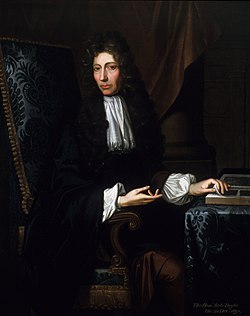
Robert Boyle investigated phosphorus and demonstrated that it could ignite sulfur-coated material. His experiments helped establish the chemical principles later used in matches, including the role of friction and heat in initiating combustion.
Image source: Robert Boyle
1805
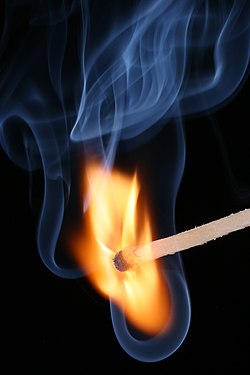
French chemist Jean Chancel created a match using a mixture that included potassium chlorate and sulfur, ignited by contact with concentrated sulfuric acid. Chancel's device was an important step toward self-igniting matches, though it was hazardous and costly.
Image source: Match
1823
Johann Wolfgang Döbereiner invented a hydrogen-producing ignition device that used platinum to catalyze combustion. The Döbereiner lamp was not a match, but it was a commercially successful alternative fire starter before inexpensive friction matches became widespread.
Image source: Döbereiner's lamp
Apr 7, 1827
English pharmacist John Walker began selling friction lights at Stockton-on-Tees. His splints carried a paste containing antimony sulfide, potassium chlorate, gum, and starch, and could be ignited by striking against a rough surface.
1829
Samuel Jones commercialized improved friction matches under the name Lucifers. Their strong odor and tendency to flare made them imperfect, but the convenient product helped establish the match as an everyday consumer technology.
1830
French chemist Charles Sauria developed a match based on white phosphorus. White phosphorus ignited readily through friction and made matches easier to use, accelerating commercial adoption despite serious toxicity and occupational-health consequences.
1835
William Newton patented a match made on a strip of paper rather than a wooden splint. Paper matches reduced material use and anticipated later book matches, although wooden matches remained dominant in most markets.
1836
Industrial matchmaking expanded in Sweden during the 1830s, building on advances in mechanized splint production and chemical preparation. Sweden later became one of the world's leading centers of match manufacturing and innovation.
1840 - 1869
Factories in Europe and North America increasingly adopted white phosphorus because it produced easy-to-light matches. The resulting growth made matches inexpensive and ubiquitous, while exposing workers to dangerous phosphorus fumes and dust.
1840 - 1879
Machinery for cutting, drying, dipping, and packing wooden splints transformed matchmaking from a largely manual craft into mass production. Mechanization sharply lowered prices and enabled matches to become a standard household commodity.
1855
Lundström safety matches received international attention at the Paris world's fair. The exposure helped promote the Swedish design abroad and encouraged manufacturers to replace more hazardous white-phosphorus products.
1881
The Diamond Match Company was established in the United States and grew into a major producer. Its scale, branding, packaging, and patents helped consolidate the American match industry.
1884
The Diamond Match Company made important match patents available to competitors after a federal antitrust challenge. The decision encouraged competition and helped spread safety-match technology in the United States.
1890 - 1899
Manufacturers developed modern strike-anywhere matches using compounds such as phosphorus sesquisulfide. Unlike safety matches, these matches could ignite when struck against many rough surfaces, increasing convenience but also fire risk.
1930 - 1959
Swedish and other manufacturers increasingly automated match forming, coating, drying, boxing, and inspection during the twentieth century. Automation improved uniformity and productivity while reducing some direct exposure to hazardous production processes.
1844
Swedish chemist Gustaf Erik Pasch moved the reactive phosphorus compound from the match head to a separate striking surface. This design reduced accidental ignition and laid the foundation for the modern safety match.
1845
Red phosphorus, a less volatile allotrope of phosphorus, became central to safety-match chemistry. Unlike white phosphorus, it does not normally ignite from ordinary friction and is substantially less toxic in factory environments.
1855
Johan Edvard Lundström and his brother Carl Frans Lundström refined and manufactured safety matches in Jönköping, Sweden. Their product used red phosphorus on the striking surface and became the model for safer mass-market matches.
Jun 1888 - Jul 1888
Workers at the Bryant & May match factory in London struck against low pay, fines, and harsh conditions, including exposure to white phosphorus. The successful action became a landmark in British labor history and drew attention to industrial exploitation.
Image source: Matchgirls' strike
Sep 26, 1906
Countries signed an international agreement in Bern to prohibit the manufacture, import, and sale of white-phosphorus matches. The convention reflected growing recognition of phosphorus poisoning and the need for coordinated industrial regulation.
1912
The United States imposed a federal tax so severe that it effectively ended the manufacture and sale of white-phosphorus matches. The policy responded to industrial poisoning and encouraged the transition to safer alternatives.
1919
The International Labour Organization adopted measures supporting the elimination of white phosphorus from match production. International labor standards reinforced national bans and made safer match chemistry the industry norm.
Image source: International Labour Organization
1940 - 1959
Match manufacturers introduced sturdier boxes, improved striking surfaces, and more reliable match-head formulations during the mid-twentieth century. These changes reduced misfires and helped matches meet increasingly demanding consumer-safety expectations.
1970 - 1999
Manufacturers and regulators increasingly required packaging that made matches harder for young children to access. The shift included improved boxes, warning labels, and standards for household fire safety.
1973
The newly established U.S. Consumer Product Safety Commission became a major authority for regulating consumer match products. Its work addressed labeling, package safety, performance, and risks associated with accidental fires.
2000 - 2025
In the twenty-first century, safety matches continued to be manufactured worldwide for candles, grills, fireplaces, camping, and emergency kits. Standards commonly address ignition reliability, packaging, labeling, and restrictions on hazardous phosphorus compounds.
1892
Joshua Pusey patented a paper matchbook with an integrated striking surface. Matchbooks used little wood, folded easily, and created a powerful new advertising format for businesses and consumer brands.
1894
The Diamond Match Company developed a practical commercial matchbook and promoted it widely. Its adoption made paper matchbooks familiar in restaurants, hotels, tobacco products, and political campaigns.
1901
Bryant & May became part of a large international match-manufacturing network and remained one of Britain's best-known match brands. The company's history connected mass production, advertising, labor activism, and public-health reform.
1917
Swedish Match traces its corporate origins to the consolidation of Swedish match interests in 1917. The company helped maintain Sweden's influential role in match production, technology, and international distribution.
1917 - 1939
Financier Ivar Kreuger built an international match empire through loans, acquisitions, and national match monopolies. The expansion demonstrated the strategic economic importance of a cheap everyday product before the empire collapsed after Kreuger's death.
1930 - 1969
Businesses widely distributed matchbooks printed with logos, slogans, telephone numbers, and illustrations. Hotels, restaurants, bars, airlines, and political campaigns used them as inexpensive advertising and everyday take-home souvenirs.
1932
The financial collapse of Ivar Kreuger's match empire followed the discovery of extensive fraud and the loss of investor confidence. The scandal reshaped ownership and financing across several national match industries.
1973
The spread of inexpensive disposable butane lighters gave consumers a reusable-feeling alternative to matches. Matches remained important for candles, fireplaces, cooking, and ceremonial uses, but their role in everyday smoking declined.
1980 - 2099
Global consolidation and competition from lighters reduced the number of large match producers in many countries. Remaining manufacturers focused on automation, export markets, private labels, specialty matches, and improved packaging.
1990 - 2029
As matchbooks became less central to daily life, collectors increasingly preserved branded covers, unusual boxes, and historical match labels. Match collections document graphic design, hospitality, tobacco culture, transportation, and local business history.
Build a timeline like this one in minutes, for free. Start Yours →
Or browse the full history timeline directory, with more than 2,500 topics.
This History of Matches timeline was generated with the help of AI, using information found on the internet.
We work hard to keep these timelines accurate, but mistakes do get through. If you spot one, email us at [email protected] and we'll fix it for future visitors.
Generate yours with AI or build it from scratch, for free.
Export your timeline, add your own events, edit or remove AI-generated events, and much more
No credit card required.
15-day money-back guarantee.
You can create an unlimited number of timelines with up to 10 events on each one, customize how they look, export them to PDF, PNG, PowerPoint, CSV, and Excel, and share them with a link. Timelines made with Timeline Maker AI keep every event the generator created, and you can add up to 5 events of your own. Paid plans remove the event limit, add spreadsheet imports and hide Preceden's branding, and the higher-priced plan also adds collaborators, a custom logo and a custom domain.
Yes. You can cancel your subscription from your account page at any time, and you will not be charged again. Your subscription stays active for the rest of the period you already paid for.
Yes. We email you a reminder 15 days before your annual renewal, and we email you a receipt after every payment.
Yes. You can email us within 15 days of any payment, and we will issue you a full refund.
Check out our pricing docs or send us an email anytime: [email protected].