-
Use Cases
-
Resources
-
Pricing
The invention of writing marks one of humanity's most transformative achievements, beginning around 3400 BCE in Mesopotamia with Sumerian cuneiform. Early writing systems emerged independently in Egypt, China, and Mesoamerica, evolving from simple pictographs and accounting tokens into complex scripts that enabled record-keeping, literature, law, and the transmission of knowledge across generations. More Less
8000 BC
% complete
A system of clay tokens used to track and exchange commodities in southern Mesopotamia dates back as early as 8000 BC. In 1977, archaeologist Denise Schmandt-Besserat proposed a theory linking the development of cuneiform to this token system.
Image source: History of writing
7000 BC
% complete
Historically, most proto-writing systems did not produce true writing systems. While the earliest writing dates to the Early Bronze Age (3300–2100 BC), proto-writing is attested as early as the 7th millennium BC.
Image source: Proto-writing
1990
% complete
During the 1990s, symbols inscribed between 3400 and 3200 BC were discovered at Abydos in Egypt, initially causing some scholars to doubt that the Mesopotamian sign system predated the Egyptian one and challenging the hypothesis that writing diffused from Mesopotamia to Egypt.
3400 BC - 3100 BC
% complete
Sumerian cuneiform is one of four independent inventions of writing most commonly recognized. It gradually evolved from proto-writing between 3400 and 3100 BC, with its gradual evolution lengthy and well-documented through its predecessor token system.
Image source: Cuneiform
3250 BC
% complete
Egyptian hieroglyphs represent another commonly recognized independent invention of writing, emerging around 3250 BC. Egyptian writing appears suddenly in the late 4th millennium BC, unlike the gradual Mesopotamian development.
Image source: Egyptian hieroglyphs
2900 BC
% complete
By the 29th century BC, writing using a wedge-shaped stylus included phonetic elements representing syllables of the Sumerian language, becoming a general-purpose writing system that gradually replaced round-stylus and sharp-stylus markings during the 27th and 26th centuries BC.
2600 BC
% complete
Sumerian cuneiform and Egyptian hieroglyphs both gradually evolved from proto-writing between 3400 and 3100 BC, with the earliest coherent texts appearing around 2600 BC.
2600 BC - 2000 BC
% complete
The Indus script, found on artefacts produced by the Indus Valley Civilization on the Indian subcontinent between roughly 2600 and 2000 BC, remains undeciphered, and whether it functioned as true writing is not agreed upon by scholars.
Image source: Indus script
2600 BC
% complete
From the 26th century BC, cuneiform was adapted to write the Akkadian language, which spread across southern Mesopotamia as Sumerian ceased to be spoken, with Akkadian writing appearing in significant quantities around 2350 BC.
Image source: Akkadian language
1300 BC
% complete
Anatolian hieroglyphic writing first appeared on Luwian royal seals from the 13th century BC, representing an indigenous Anatolian writing tradition.
Image source: Anatolian hieroglyphs
1250 BC - 1050 BC
% complete
The earliest attested Chinese characters comprise inscriptions on oracle bones and bronze vessels dating to the Late Shang period (c. 1200 – c. 1050 BC), with the earliest dated c. 1250 BC. There is no evidence of contact with literate Near Eastern civilizations, and Chinese logographic methods are distinct from cuneiform and hieroglyphs.
Image source: Oracle bone script
700 BC
% complete
Much later, around the 7th century BC, the hieratic script of ancient Egypt was further streamlined to produce the demotic script style, used for everyday administrative and literary purposes.
Image source: Demotic Egyptian script
300 BC
% complete
Mesoamerica hosts one of the four independent inventions of writing, before c. 1 AD. The earliest inscriptions identifiable as Maya date to the 3rd century BC, and the earliest decipherable text dates to 199 AD. The system was in continuous use until shortly after the Spanish conquest in the 16th century.
Image source: Maya script
2400 BC
% complete
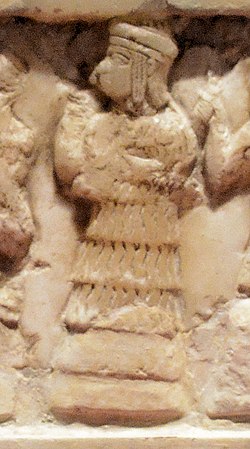
The earliest literary author known by name is Enheduanna, credited with works of Sumerian literature including Exaltation of Inanna, composed in the Sumerian language during the 24th century BC.
Image source: Enheduanna
2300 BC
% complete
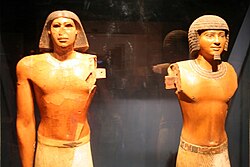
The next earliest named author after Enheduanna is Ptahhotep, credited with The Maxims of Ptahhotep, an instructional book for young men composed in Old Egyptian during the 23rd century BC.
Image source: Ptahhotep
2150 BC
% complete
While the ancient Egyptian state did not codify its laws, legal documents such as official decrees and private contracts were used during the Old Kingdom around 2150 BC.
Image source: Old Kingdom of Egypt
2100 BC
% complete
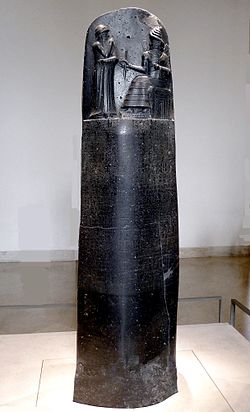
The first codes of law were written in Mesopotamia around 2100 BC, exemplified by the Code of Hammurabi (c. 1750 BC), which was inscribed on stone stelae throughout the Old Babylonian Empire.
Image source: Code of Hammurabi
500 BC - 400 BC
% complete
Herodotus and Thucydides, who wrote in 5th-century BC Athens, are considered founders of the Western historiographical tradition, incorporating genealogy and mythic accounts into systematic investigations of events.
Image source: Herodotus
500 BC - 400 BC
% complete
Socrates, active in 5th-century BC Athens, argued that writing was an inferior means of transmission of learning, as recounted in Plato's Phaedrus — though his dialogues themselves were preserved as written works authored by Plato.
100 - 200
% complete
The works of Galen, a Greek physician living in Rome during the 2nd century AD, were important in European medical practice through the Renaissance, demonstrating the enduring influence of written medical knowledge.
Image source: Galen
476
% complete
After the fall of the Western Roman Empire in the late 5th century, literature production became largely confined to the Byzantine and Sasanian empires, while in Western Europe manuscript culture became the domain of the Christian church until the 11th century. The Middle East became a crossroads for learning in Constantinople, Damascus, and Baghdad.
Image source: Fall of the Western Roman Empire
600 - 700
% complete
The spread of Islam in the 7th century brought about the rapid establishment of Arabic as a major literary language in much of the Mediterranean and Central Asia.
Image source: Spread of Islam
1000 - 1100
% complete
By the 11th century, the city of Córdoba in Andalusia had become one of the world's foremost intellectual centres and was the site of the largest library in Europe.
Image source: Córdoba, Spain
1100 - 1200
% complete
During the 12th century, universities emerged from clusters of scholars in Bologna, Salamanca, Paris, and Oxford. By 1500 there were at least 60 universities throughout Europe enrolling at least 750,000 students, with scholastic education continuing into the 17th century in some disciplines.
Image source: Medieval university
1300 - 1400
% complete
By the 14th century, the Renaissance in Europe led to a revival of Greek as a significant literary language, in addition to Latin, expanding the written intellectual traditions available to European scholars.
Image source: Renaissance
1700 - 1800
% complete
In the 18th century, dissident Scottish and English universities began offering practical instruction in rhetoric and writing to enable non-elite students to influence contemporary events.
Image source: Rhetoric
1750 - 1800
% complete
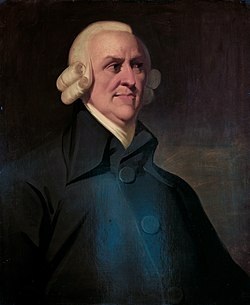
During the late 18th century, François Quesnay and Adam Smith developed systematic theories of economics for the first time, made possible by written scholarly discourse and publication.
Image source: Adam Smith
1850 - 1950
% complete
Only in the 19th century did universities begin making place for the writing of new knowledge, adopting the German model of disciplinary research. In elite British universities, tutorials required weekly student writing, while US courses in writing were often required starting in the late 19th century, with writing across the curriculum becoming a focus towards the end of the 20th century.
Image source: Composition studies
1800 BC
% complete
The first alphabetic writing was developed by workers in the Sinai Peninsula to write West Semitic languages around 1800 BC, in the context of cultural exchanges between Semitic-speaking people from the Levant and communities in Egypt.
Image source: Proto-Sinaitic script
1400 BC - 1200 BC
% complete
Early abjads, where letters generally represent only consonantal sounds, remained marginal for centuries. Towards the end of the Bronze Age, Proto-Sinaitic script split into the Proto-Canaanite alphabet (c. 1400 BC), the undeciphered Byblos syllabary, and the Ancient South Arabian script (c. 1200 BC).
1300 BC
% complete
Proto-Canaanite, which was probably influenced by the Byblos syllabary, in turn inspired the Ugaritic alphabet around 1300 BC, an early cuneiform-based alphabet used at Ugarit.
Image source: Ugaritic alphabet
1050 BC
% complete
The Phoenician alphabet emerged around 1050 BC as a direct descendant of Proto-Sinaitic. It was ultimately adapted into the Greek alphabet, profoundly shaping the future of Western writing systems.
Image source: Phoenician alphabet
700 BC - 100 BC
% complete
Evidence of Latin writing appears as early as the 7th century BC. The script gradually evolved over the following centuries, with all Latin letterforms arriving at their modern shapes by around 100 BC.
Image source: Latin script
100
% complete
Paper was invented in China during the 2nd century AD and is traditionally credited to Cai Lun. It revolutionized the availability of writing material, eventually spreading across the world.
Image source: History of paper
1000 - 1100
% complete
Paper money was first used in China during the 11th century. It and other financial instruments relied on writing, initially in the form of letters and later as specialized genres designed to facilitate transactions and guarantees of value between individuals, banks, or governments.
Image source: Banknote
1400 - 1500
% complete
As printing emerged, it largely served the knowledge needs of bureaucracy and monasteries, with substantial vernacular printing only emerging around the 15th century. Over ensuing centuries, no single authority in divided Europe could censor or control book production.
Image source: Global spread of the printing press
1450
% complete
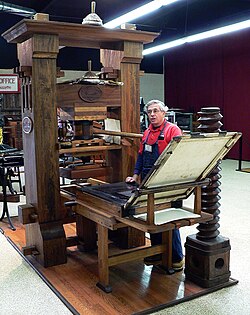
Johannes Gutenberg's invention of the moveable type printing press around 1450 created new opportunities in Europe for producing and widely distributing books, fostered much new writing, and had particular consequences for the development of knowledge, as documented by Elizabeth Eisenstein.
Image source: Printing press
1600 - 1700
% complete
Growing divisions in English society during the 16th and 17th centuries culminated in the English Civil War. In this and other periods of conflict, cheap printed materials facilitated propaganda campaigns, pamphlet wars, and often illicit challenges to the status quo.
Image source: English Civil War
1665
% complete
Printing made possible the invention of scientific journals, with the Journal des sçavans appearing in France and the Philosophical Transactions of the Royal Society in England, both in 1665, laying foundations for modern disciplinary publication practices.
Image source: Scientific journal
1800 - 1900
% complete
With the advent of wood-pulp paper in the 19th century, the cost of writing material began to steadily decline, democratizing access to writing and print.
Image source: Paper
1850 - 1900
% complete
During the late 19th century, the circulation of regional newspapers encouraged adoption and articulation of urban or localized identities by readers.
Image source: Newspaper
1900 - 2000
% complete
Through the 20th century, telegraphy, nationally circulating newspapers, and scripted national radio and television news broadcasts created horizons of attention, with both benefits and costs for public discourse.
Image source: Mass media
1900 - 2000
% complete
Advancements in mass production of paper throughout the 20th century improved strength, ink retention, and other qualities, making wood-pulp paper one of the cheapest commodities in the global economy, with unprecedented availability as a writing medium and widespread adoption for other applications.
Or browse the full history timeline directory, with more than 2,000 topics.
This Invention of Writing timeline was generated with the help of AI, using information found on the internet.
We work hard to keep these timelines accurate, but mistakes do get through. If you spot one, email us at [email protected] and we'll fix it for future visitors.
Generate yours with AI or build it from scratch, for free.
Export your timeline, add your own events, edit or remove AI-generated events, and much more
No credit card required.
Cancel anytime.
Cancel anytime.
You can create an unlimited number of timelines with up to 10 events on each one, customize how they look, export them to PDF, PNG, PowerPoint, CSV, and Excel, and share them with a link. Paid plans raise the event limit and add features like spreadsheet imports and collaborators.
Yes. You can cancel your subscription from your account page at any time, and you will not be charged again. Your subscription stays active for the rest of the period you already paid for.
Yes. We will email you a reminder before the annual renewal, and we will also email you a receipt.
Yes. You can email us within 15 days of any payment, and we will issue you a full refund.
Check out our pricing docs or send us an email anytime: [email protected].