-
Use Cases
-
Resources
-
Pricing
The history of kindergarten traces the development of early childhood education, beginning with German educator Friedrich Fröbel, who coined the term 'kindergarten' (children's garden) and opened the first such institution in 1837. His play-based, child-centered philosophy spread across Europe and America despite periods of political suppression, shaping modern preschool and early education systems worldwide. More Less
1779
In 1779, Johann Friedrich Oberlin and Louise Scheppler founded in Strasbourg an early establishment for caring for and educating preschool children whose parents were absent during the day, one of the earliest known institutions of its kind.
1780
At about the same time as the Strasbourg founding, similar infant establishments were created in Bavaria in 1780, serving children whose parents both worked outside the home.
1802
In 1802, Princess Pauline zur Lippe established a preschool center in Detmold, the capital of the then principality of Lippe, Germany (now in the State of North Rhine-Westphalia).
Image source: Kindergarten

1816
In 1816, Robert Owen, a philosopher and pedagogue, opened the first British and probably globally the first infant school in New Lanark, Scotland.
1819
Samuel Wilderspin opened his first infant school in London in 1819, and went on to establish hundreds more across Britain.
Image source: Samuel Wilderspin

1823
In 1823, Wilderspin published On the Importance of Educating the Infant Poor, based on his school, spreading ideas about early childhood education.
May 27, 1828
Countess Theresa Brunszvik (1775–1861), who had known and been influenced by Johann Heinrich Pestalozzi, opened an Angyalkert ('angel garden' in Hungarian) on May 27, 1828, in her residence in Buda, the first of eleven care centers she founded for young children.
1836
In 1836, Countess Theresa Brunszvik established an institute for the foundation of preschool centers, furthering the spread of early childhood care institutions.
1837
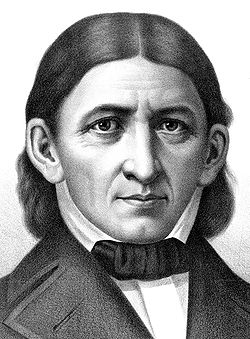
Friedrich Fröbel (1782–1852) opened a 'play and activity' institute in 1837, in Bad Blankenburg, in the principality of Schwarzburg-Rudolstadt, as an experimental social experience for children entering school.
Image source: Friedrich Fröbel
1840
In 1840, the well-connected educator Emily Ronalds was the first British person to study Fröbel's approach, and he urged her to transplant his kindergarten concepts in England.
This History of Kindergarten timeline was generated with the help of AI, using information found on the internet.
We work hard to keep these timelines accurate, but mistakes do get through. If you spot one, email us at [email protected] and we'll fix it for future visitors.
Generate yours with AI or build it from scratch, for free.