
-
Use Cases
-
Resources
-
Pricing
The Great Wall of China is a series of fortifications built across the northern borders of China to protect against invasions. Constructed and rebuilt by multiple dynasties over more than two millennia, its most famous sections were built during the Ming Dynasty. Stretching thousands of kilometers, it stands today as one of the most impressive architectural feats in human history and a UNESCO World Heritage Site. More Less
800 BC - 500 BC
% complete
The Chinese were already familiar with the techniques of wall-building by the time of the Spring and Autumn period between the 8th and 5th centuries BC, laying the groundwork for the later construction of extensive defensive walls across northern China.
Image source: Great Wall of China
700 BC - 601 BC
% complete
The first walls that would eventually become part of the Great Wall date to the 7th century BC, when rival states constructed fortifications to defend their territories against one another and against nomadic peoples.
221 BC - 206 BC
% complete
During the Qin dynasty, the earlier walls built by separate states were joined together into a unified defensive system under the first emperor, creating the earliest version of what would become known as the Great Wall of China.
206 BC
% complete
There are no surviving historical records indicating the exact length and course of the Qin walls, as most of the ancient walls have eroded away over the centuries, and very few sections remain today.
386 - 1227
% complete
Dynasties founded by non-Han ethnic groups also built border walls: the Xianbei-ruled Northern Wei, the Khitan-ruled Liao, Jurchen-led Jin and the Tangut-established Western Xia all constructed defensive walls, reaching further north than Han-built fortifications.
1115 - 1234
% complete
The Jurchen-led Jin dynasty constructed extensive border fortifications in northern China; these Jin dynasty walls are now measured at 4,010 km (2,492 mi) in length, forming a significant portion of the total Great Wall remains.
1200 - 1400
% complete
None of the Europeans who visited China or Mongolia in the 13th and 14th centuries, such as Giovanni da Pian del Carpine, William of Rubruck, Marco Polo, Odoric of Pordenone and Giovanni de' Marignolli, mentioned the Great Wall.
1346
% complete
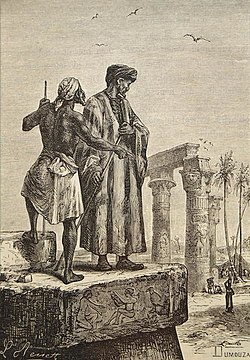
The North African traveler Ibn Battuta, who visited China during the Yuan dynasty around 1346, had heard about China's Great Wall, possibly before he had even arrived in China.
Image source: Ibn Battuta
1514
% complete
Soon after the Portuguese reached Ming China by ship in the early 16th century, accounts of the Great Wall began circulating in Europe, although no European was able to see it for another 100 years.
1559
% complete
In 1559, in his work 'A Treatise of China and the Adjoyning Regions', Gaspar da Cruz offered an early discussion of the Great Wall, one of the first Western accounts of the structure.
Image source: Gaspar da Cruz
1563
% complete
One of the earliest European descriptions of the Great Wall may be the one contained in João de Barros's 1563 work 'Asia', an important early Portuguese account of the region.
Image source: João de Barros
1585
% complete
Bishop Juan González de Mendoza described the Great Wall in 1585 as a 'superbious and mightie work' of architecture, though he had not seen it himself. Other early Western accounts include those of Gaspar da Cruz, Bento de Goes, and Matteo Ricci.
1605
% complete
Perhaps the first recorded instance of a European actually entering China via the Great Wall came in 1605, when the Portuguese Jesuit brother Bento de Góis reached the northwestern Jiayu Pass from India.
Image source: Bento de Góis
1368 - 1644
% complete
Successive dynasties expanded the wall system over the centuries, but the best-known sections of the Great Wall of China were built by the Ming dynasty between 1368 and 1644.
1450 - 1460
% complete
During the mid–15th century, the Ming also built a so-called 'Liaodong Wall', extending the defensive system to protect the Liaodong region in the northeast.
Image source: Great Wall of China
1567 - 1570
% complete
Under general Qi Jiguang's supervision, 1,200 watchtowers from Shanhaiguan Pass to Changping were constructed between 1567 and 1570, and sections of the ram-earth wall were faced with bricks.
Image source: Qi Jiguang
1600 - 1644
% complete
Towards the end of the Ming, the Great Wall helped defend the empire against the Manchu invasions that began around 1600, serving as a critical barrier for decades.
1644
% complete
The Manchus were finally able to cross the Great Wall in 1644, after Beijing had already fallen to Li Zicheng's short-lived Shun dynasty, paving the way for the Qing conquest of China.
1754
% complete
One of the earliest known references to the myth of the Great Wall's visibility from the Moon appears in a letter written in 1754 by the English antiquary William Stukeley, who claimed it 'may be discerned at the Moon'.
Image source: William Stukeley
1800 - 1899
% complete
By the nineteenth century, 'the Great Wall of China' had become standard in English and French, although other European languages such as German continue to refer to it as 'the Chinese wall'.
1895
% complete
In 1895 Henry Norman wrote that besides its age the Wall 'enjoys the reputation of being the only work of human hands on the globe visible from the Moon', further spreading the myth.
1932
% complete
The myth that the Great Wall is visible from the Moon also appears in the 1932 strip of Ripley's Believe It or Not!, helping make the erroneous claim ubiquitous in popular culture.
Image source: Ripley's Believe It or Not!
2007
% complete
In 2007 it was estimated that more than 60 km (37 mi) of the wall in Gansu province may disappear in the next 20 years, due to erosion from sandstorms.
Jul 7, 2007
% complete
The Great Wall of China is a UNESCO World Heritage Site, and in 2007 it was voted one of the New 7 Wonders of the World in a global poll.
Image source: New 7 Wonders of the World
2009
% complete
In 2009, 180 km of previously unknown sections of the Ming wall concealed by hills, trenches and rivers were discovered with the help of infrared range finders and GPS devices.
2012
% complete
A 2012 report by the National Cultural Heritage Administration states that 22% of the Ming Great Wall, or 1,961 km (1,219 mi), has disappeared.
2012
% complete
In 2012, based on existing research and a comprehensive mapping survey, the National Cultural Heritage Administration concluded the remaining Great Wall sites include 10,051 wall sections, 29,510 individual buildings, and 2,211 fortifications, spanning 21,196.18 km (13,170.70 mi).
2012
% complete
Qin, Han and earlier Great Wall sites are 3,080 km (1,914 mi) long in total; Jin dynasty border fortifications are 4,010 km (2,492 mi); the remainder date back to Northern Wei, Northern Qi, Sui, Tang, the Five Dynasties, Song, Liao and Xixia.
2014
% complete
In 2014 a portion of the wall near the border of Liaoning and Hebei province was repaired with concrete, drawing criticism as an inappropriate restoration of the historic structure.
Mar 2015 - Apr 2015
% complete
In March and April 2015, nine sections with a total length of more than 10 km (6 mi), believed to be part of the Great Wall, were discovered along the border of Ningxia autonomous region and Gansu province.
2018 - 2019
% complete
The Badaling Great Wall saw nearly 10 million visitors in 2018, and in 2019, a daily limit of 65,000 visitors was instated to protect the site from overcrowding.
Image source: Badaling
2023
% complete
A section of the wall in Shanxi province was severely damaged in 2023 by construction workers, who widened an existing gap in the wall to make a shortcut for an excavator to pass through.
Or browse the full history timeline directory, with more than 2,000 topics.
This Great Wall of China timeline was generated with the help of AI, using information found on the internet.
We work hard to keep these timelines accurate, but mistakes do get through. If you spot one, email us at [email protected] and we'll fix it for future visitors.
Generate yours with AI or build it from scratch, for free.
Export your timeline, add your own events, edit or remove AI-generated events, and much more
No credit card required.
Cancel anytime.
Cancel anytime.
You can create an unlimited number of timelines with up to 10 events on each one, customize how they look, export them to PDF, PNG, PowerPoint, CSV, and Excel, and share them with a link. Paid plans raise the event limit and add features like spreadsheet imports and collaborators.
Yes. You can cancel your subscription from your account page at any time, and you will not be charged again. Your subscription stays active for the rest of the period you already paid for.
Yes. We will email you a reminder before the annual renewal, and we will also email you a receipt.
Yes. You can email us within 15 days of any payment, and we will issue you a full refund.
Check out our pricing docs or send us an email anytime: [email protected].