-
Use Cases
-
Resources
-
Pricing
The Colosseum, also known as the Flavian Amphitheatre, is an iconic oval amphitheater in the center of Rome, Italy. Built between 70 and 80 AD during the reigns of emperors Vespasian and Titus, it was the largest amphitheater ever constructed, capable of holding up to 80,000 spectators. It hosted gladiatorial contests, public spectacles, animal hunts, and even mock naval battles. Today, it stands as one of the most visited monuments in the world and a UNESCO World Heritage Site. More Less
500 - 599
% complete
The arena of the Colosseum continued to be used for contests well into the 6th century, long after the height of the gladiatorial games in the Roman Empire.
Image source: Colosseum
1100 - 1199
% complete
The numerous vaulted spaces in the arcades under the seating were converted into housing and workshops, and are recorded as still being rented out as late as the 12th century.
1200
% complete
Around 1200 the Frangipani family took over the Colosseum and fortified it, apparently using it as a castle during the turbulent medieval period in Rome.
1300 - 1349
% complete
In the early to mid 14th century, the Pope's relocation to Avignon caused a population decline in Rome that left the region insecure, contributing to the neglect of the Colosseum.
1349
% complete
Severe damage was inflicted on the Colosseum by the great earthquake in 1349, causing the outer south side, lying on a less stable alluvial terrain, to collapse. Large segments have collapsed following earthquakes over the centuries.
1671
% complete
In 1671, Cardinal Paluzzo Altieri authorized its use for bullfights; a public outcry caused the idea to be hastily abandoned.
580
% complete
By the late 6th century a small chapel had been built into the structure of the amphitheater, though this apparently did not confer any particular religious significance on the building as a whole.
1100 - 1199
% complete
The Colosseum was not included in the itineraries compiled for the use of pilgrims nor in works such as the 12th century Mirabilia Urbis Romae, which claims the Circus Flaminius – but not the Colosseum – as the site of martyrdoms.
1377
% complete
In 1377, after the Pope's return to Rome, the Colosseum was restored by a religious order called Arciconfraternita del SS. Salvatore ad Sancta Sanctorum, who then inhabited a northern portion of it until as late as the early 19th century.
1500 - 1699
% complete
During the 16th and 17th century, Church officials sought a productive role for the Colosseum, considering various uses for the massive ancient structure.
1566 - 1572
% complete
Pope Pius V (1566–1572) is said to have recommended that pilgrims gather sand from the arena of the Colosseum to serve as a relic, on the grounds that it was impregnated with the blood of martyrs, although some of his contemporaries did not share his conviction.
1585 - 1590
% complete
Pope Sixtus V (1585–1590) planned to turn the building into a wool factory to provide employment for Rome's prostitutes, though this proposal fell through with his premature death.
Image source: Pope Sixtus V
1653
% complete
A century after Pius V, Fioravante Martinelli listed the Colosseum at the head of a list of places sacred to the martyrs in his 1653 book Roma ex ethnica sacra.
1740 - 1758
% complete
Leonard of Port Maurice persuaded Pope Benedict XIV (1740–1758) to forbid the quarrying of the Colosseum and erect Stations of the Cross around the arena, which remained until February 1874.
Image source: Pope Benedict XIV
1749
% complete
In 1749, Pope Benedict XIV endorsed the view that the Colosseum was a sacred site where early Christians had been martyred. However, there is no historical evidence to support this claim, nor evidence that anyone before the 16th century suggested it.
1770 - 1783
% complete
Benedict Joseph Labre spent the later years of his life within the walls of the Colosseum, living on alms, before he died in 1783. He was later canonized as a saint.
Image source: Benedict Joseph Labre
Feb 1874
% complete
The Stations of the Cross that Pope Benedict XIV had erected around the arena remained in place until February 1874, when they were finally removed after more than a century.
700 - 799
% complete
In the 8th century, an epigram attributed to the Venerable Bede celebrated the symbolic significance of the statue: "as long as the Colossus stands, so shall Rome; when the Colossus falls, Rome shall fall; when Rome falls, so falls the world."
1000
% complete
By the year 1000 the Latin name "Colosseum" had been coined to refer to the amphitheatre from the nearby "Colossus Solis", the giant bronze statue that once stood beside it.
1100 - 1399
% complete
The spelling was sometimes altered in Medieval Latin: coloseum and coliseum are attested from the 12th and 14th centuries respectively, showing the evolving form of the name.
1100 - 1199
% complete
In the 12th century, the structure was recorded as the amphitheatrum colisei, 'Amphitheatre of the Colossus', cementing the association with the nearby colossal statue.
1367
% complete
The Italian colosseo, or coliseo, are attested as referring first to the amphitheatre in Rome, and then to any amphitheatre (as Italian: culiseo in 1367).
1460
% complete
By 1460, an equivalent of the name existed in Catalan: coliseu, reflecting the spread of the term across Romance languages.
1495
% complete
By 1495 the Spanish word coliseo had appeared, derived from the same root referring to the Roman amphitheatre and later any large theatre or arena.
1500
% complete
In the High Middle Ages, the Flavian amphitheatre is attested as the late 13th-century Old French: colosé, and in Middle French as: colisée by the early 16th century, by which time the word could be applied to any amphitheatre.
1533
% complete
An English translation by John Bourchier, 2nd Baron Berners, of Antonio de Guevara's biography of Marcus Aurelius in about 1533 referred to "this Emperour, beynge with the Senate at Collisee", an early English use of the name.
1548
% complete
By 1548 the Portuguese equivalent coliseu had appeared, completing the spread of the name across the major Iberian languages.
1643
% complete
The Colosseum has a wide and well-documented history of flora ever since Domenico Panaroli made the first catalogue of its plants in 1643, beginning centuries of botanical observation at the site.
1807 - 1827
% complete
The façade was reinforced with triangular brick wedges in 1807 and 1827, shoring up the damaged perimeter wall. The distinctive wedges at each end remain visible today.
1810 - 1814
% complete
The arena substructure was partly excavated in 1810–1814, one of several 19th-century efforts funded by popes to repair and restore the Colosseum, which still retains its Christian connection today.
1831 - 1846
% complete
The interior of the Colosseum was repaired in 1831 and again in 1846, part of ongoing restoration efforts throughout the 19th century.
1855
% complete
The peak of plant diversity at the Colosseum came in 1855, when 420 species were recorded, explained by climate change in Rome, bird migration, flower blooming, and the growth of the city around the monument.
1871
% complete
Attempts were made in 1871 to eradicate the vegetation growing on the Colosseum, because of concerns over the damage that was being caused to the masonry, but much of it has returned since.
1874
% complete
The arena substructure was excavated again in 1874, continuing the gradual exposure of the hypogeum beneath the arena floor.
1928 - 2000
% complete
The Summer Olympic Games medal from 1928 to 2000, designed by Giuseppe Cassioli, features a depiction of the Colosseum, making the monument an enduring symbol of the Olympic movement.
1930 - 1939
% complete
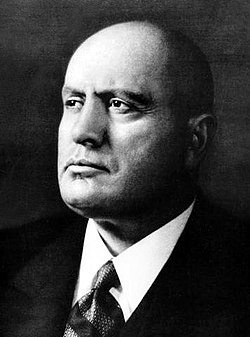
The interior was repaired in the 1930s, and the arena substructure was fully exposed under Benito Mussolini, revealing the hypogeum network beneath the arena floor.
Image source: Benito Mussolini
1942
% complete
It was built for Mussolini for the Universal Exhibition of 1942 but the exhibition never happened due to the outbreak of World War II.
Image source: EUR, Rome
1948
% complete
Capital punishment was abolished in Italy in 1948, laying the groundwork for the Colosseum's later role as a symbol of the international campaign against the death penalty.
Image source: Capital punishment in Italy
1993 - 2000
% complete
The effects of pollution and general deterioration over time prompted a major restoration programme carried out between 1993 and 2000, at a cost of 40 billion lire ($19.3 million or €20.6 million at 2000 prices).
2000
% complete
Several anti–death penalty demonstrations took place in front of the Colosseum in 2000, as the monument became a symbol of the international campaign against capital punishment.
May 2002
% complete
Performers who have played at the Colosseum in recent years have included Ray Charles in May 2002, marking the start of a series of high-profile concerts at the ancient venue.
Image source: Ray Charles
May 2003
% complete
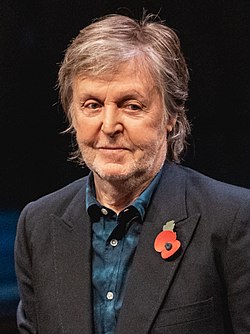
Paul McCartney performed at the Colosseum in May 2003, continuing the tradition of world-renowned musicians playing at the historic Roman landmark.
Image source: Paul McCartney
Sep 2005
% complete
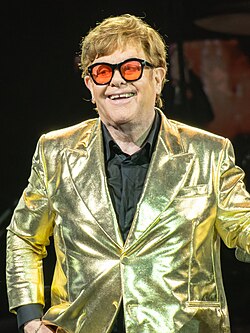
Elton John performed at the Colosseum in September 2005, adding his name to the list of legendary artists who have played at the ancient amphitheatre.
Image source: Elton John
Jul 2006
% complete
Billy Joel performed at the Colosseum in July 2006, rounding out a series of concerts by music legends at the iconic Roman venue.
Image source: Billy Joel
2010
% complete
Beneath the Colosseum, a network of subterranean passageways that were once used for transporting wild animals and gladiators to the arena opened to the public in summer 2010.
2011
% complete
In 2011, Diego Della Valle, head of the shoe firm Tod's, entered into an agreement with local officials to sponsor a €25 million restoration of the Colosseum. Work was planned to begin at the end of 2011, taking up to two and a half years.
Image source: Diego Della Valle
Apr 2012
% complete
The American state of Connecticut abolished capital punishment in April 2012, prompting the Colosseum to be illuminated in gold in recognition later that year.
Image source: Capital punishment in Connecticut
Nov 2012
% complete
Most recently, the Colosseum was illuminated in gold in November 2012 following the abolishment of capital punishment in the American state of Connecticut in April 2012, underscoring its role as a symbol against the death penalty.
2013
% complete
Due to the controversial nature of using a public–private partnership to fund the restoration, work was delayed and began in 2013 under the sponsorship agreement with Tod's.
Jul 1, 2016
% complete
After three years, the work was completed on 1 July 2016, when the Italian minister of culture, Dario Franceschini, also announced that funds have been committed to replace the floors by the end of 2018.
Image source: Dario Franceschini
2017
% complete
Since 2017, the top two levels of the Colosseum have been opened for guided visits, offering visitors new panoramic views of Rome and the arena below.
Oct 2024 - Sep 2025
% complete
Restoration work which restored decorative stuccoes and added a walkway was conducted on the passage from October 2024 to September 2025, enhancing visitor access to newly restored areas.
Oct 27, 2025
% complete
The restored passage, featuring recovered decorative stuccoes and a new walkway, will be opened to the public on 27 October 2025.
2026
% complete
Another restoration project is planned to begin in 2026, continuing the long tradition of preserving the Colosseum for future generations.
Or browse the full history timeline directory, with more than 2,000 topics.
This Colosseum timeline was generated with the help of AI, using information found on the internet.
We work hard to keep these timelines accurate, but mistakes do get through. If you spot one, email us at [email protected] and we'll fix it for future visitors.
Generate yours with AI or build it from scratch, for free.
Export your timeline, add your own events, edit or remove AI-generated events, and much more
No credit card required.
Cancel anytime.
Cancel anytime.
You can create an unlimited number of timelines with up to 10 events on each one, customize how they look, export them to PDF, PNG, PowerPoint, CSV, and Excel, and share them with a link. Paid plans raise the event limit and add features like spreadsheet imports and collaborators.
Yes. You can cancel your subscription from your account page at any time, and you will not be charged again. Your subscription stays active for the rest of the period you already paid for.
Yes. We will email you a reminder before the annual renewal, and we will also email you a receipt.
Yes. You can email us within 15 days of any payment, and we will issue you a full refund.
Check out our pricing docs or send us an email anytime: [email protected].