-
Use Cases
-
Resources
-
Pricing
The Punic Wars were a series of three major conflicts fought between the Roman Republic and the Carthaginian Empire between 264 and 146 BC. Driven by rivalry over trade and territorial control, particularly in Sicily and the western Mediterranean, these wars included legendary figures such as Hannibal Barca and Scipio Africanus. Rome's eventual victory resulted in the total destruction of Carthage and established Rome as the dominant power of the ancient Mediterranean world. More Less
264 BC
% complete
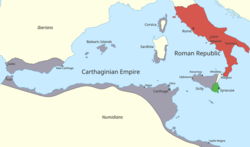
Rome and Carthage went to war over control of Sicily after a dispute involving the Mamertines of Messana. Rome's intervention on Sicily directly challenged Carthaginian influence, beginning a 23-year struggle for dominance of the western Mediterranean.
Image source: First Punic War
262 BC
% complete
Roman forces besieged and captured the Carthaginian stronghold of Agrigentum in Sicily. The victory, Rome's first major land success of the war, drove Carthage back to defensive coastal positions and encouraged Rome to pursue a naval strategy.
Image source: Battle of Agrigentum
260 BC
% complete
Determined to challenge Carthaginian naval supremacy, Rome constructed a fleet of over 100 quinqueremes, reportedly modeled on a captured Carthaginian ship. This marked the birth of Roman sea power.
Image source: Roman navy

260 BC
% complete
Commanded by Gaius Duilius, the new Roman fleet defeated the Carthaginians off Mylae in northern Sicily using the corvus boarding bridge, which turned naval battles into infantry fights favoring Roman legionaries.
Image source: Battle of Mylae
256 BC
% complete
One of the largest naval battles in history, fought between massive Roman and Carthaginian fleets off southern Sicily. The Roman victory allowed an invasion force to sail for Africa, threatening Carthage itself.
Image source: Battle of Cape Ecnomus
256 BC - 255 BC
% complete
Marcus Atilius Regulus led a Roman army into Africa, winning early victories and bringing Carthage close to surrender terms. The campaign collapsed when Spartan mercenary Xanthippus crushed the Romans at the Battle of Tunis, capturing Regulus.
Image source: Marcus Atilius Regulus (consul 267 BC)
255 BC - 249 BC
% complete
Storms destroyed several Roman fleets with enormous loss of life, while Carthage under Adherbal won at Drepana in 249 BC. These setbacks stalled Roman momentum despite continued fighting on Sicily.
Image source: Battle of Drepana
250 BC - 241 BC
% complete
Rome laid siege to the key Carthaginian port of Lilybaeum in western Sicily. The prolonged siege drained both sides but kept pressure on Carthage's last strongholds on the island.
Image source: Siege of Lilybaeum (250–241 BC)
247 BC - 241 BC
% complete
Hamilcar Barca took command in Sicily and waged an effective guerrilla war from Mount Hercte and Mount Eryx, raiding Roman positions and keeping Carthaginian resistance alive despite dwindling resources.
Image source: Hamilcar Barca
241 BC
% complete
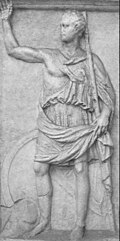
Carthage agreed to evacuate Sicily, pay a large indemnity, and refrain from warring against Syracuse and her allies. Rome gained its first overseas province, marking a turning point in Mediterranean power dynamics.
Image source: Treaty of Lutatius
Mar 10, 241 BC
% complete
A rebuilt Roman fleet under Gaius Lutatius Catulus decisively defeated the Carthaginian relief fleet near the Aegates Islands, cutting off supplies to Sicily and forcing Carthage to sue for peace.
Image source: Battle of the Aegates
241 BC - 238 BC
% complete
Unpaid Carthaginian mercenaries from Sicily revolted against Carthage, joined by Libyan subjects. The brutal conflict, chronicled by Polybius, nearly destroyed Carthage before Hamilcar Barca suppressed it.
Image source: Mercenary War
238 BC
% complete
Exploiting Carthage's weakness during the Mercenary War, Rome annexed Sardinia and later Corsica, imposing an additional indemnity. Carthage resented this perceived violation of the peace treaty, fueling future hostility.
Image source: Sardinia and Corsica
237 BC
% complete
Hamilcar Barca led Carthaginian forces into southern Spain to rebuild Carthaginian power and extract silver wealth. His son-in-law Hasdrubal the Fair and son Hannibal expanded these holdings into a powerful base.
Image source: Barcid conquest of Hispania
227 BC
% complete
Hasdrubal the Fair founded Qart Hadasht (New Carthage, modern Cartagena) as the capital of Carthaginian Spain, consolidating Barcid rule and resources for future campaigns.
Image source: Cartagena, Spain
226 BC
% complete
Hasdrubal agreed with Rome that Carthaginian forces would not cross the Ebro River in Spain. Rome's subsequent alliance with Saguntum south of the river created friction that would spark the next war.
Image source: Ebro Treaty
221 BC
% complete
After Hasdrubal's assassination, the 26-year-old Hannibal assumed command of Carthaginian forces in Spain. Sworn to eternal hostility toward Rome, he prepared for a bold offensive war.
Image source: Hannibal
219 BC
% complete
Hannibal besieged and captured Saguntum, a Roman ally south of the Ebro. Rome demanded his surrender; Carthage refused, and the Second Punic War began.
Image source: Siege of Saguntum
218 BC
% complete
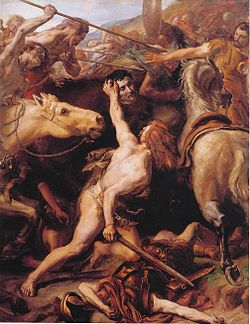
Hannibal defeated Roman armies on the Po plain, first skirmishing at the Ticinus River where consul Scipio was wounded, then crushing a larger force under Sempronius Longus at the Trebia.
Image source: Battle of the Trebia
218 BC
% complete
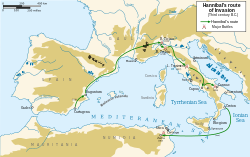
Hannibal marched his army, including war elephants, from Spain across Gaul and over the Alps into Italy, one of the most celebrated military feats in history, arriving with a battle-hardened though diminished force.
Image source: Hannibal's crossing of the Alps
217 BC
% complete
Dictator Fabius Maximus 'Cunctator' avoided pitched battles, shadowing Hannibal and harassing his supply lines. His cautious Fabian strategy bought Rome time despite criticism at home.
Image source: Fabian strategy
Jun 217 BC
% complete
Hannibal ambushed consul Flaminius' army along the shores of Lake Trasimene, annihilating it in one of the largest ambushes in military history and throwing Rome into crisis.
Image source: Battle of Lake Trasimene
216 BC - 211 BC
% complete
Following Cannae, Capua, Rome's second city, allied with Hannibal. Rome besieged it for years, recapturing it in 211 BC and punishing the defectors severely.
Aug 2, 216 BC
% complete
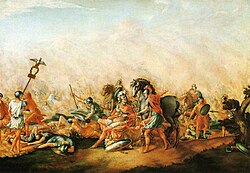
Hannibal's double envelopment annihilated a Roman army of roughly 80,000 men under consuls Varro and Paullus. Cannae remains a model tactical masterpiece and was Rome's worst defeat, prompting many southern Italian allies to defect.
Image source: Battle of Cannae
213 BC - 212 BC
% complete
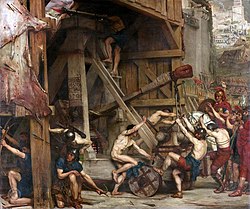
Roman forces under Marcellus besieged Syracuse, which had sided with Carthage. Famous defenses attributed to Archimedes delayed capture until the city fell in 212 BC, during which Archimedes was killed.
Image source: Siege of Syracuse (213–212 BC)
209 BC
% complete
The young Publius Cornelius Scipio stormed New Carthage by land and sea, seizing Carthage's Spanish capital, its treasury, and hostages, turning the tide in Iberia.
Image source: Battle of New Carthage
207 BC
% complete
Hannibal's brother Hasdrubal, marching reinforcements from Spain into Italy, was intercepted and defeated by consuls Claudius Nero and Livius Salinator at the Metaurus River. Hasdrubal was killed, ending hopes of reinforcing Hannibal.
Image source: Battle of the Metaurus
206 BC
% complete
Scipio routed the last major Carthaginian army in Spain under Mago and Hasdrubal Gisco, securing Roman control of Iberia and its rich silver mines.
Image source: Battle of Ilipa
204 BC
% complete
Now consul, Scipio sailed from Sicily to Africa, landing near Utica. He defeated Carthaginian forces and their Numidian allies, forcing Carthage to recall Hannibal from Italy.
Image source: Scipio Africanus
Oct 202 BC
% complete
Scipio, aided by Numidian cavalry under Masinissa, defeated Hannibal in the decisive battle of the war. Carthage sued for peace, ceding Spain, paying indemnities, and accepting restrictions that ended its status as a great power.
Image source: Battle of Zama
201 BC
% complete
Carthage accepted harsh peace terms: payment of 200 talents annually for fifty years, loss of all territory outside Africa, no war without Roman permission, and a reduced navy. Rome emerged as the dominant Mediterranean power.
Image source: Second Punic War
195 BC - 183 BC
% complete
Fleeing Roman pressure, Hannibal served as a military advisor to Antiochus III and other eastern rulers before dying by suicide in Bithynia around 183 BC as Rome demanded his surrender.
157 BC
% complete
Senator Cato the Elder famously ended every speech with 'Carthago delenda est,' stoking Roman fear of Carthage's economic recovery and pushing Rome toward a final confrontation.
Image source: Carthago delenda est
149 BC
% complete
Using Carthage's defensive war against Numidia as pretext, Rome issued impossible demands, including the abandonment of the city itself. Carthage refused and resolved to resist, beginning the Third Punic War.
Image source: Third Punic War
149 BC - 146 BC
% complete
Roman forces blockaded Carthage by land and sea. Early assaults failed, but under Scipio Aemilianus the siege tightened, culminating in the breach of the harbor wall in 146 BC.
Image source: Siege of Carthage (Third Punic War)
146 BC
% complete
After fierce street fighting lasting days, Carthage fell. Tens of thousands of survivors were sold into slavery and the city was razed. Rome annexed its territory as the province of Africa, ending the Punic Wars.
Image source: Siege of Carthage (Third Punic War)
Or browse the full history timeline directory, with more than 2,000 topics.
This Punic Wars timeline was generated with the help of AI, using information found on the internet.
We work hard to keep these timelines accurate, but mistakes do get through. If you spot one, email us at [email protected] and we'll fix it for future visitors.
Generate yours with AI or build it from scratch, for free.
Export your timeline, add your own events, edit or remove AI-generated events, and much more
No credit card required.
Cancel anytime.
Cancel anytime.
You can create an unlimited number of timelines with up to 10 events on each one, customize how they look, export them to PDF, PNG, PowerPoint, CSV, and Excel, and share them with a link. Paid plans raise the event limit and add features like spreadsheet imports and collaborators.
Yes. You can cancel your subscription from your account page at any time, and you will not be charged again. Your subscription stays active for the rest of the period you already paid for.
Yes. We will email you a reminder before the annual renewal, and we will also email you a receipt.
Yes. You can email us within 15 days of any payment, and we will issue you a full refund.
Check out our pricing docs or send us an email anytime: [email protected].