
-
Resources
-
Pricing
King Philip's War was a major conflict between several Native nations and English colonists in New England from 1675 to 1678. Led in part by Metacom, known to the English as King Philip, the war grew from land disputes, political tensions, cultural differences, and colonial expansion. More Less
Build a timeline like this one in minutes, for free. Start Yours →
1616 - 1619
An epidemic, probably introduced through European contact, devastated coastal Indigenous communities in what is now New England. The population collapse altered the regional balance of power and left survivors vulnerable to further land pressure and political competition.
Image source: Wampanoag
1621
After the arrival of the Plymouth colonists, Wampanoag leaders including Ousamequin, known to the English as Massasoit, established diplomatic and trading relations with the settlement. The alliance brought periods of cooperation but also introduced expanding colonial land claims, disease, religious pressure, and economic dependence.
Mar 22, 1621
Ousamequin and Plymouth leaders concluded an agreement promising peace, mutual defense, and the return of stolen property. The treaty became an important foundation of early Plymouth–Wampanoag diplomacy, although later generations disputed how far it restricted Indigenous sovereignty and land use.
Image source: Treaty of Ghent
1646
Puritan minister John Eliot began preaching Christianity in the Massachusett language. His mission created so-called praying towns, where Indigenous converts were expected to adopt aspects of English settlement, governance, and religion while remaining under increasing colonial supervision.
Image source: John Eliot (missionary)
1651
Natick was established as the first major praying town associated with John Eliot's missionary program. It became a center of Christian Indigenous life but also demonstrated the tensions between Indigenous autonomy and colonial efforts to reshape Native communities.
Image source: Natick, Massachusetts
1660 - 1674
During the 1660s and early 1670s, Plymouth colonists expanded into Wampanoag territory through purchases, disputed deeds, and political pressure. The loss of land, restrictions on movement, and colonial demands for submission eroded the earlier alliance between Plymouth and the Wampanoag.
Image source: King Philip's War
1661
Ousamequin, the Wampanoag sachem who had maintained a long alliance with Plymouth, died in the early 1660s. His death removed a major diplomatic stabilizer and was followed by increasing tension involving his sons Wamsutta and Metacom.
Image source: Massasoit
1662
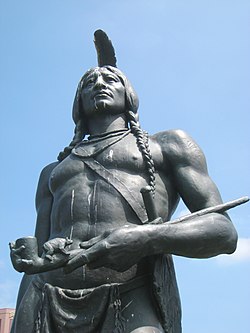
After Wamsutta's death, his brother Metacom, known to the English as King Philip, became the principal Wampanoag sachem. He inherited worsening disputes with Plymouth and worked to preserve Wampanoag independence amid expanding English settlement.
Image source: Metacomet
1662
Wamsutta, also known as Alexander, died in 1662 before his brother Metacom became sachem.
1671
Plymouth officials confronted Metacom over reports that Wampanoag people were acquiring weapons and communicating with other Native nations. Metacom denied plans for rebellion and agreed to surrender some firearms, but the investigation deepened distrust on both sides.
Jan 1675
John Sassamon, a Christian Indigenous interpreter and former aide to Metacom, warned Plymouth authorities that some Wampanoag leaders were preparing for war. His report intensified colonial fears and contributed directly to the crisis that followed his death.
Jan 29, 1675
Sassamon's body was found beneath the ice of Assawompsett Pond. Plymouth authorities treated the death as murder and arrested three Wampanoag men, despite disputes over the evidence and the political implications of trying Indigenous defendants in a colonial court.
Jun 8, 1675
John Sassamon's alleged killers—Wampanoag men including Tobias, John, and Mattashunamo—were convicted and executed by Plymouth authorities. The executions convinced many Wampanoag that peaceful accommodation and colonial justice could no longer protect them.
1675 - 1678
The war destroyed farms, homes, livestock, mills, and trading networks across New England. Colonial governments incurred heavy debts, taxes rose, and frontier communities experienced prolonged insecurity even after large-scale fighting ended.
1676
Puritan minister Increase Mather published A Brief History of the War with the Indians in New-England. The work interpreted the conflict as divine judgment and helped establish an enduring English colonial narrative of the war.
Image source: Increase Mather
1676 - 1680
Disease, starvation, battlefield deaths, executions, enslavement, and displacement caused severe Indigenous population losses. Many surviving communities lost political independence and access to ancestral lands, while colonial settlement expanded into territories formerly controlled by Native nations.
1676
Plymouth and other colonies enslaved or transported many Indigenous captives after the war, sending people to Bermuda, the Caribbean, and other destinations. Families were separated, and enslavement became one of the principal colonial punishments imposed on defeated communities.
Image source: End of slavery in the United States
Aug 1676
After Metacom's death, colonial authorities quartered his body and displayed parts of it as a warning. His head was exhibited at Plymouth for years, while his wife and son were sold into slavery, illustrating the punitive and racialized aftermath of the war.
Aug 28, 1676
Anawan, a senior Wampanoag military leader, was captured at Anawan Rock in Rehoboth by Captain Benjamin Church. His surrender symbolized the collapse of organized Wampanoag resistance in southeastern New England.
Image source: Anawan Rock
Sep 1676
Despite his surrender, Anawan was executed by colonial authorities. His death demonstrated that military defeat did not necessarily lead to negotiated protection for Indigenous leaders or communities.
Apr 12, 1678
The Treaty of Casco Bay ended major fighting between Massachusetts and many Eastern Abenaki communities in present-day Maine. The agreement required the return or payment of captives and acknowledged a form of English authority, but it did not resolve underlying disputes over land and sovereignty.
Image source: Casco Bay
1682
Mary Rowlandson's The Sovereignty and Goodness of God recounted her eleven-week captivity and release. The bestselling account shaped colonial views of Indigenous people, warfare, providence, and captivity for generations.
Image source: A Narrative of the Captivity and Restoration of Mrs. Mary Rowlandson
1716
Benjamin Church's memoir, edited and published by his son Thomas, described colonial campaigns against Metacom and other Indigenous leaders. It promoted Church's reputation as an effective frontier commander and became a major source for later histories of the war.
Jun 1675 - Jul 1675
Colonial forces pursued Metacom and Wampanoag communities around Mount Hope in present-day Rhode Island. The campaign failed to capture the sachem and drove the conflict into a wider cycle of raids, counterraids, and destruction.
Jun 20, 1675
Wampanoag fighters attacked English settlers around Swansea, Plymouth Colony, after escalating disputes and retaliatory seizures. The assault is conventionally treated as the beginning of King Philip's War, which quickly spread across much of southern New England.
Sep 9, 1675
The New England Confederation declared war on the Natives on September 9, 1675.
Dec 19, 1675
A combined force from Connecticut and Massachusetts attacked the Narragansett winter camp in the Great Swamp of southern Rhode Island. Hundreds of Narragansett people were killed, including noncombatants, and the attack destroyed a major Indigenous refuge and brought the Narragansett decisively into the war.
Image source: Great Swamp Fight
Feb 1676
Weymouth, Massachusetts, was attacked during the coordinated Indigenous offensive of February 1676. Raids against communities close to Boston exposed the vulnerability of colonial settlements and disrupted farms, roads, and local trade.
Feb 10, 1676
Indigenous forces attacked Lancaster, Massachusetts, killing settlers and capturing Mary Rowlandson and others. Rowlandson's later published captivity narrative became one of the most influential English accounts of the war and portrayed the conflict through a strongly Puritan perspective.
Image source: Mary Rowlandson
Feb 21, 1676
Indigenous fighters attacked Medfield, Massachusetts, near Boston. The raid demonstrated that Native forces could strike deeply into settled areas and generated panic throughout the Massachusetts Bay Colony.
Mar 14, 1676
Indigenous fighters attacked Northampton in the Connecticut River Valley. The assault formed part of a broad campaign against exposed English settlements and pressured colonists to concentrate in fortified towns.
Apr 21, 1676
Indigenous forces attacked Sudbury, Massachusetts, and defeated or scattered several colonial parties sent to relieve the town. The battle was among the most serious Indigenous successes near the heart of Massachusetts Bay.
May 2, 1676
Mary Rowlandson was released after colonial authorities paid a ransom. Her captivity narrative, published later in 1682, described the experience as a test of Puritan faith and became a foundational text in the history of American captivity literature.
May 19, 1676
Massachusetts militia under William Turner attacked a large Indigenous encampment at Peskeompsut near present-day Gill, Massachusetts. The surprise assault killed many people, including noncombatants, and prompted a devastating Indigenous counterattack during the retreat.
Image source: Battle of Turner's Falls
Jun 1676
Indigenous raids continued against Swansea, Rehoboth, and nearby settlements in southeastern New England. These attacks reflected the persistence of Wampanoag resistance even after colonial armies had destroyed many villages and food supplies.
Aug 12, 1676
Metacom was located and killed near Mount Hope in present-day Bristol, Rhode Island, by a colonial force assisted by John Alderman, a Christian Wampanoag. The sachem's death marked the collapse of organized Wampanoag resistance, although fighting continued elsewhere.
Dec 1675
Following the Great Swamp attack, surviving Narragansett leaders allied with Metacom and other Indigenous forces. Their participation added experienced fighters and strengthened resistance across Rhode Island, Massachusetts, and Connecticut.
Image source: Narragansett people
Aug 6, 1676
Weetamoo, a prominent Pocasset leader and ally of Metacom, drowned while attempting to cross the Taunton River near present-day Bridgewater, Massachusetts. English forces displayed her severed head and body, an act intended to terrorize Indigenous communities.
Image source: Weetamoo
Build a timeline like this one in minutes, for free. Start Yours →
Or browse the full history timeline directory, with more than 2,500 topics.
This King Philip's War timeline was generated with the help of AI, using information found on the internet.
We work hard to keep these timelines accurate, but mistakes do get through. If you spot one, email us at [email protected] and we'll fix it for future visitors.
Generate yours with AI or build it from scratch, for free.
Export your timeline, add your own events, edit or remove AI-generated events, and much more
No credit card required.
15-day money-back guarantee.
You can create an unlimited number of timelines with up to 10 events on each one, customize how they look, export them to PDF, PNG, PowerPoint, CSV, and Excel, and share them with a link. Timelines made with Timeline Maker AI keep every event the generator created, and you can add up to 5 events of your own. Paid plans remove the event limit, add spreadsheet imports and hide Preceden's branding, and the higher-priced plan also adds collaborators, a custom logo and a custom domain.
Yes. You can cancel your subscription from your account page at any time, and you will not be charged again. Your subscription stays active for the rest of the period you already paid for.
Yes. We email you a reminder 15 days before your annual renewal, and we email you a receipt after every payment.
Yes. You can email us within 15 days of any payment, and we will issue you a full refund.
Check out our pricing docs or send us an email anytime: [email protected].