-
Use Cases
-
Resources
-
Pricing
1850 - 1912
The Balkan Wars grew out of the incomplete emergence of nation-states in the European territories of the Ottoman Empire during the second half of the nineteenth century. The competing claims of Balkan peoples and the wider interests of the Great Powers made the Ottoman question a persistent source of tension.
Image source: Eastern question
1877 - 1878
Serbia gained substantial territory during the Russo-Turkish War of 1877–1878. These gains strengthened Serbian statehood and encouraged later ambitions to expand into areas inhabited by Serbs that remained under Ottoman rule.
Image source: Russo-Turkish War (1877–1878)
1878
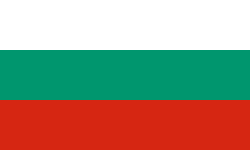
Bulgaria became an autonomous principality in 1878. Its new political status provided a base for later efforts to unite Bulgarians and acquire Ottoman-held territories in Macedonia and Thrace.
Image source: Principality of Bulgaria
1881
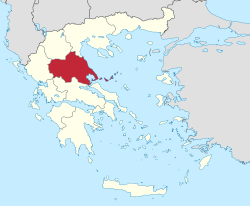
Greece acquired Thessaly in 1881, expanding the Greek kingdom. Although Greece later lost a small area back to the Ottoman Empire in 1897, the acquisition strengthened Greek territorial aspirations.
Image source: Thessaly
1885
Bulgaria incorporated the formerly distinct province of Eastern Rumelia in 1885. This act demonstrated the possibility of territorial unification and intensified Bulgarian interest in other Ottoman-controlled regions.
Image source: Bulgarian unification
1900 - 1912
In the late nineteenth and early twentieth centuries, Bulgaria and Greece competed for influence and territory in Ottoman Macedonia and Thrace. Their rivalry became a central strategic issue before and during the Balkan Wars.
1904 - 1912
From 1904, Greek and Bulgarian bands fought one another and the Ottoman army in low-intensity warfare in Macedonia. This Struggle for Macedonia deepened national rivalries and prepared the ground for later military confrontation.
Image source: Macedonian Struggle
1911 - 1912
Italy's victory in the Italo-Turkish War of 1911–1912 exposed Ottoman weakness. Together with revolts in the Albanian provinces, the loss of Libya suggested that the Empire could not easily retaliate against another war.
Image source: Italo-Turkish War
1911 - 1912
A series of three revolts in Ottoman-held Albania demonstrated the weakness of the Young Turk regime. The unrest contributed to the fall of the Young Turks after a coup and encouraged Balkan states to judge the Empire vulnerable.
Jul 1908
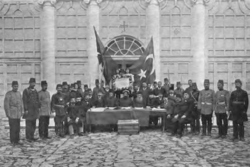
The Young Turk Revolution of July 1908 reinstated constitutional monarchy in the Ottoman Empire and began the Second Constitutional Era. Sultan Abdul Hamid II was forced to restore the constitution of 1876 and reconvene parliament.
Image source: Young Turk Revolution
Oct 1908
In October 1908, Austria-Hungary used the Ottoman political upheaval to annex Bosnia and Herzegovina, which it had occupied since 1878. The annexation heightened regional tension and alarmed Serbia and Russia.
Image source: Bosnian Crisis
Oct 1908
Bulgaria declared independence in 1908, following its earlier autonomous status. Unlike the earlier declaration, this independence was internationally recognized, strengthening Bulgaria's position in the Balkans.
1909
After Sultan Abdul Hamid II's failed counter-coup in 1909, the liberal element of the Young Turks was sidelined. Nationalists became dominant, contributing to a more Ottomanizing and confrontational political climate.
Mar 1909
In March 1909, Serbia was forced to accept Austria-Hungary's annexation of Bosnia and Herzegovina and to restrain anti-Habsburg agitation by Serbian nationalists. The settlement temporarily reduced the immediate risk of a wider conflict.
15 Aug 1909
On 15 August 1909, the Military League, a group of Greek officers, launched a coup. The intervention reflected political and military dissatisfaction in Greece during the period of intensifying regional competition.
Mar 1910
The Greek Military League dissolved itself in March 1910. Its coup nevertheless formed part of the political changes that preceded Greece's later participation in the Balkan League.
Aug 1910
Montenegro followed Bulgaria's precedent and became a kingdom in August 1910. The change strengthened its independent position before it joined the coalition against the Ottoman Empire.
Image source: Kingdom of Montenegro
1912
Following the Italian victory in Libya, the Albanian revolts, and the growing severity of Ottomanizing policies, the Young Turks fell from power after a coup in 1912. The regime remained influential and later established a dictatorship in June 1913.
Apr 1911
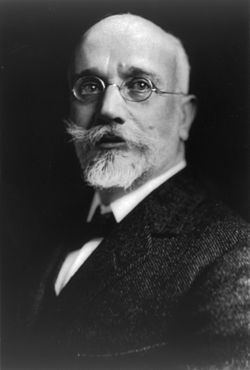
In April 1911, Greek prime minister Eleutherios Venizelos attempted to reach an agreement with the Bulgarian prime minister and form a defensive alliance against the Ottoman Empire. The effort failed because Bulgaria doubted the strength of the Greek army.
Image source: Eleftherios Venizelos
Oct 1, 1911 - 1912
Negotiations among the Balkan governments began in the latter part of 1911 and were conducted in secret. Their purpose was to coordinate against the Ottoman Empire despite serious disputes over the future division of Macedonia and Thrace.
Image source: Balkan League
Dec 1911
In December 1911, Bulgaria and Serbia agreed to begin negotiations for an alliance under close Russian inspection. The talks addressed their shared opposition to Ottoman rule while also confronting their competing claims in Macedonia.
1912
During the summer of 1912, Greece reached informal gentlemen's agreements with Serbia and Montenegro. These understandings completed the practical cooperation needed for coordinated action against the Ottoman Empire.
13 Mar 1912
The treaty between Serbia and Bulgaria was signed on 29 February/13 March 1912. It established the core bilateral relationship of the future Balkan League and included arrangements concerning the disputed Macedonian territories.
Apr 1912
In April 1912, Montenegro and Bulgaria reached an agreement that included financial aid to Montenegro if it went to war with the Ottoman Empire. The arrangement helped bring Montenegro into the emerging coalition.
29 May 1912
The alliance pact between Greece and Bulgaria was finally signed on 16/29 May 1912. Unlike the Serbo-Bulgarian agreement, it did not stipulate a specific division of Ottoman territories.
Sep 1912
By the end of September 1912, Bulgaria had formal written alliances with Serbia, Greece, and Montenegro. The four Balkan states were now organized into the Balkan League, although their territorial objectives remained divergent.
1912 - 1923
The wars and their aftermath transformed the region's population. By 1923, only 38 percent of the Muslim population recorded in the Balkans in 1912 still lived there, while a majority of Balkan Turks had been killed or expelled.
Image source: Balkan Wars
1913
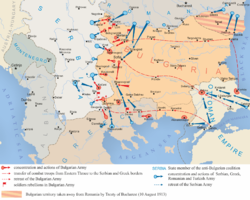
Montenegro and the Ottoman Empire later intervened against Bulgaria, while Romania attacked Bulgaria from the north in violation of a peace treaty. Bulgaria was thus confronted by former allies and additional regional opponents.
Image source: Second Balkan War
1913
The Second Balkan War dealt a catastrophic blow to Russian policy in the Balkans, which had long focused on access to the warm seas. Russia's loss of influence over Bulgaria left Serbia as its crucial remaining ally in the region.
1913 - 1914
After 1913, Russia could not afford to lose its last important ally in the Balkans. This left Russian foreign policy with little alternative but to support Serbia when its crisis with Austria-Hungary escalated in 1914.
1913 - 1914
The Balkan Wars created the conditions for the July Crisis of 1914. When a Serbian-backed organization assassinated Archduke Franz Ferdinand, the resulting confrontation between Serbia and Austria-Hungary escalated rapidly into the First World War.
Image source: July Crisis
1 Jun 1913
After disputes over the division of Macedonia, Greece and Serbia settled their differences and signed a military alliance on 1 June, corresponding to 19 May 1913 in the Old Style calendar. The agreement was directed against Bulgaria.
Jun 1913
Bulgaria made acceptance of Russian arbitration conditional, effectively refusing substantive discussion. Russia consequently repudiated its alliance with Bulgaria, a major diplomatic failure on the eve of the Second Balkan War.
Image source: Russo-Turkish War (1877–1878)
8 Jun 1913
On 8 June 1913, Tsar Nicholas II sent identical personal messages to the kings of Bulgaria and Serbia. He offered to arbitrate their dispute under the provisions of the 1912 Serbo-Bulgarian treaty in an effort to prevent a new war.
29 Jun 1913
On 29 June, corresponding to 16 June in the Old Style calendar, Bulgaria attacked its former allies Serbia and Greece. General Savov issued the orders under the direct authority of Tsar Ferdinand I, without consulting the Bulgarian government or issuing an official declaration of war.
30 Jun 1913
During the night of 30 June, corresponding to 17 June in the Old Style calendar, Bulgarian forces attacked the Serbian army at the Bregalnica River and then the Greek army at Nigrita. The attacks initiated the main fighting of the Second Balkan War.
10 Aug 1913
The Treaty of Bucharest, signed on 10 August 1913, drew the principal epilogue to the nine-month pan-Balkan war. It formalized the postwar territorial arrangements among the Balkan states.
Image source: Treaty of Bucharest (1913)
30 Sep 1913
The Treaty of Constantinople was signed on 30 September 1913. Afterward, Bulgaria sought an alliance with the Ottoman Empire against Greece and Serbia in support of its claims to Macedonia.
Nov 1913
By November 1913, Bulgaria was forced to admit defeat. Greece received international recognition for its claim to Thessaloniki, while the territorial settlement overturned many Bulgarian expectations from the First Balkan War.
14 Nov 1913
The Treaty of Athens, signed on 14 November 1913 between the Ottoman Empire and Greece, concluded the conflict between the two countries. Relations nevertheless remained poor and war nearly broke out again in spring 1914.
26 Sep 1912
On 13/26 September 1912, Ottoman mobilization in Thrace forced Serbia and Bulgaria to order their own mobilization. The military preparations sharply increased the likelihood that the alliance system would lead to open war.
8 Oct 1912
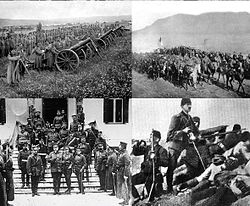
The First Balkan War began on 8 October 1912 when the Balkan League attacked the Ottoman Empire. Bulgaria, Greece, Serbia, and Montenegro sought to conquer Ottoman territories inhabited by their respective ethnic populations.
Image source: First Balkan War
17 Oct 1912
The Ottoman Empire withdrew its ambassadors from Sofia, Belgrade, and Athens, while Bulgarian, Serbian, and Greek diplomats left Constantinople. The Balkan states delivered their war declaration on 4/17 October 1912.
26 Oct 1912
On 12 November, corresponding to 26 October 1912 in the Old Style calendar, Greece expanded its occupied area. Greek forces joined the Serbian army to the northwest while the main Greek army moved east toward Kavala and encountered the Bulgarian advance.
23 Jan 1913
Nazım Pasha, chief of staff of the Ottoman Army, was held responsible for the military failure and was assassinated on 23 January 1913 during the 1913 Ottoman coup d'état.
Image source: 1913 Ottoman coup d'état
30 May 1913
The First Balkan War officially ended with the Treaty of London on 30 May, corresponding to 17 May in the Old Style calendar. The settlement was negotiated with the Great Powers after pressure was applied to Greece and Serbia, which had delayed signing to strengthen their defensive positions.
Or browse the full history timeline directory, with more than 2,500 topics.
This Balkan Wars timeline was generated with the help of AI, using information found on the internet.
We work hard to keep these timelines accurate, but mistakes do get through. If you spot one, email us at [email protected] and we'll fix it for future visitors.
Generate yours with AI or build it from scratch, for free.
Export your timeline, add your own events, edit or remove AI-generated events, and much more
No credit card required.
Cancel anytime.
Cancel anytime.
You can create an unlimited number of timelines with up to 10 events on each one, customize how they look, export them to PDF, PNG, PowerPoint, CSV, and Excel, and share them with a link. Paid plans raise the event limit and add features like spreadsheet imports and collaborators.
Yes. You can cancel your subscription from your account page at any time, and you will not be charged again. Your subscription stays active for the rest of the period you already paid for.
Yes. We will email you a reminder before the annual renewal, and we will also email you a receipt.
Yes. You can email us within 15 days of any payment, and we will issue you a full refund.
Check out our pricing docs or send us an email anytime: [email protected].