-
Use Cases
-
Resources
-
Pricing
500 BC - 401 BC
The early Chinese kites associated with Mozi and Lu Ban were wooden flying objects called muyuan. Their reported use represents one of the earliest known chapters in kite history.
Image source: Kite
500 BC - 401 BC
Chinese tradition credits the 5th-century BC philosophers Mozi and Lu Ban with inventing the kite. They are said to have flown wooden kites known as muyuan (木鸢).
1200 - 1299
Stories about kites were first brought to Europe by Marco Polo toward the end of the 13th century, helping introduce European audiences to kite traditions from Asia.
1326
Walter de Milemete's 1326 treatise De nobilitatibus, sapientiis, et prudentiis regum depicts knights flying a kite carrying a black-powder-filled firebomb over a city wall.
1400
Around 1400, Konrad Kyeser described dragon kites in Bellifortis, providing an early European written reference to a distinctive kite form.
Image source: Bellifortis
1500 - 1699
Sailors brought kites back to Europe from Japan and Malaysia during the 16th and 17th centuries, expanding European exposure to Asian kite designs and practices.
1392 - 1910
Kites were used by Admiral Yi of Korea's Joseon dynasty, which ruled from 1392 to 1910. Their use formed part of the military and signaling history associated with Korean kites.
1592 - 1598
During the Japanese invasions of Korea, Admiral Yi commanded his navy using kites. The practice is associated with the Korean naval campaigns of 1592–1598.
Image source: Yi Sun-sin
1841
The Yōkaichi festival exemplifies Japan's tradition of constructing and flying exceptionally large kites in organized public celebrations.
1841
The Yōkaichi Giant Kite Festival in Higashiōmi, Shiga, began in 1841. It is identified as the most famous example of Japan's giant-kite festivals.
1853 - 1879
Chinese immigrants arrived in Guyana from 1853 to 1879. Bridget Brereton and Kevin Yelvington speculate that Chinese indentured immigrants introduced kite flying to the then colony of British Guiana during the mid-19th century.
Image source: Kite
1853 - 1879
The arrival of Chinese people in Guyana between 1853 and 1879 provided the migration context for the proposed transmission of kite-flying practices to British Guiana.
1860 - 1910
The period from 1860 to about 1910 became Europe's golden age of kiting. During these decades, kite flying attracted sustained public, scientific, and design interest.
1885
Easter 1885 is cited as a good example in the history of kite-flying customs, illustrating the connection between kite use and seasonal communal observances.
2007
The 2007 film The Kite Runner depicts kite flying as an important popular ritual. The film's setting is Afghanistan, which is identified as neighboring the context discussed in the source.
2007
Kite flying is described as a popular ritual, especially among young people. This cultural practice is depicted in the 2007 film The Kite Runner, although the story is set in neighboring Afghanistan.
Image source: The Kite Runner
1700 - 1899
Although initially regarded as curiosities, kites became useful vehicles for scientific research during the 18th and 19th centuries. Their ability to lift instruments and observers made them valuable experimental platforms.
1752
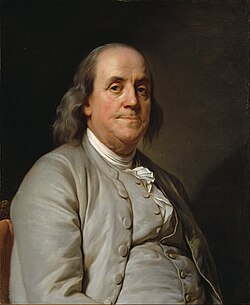
In 1752, Benjamin Franklin published an account of a kite experiment intended to demonstrate that lightning was caused by electricity. The experiment became one of the best-known scientific episodes in kite history.
Image source: Benjamin Franklin
1847
Francis Ronalds and William Radcliffe Birt described a very stable kite at Kew Observatory as early as 1847. The kite was trialled to support self-registering meteorological instruments at height.
1900 - 1999
The wartime minesweeping kite represented a specialized technological use of kites, applying their aerodynamic pull to position a submerged sweep-wire.
1900 - 1999
The 20th century saw the development of many new kite designs. Advances in construction and changing uses broadened the range of kite forms.
1914 - 1918
During the First World War, a kite was used in minesweeping operations. The foil was attached to a sweep-wire and submerged to the required depth while being towed over a minefield.
2011
In 2011, children on Al-Waha beach in the Gaza Strip flew 12,350 kites simultaneously, achieving the world record for the most kites flown at once.
2011
The record-setting flight involved children flying 12,350 kites together at Al-Waha beach in Gaza, making the event a major collective kite-flying achievement.
Sep 23, 2014
On 23 September 2014, a team led by Robert Moore flew a 129-square-foot (12-square-meter) kite to 16,009 feet (4,880 meters) above ground level.
Sep 23, 2014
The 2014 flight led by Robert Moore demonstrated the altitude possible with a large kite, reaching 16,009 feet, or 4,880 meters, above ground level.
Aug 2016
In August 2016, three spectators were killed in separate incidents in India involving fighter kites. The incidents demonstrated that enhanced kite lines could pose a lethal public hazard.
Aug 2016
The deaths associated with fighter kites during India's Independence Day period in August 2016 precipitated a ban on certain types of enhanced line.
Jul 2020
The government of Egypt banned kite flying in July 2020, citing safety and national security concerns.
Jul 2020
Following Egypt's July 2020 ban, authorities seized 369 kites in Cairo and 99 in Alexandria. The enforcement action accompanied the government's stated safety and national-security concerns.
Or browse the full history timeline directory, with more than 2,500 topics.
This History of Kites timeline was generated with the help of AI, using information found on the internet.
We work hard to keep these timelines accurate, but mistakes do get through. If you spot one, email us at [email protected] and we'll fix it for future visitors.
Generate yours with AI or build it from scratch, for free.
Export your timeline, add your own events, edit or remove AI-generated events, and much more
No credit card required.
Cancel anytime.
Cancel anytime.
You can create an unlimited number of timelines with up to 10 events on each one, customize how they look, export them to PDF, PNG, PowerPoint, CSV, and Excel, and share them with a link. Paid plans raise the event limit and add features like spreadsheet imports and collaborators.
Yes. You can cancel your subscription from your account page at any time, and you will not be charged again. Your subscription stays active for the rest of the period you already paid for.
Yes. We will email you a reminder before the annual renewal, and we will also email you a receipt.
Yes. You can email us within 15 days of any payment, and we will issue you a full refund.
Check out our pricing docs or send us an email anytime: [email protected].