-
Use Cases
-
Resources
-
Pricing
The Maldives is an Indian Ocean archipelago whose recorded history spans over two millennia. Originally settled by peoples from South Asia and Sri Lanka who practiced Buddhism and Hinduism, the islands converted to Islam in 1153 CE under Sultan Dhovemi. The Maldives endured periods of Portuguese (1558–1573) and Dutch influence before becoming a British protectorate in 1887. It gained full independence from Britain on 26 July 1965, became a republic in 1968 under President Ibrahim Nasir, and has since developed into a prominent tourist destination and a member of international bodies such as the UN and SAARC. More Less
500 BC
% complete
Austronesian, South Asian, and Arab seafarers gradually settled the coral atolls of the Maldives. These early settlers developed a maritime culture based on fishing, coconut cultivation, and trade across the Indian Ocean.
Image source: History of the Maldives
300 BC
% complete
The Redin, believed to be among the earliest settlers, constructed mounds, causeways, and harbor structures across the atolls, leaving behind megalithic remains that hint at an organized pre-Buddhist society.
100 AD
% complete
Roman and Greek sources such as the Periplus of the Erythraean Sea mention cowrie shell exports from the Maldives, which served as currency across Asia and Africa, establishing the islands as a key trading hub.
Image source: Maldives
300 AD
% complete
Buddhism arrived from Sri Lanka and India and became the principal religion of the islands for over a thousand years. Numerous stupas, monasteries, and carved artifacts from this era have been found throughout the archipelago.
Image source: Buddhism in the Maldives
1153 AD
% complete
The last Buddhist king, Dhovemi, converted to Islam taking the name Sultan Muhammad al-Adil after a Moroccan scholar Abu al-Barakat reportedly defeated a sea demon. Islam became the state religion, beginning nearly eight centuries of sultanic rule.
Image source: Islam in Maldives
1343 AD
% complete
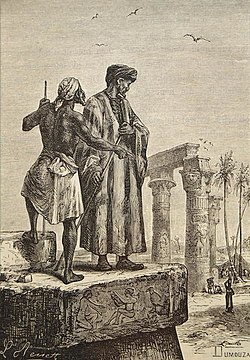
The famed Moroccan traveler Ibn Battuta spent time in the Maldives, serving as a judge and marrying into local nobility. His detailed writings provide one of the richest medieval accounts of Maldivian society, governance, and customs.
Image source: Ibn Battuta
1507 AD - 1518 AD
% complete
Portuguese ships began attacking Maldivian vessels and coastal settlements seeking control of the lucrative cowrie and spice trade. Early raids culminated in a brief Portuguese occupation of Male before local resistance drove them out.
1558 AD
% complete
Portugal seized control of the Maldives, installing garrisons in Male and ruling through appointed governors. The occupation disrupted traditional Islamic institutions and imposed Christian missionary activity on the population.
Image source: Portuguese conquest of the Jaffna kingdom
1573 AD
% complete
Muhammad Thakurufaanu of Utheemu led a guerrilla campaign against Portuguese occupiers and liberated Male in 1573. He became Sultan and national hero, restoring independence and Islamic rule; his victory is commemorated annually on National Day.
Image source: Muhammad Thakurufaanu al-Auzam
1654 AD - 1796 AD
% complete
After the Dutch took Ceylon from Portugal, the Maldives became a Dutch protectorate in practice, with the sultanate retaining internal autonomy while Dutch colonial authorities controlled external relations and trade.
1796 AD
% complete
With Britain's capture of Ceylon, British naval power supplanted Dutch influence in the Indian Ocean. The Maldives came informally under British protection, though it remained internally self-governing for decades.
1887 AD
% complete
Sultan Ibrahim Nooraddeen signed an agreement making the Maldives a formal British protectorate. Britain handled defense and foreign affairs while the sultanate retained complete control over domestic matters, a status that lasted until 1965.
1932 AD
% complete
Sultan Shamsuddeen III proclaimed the Maldives' first constitution, creating an elected People's Assembly and limiting absolute royal power. The document marked the beginning of modern constitutional government in the islands.
Jan 1, 1953
% complete
Following the death of Sultan Abdul Majeed, the Maldives declared its first republic with Mohamed Amin Didi as president. He introduced social reforms including women's education, but his government collapsed within a year amid unrest.
Image source: Mohamed Amin Didi
1954 AD
% complete
A referendum led to the abolition of the short-lived republic and restoration of the monarchy. Muhammad Fareed Didi became Sultan, returning the country to traditional rule under continued British protection.
1959 AD - 1963 AD
% complete
Discontent over centralization sparked rebellion in Addu Atoll, with three southern atolls forming the breakaway United Suvadive Republic under Abdullah Afif. The secession was crushed by 1963, reunifying the country.
Image source: United Suvadive Republic
Mar 15, 1965
% complete
Negotiations between Prime Minister Ibrahim Nasir and Britain concluded with an agreement ending the protectorate. The Maldives gained full political independence on July 26, 1965, joining the United Nations shortly afterward.
Image source: Independence of the Maldives
Nov 11, 1968
% complete
A national referendum abolished the centuries-old sultanate and established the second republic. Ibrahim Nasir became the first president, launching modernization programs including tourism development and airport construction.
Image source: Ibrahim Nasir
Apr 12, 1966
% complete
The new international airport on Hulhulé Island near Male opened, connecting the remote archipelago to global air routes and laying the foundation for the tourism industry that would transform the economy.
Image source: Velana International Airport
Feb 16, 1972
% complete
The first tourist resort opened on Vihamanaafushi (Kurumba) with Italian visitors arriving soon after. Tourism rapidly grew into the backbone of the Maldivian economy, turning pristine atolls into world-famous destinations.
Image source: Tourism in the Maldives
Nov 11, 1978 - Nov 11, 2008
% complete
Gayoom won his first presidential election unopposed and went on to rule for thirty years across six terms. His tenure saw economic growth and infrastructure development alongside authoritarian rule and periodic unrest.
Image source: Maumoon Abdul Gayoom
Jul 13, 1982
% complete
The Maldives joined the Commonwealth of Nations, strengthening its diplomatic ties with former British colonies and integrating further into the international community as a small island developing state.
Nov 3, 1988 - Nov 4, 1988
% complete
Around eighty armed mercenaries from a Sri Lankan Tamil group attempted to overthrow the government, seizing key buildings in Male. Indian forces launched Operation Cactus, swiftly recapturing the capital and rescuing the government.
Image source: 1988 Maldives coup attempt
Dec 26, 2004
% complete
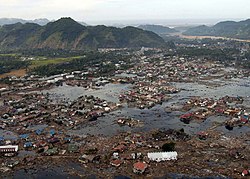
Waves from the massive undersea earthquake struck dozens of inhabited islands, killing over eighty people, displacing thousands, and causing damage exceeding half the nation's GDP, prompting major international reconstruction efforts.
Image source: 2004 Indian Ocean earthquake and tsunami
2008 AD
% complete
A new constitution introduced multiparty elections and separation of powers. In the landmark October election, opposition leader Mohamed Nasheed defeated longtime president Maumoon Abdul Gayoom, ending three decades of one-man rule.
Oct 17, 2009
% complete
President Mohamed Nasheed and his ministers held a symbolic cabinet meeting underwater wearing scuba gear to highlight rising sea levels threatening the low-lying nation, drawing worldwide attention to climate change.
Image source: Aminath Shauna
Feb 7, 2012
% complete
After weeks of opposition demonstrations and a police mutiny, President Mohamed Nasheed resigned and handed power to Vice President Mohamed Waheed Hassan. Nasheed later claimed he had been forced out in a coup, triggering prolonged political turmoil.
Nov 17, 2013
% complete
In a disputed run-off election, Abdulla Yameen defeated Mohamed Nasheed to become president. His administration oversaw large Chinese-financed infrastructure projects but was criticized for democratic backsliding and crackdowns on opposition figures.
Image source: Abdulla Yameen
Sep 23, 2018
% complete
Opposition coalition candidate Ibrahim Mohamed Solih decisively defeated incumbent Abdulla Yameen. His government released political prisoners, pursued judicial reforms, and rebalanced foreign policy toward India and Western partners.
Image source: Ibrahim Mohamed Solih
Feb 1, 2020
% complete
Under President Solih, the Maldives rejoined the Commonwealth four years after withdrawing under Yameen's government, signaling its renewed commitment to democratic values and multilateral cooperation.
Image source: Foreign relations of the Maldives
Mar 7, 2020
% complete
The first COVID-19 cases were confirmed in the Maldives, forcing closure of resorts and borders and devastating the tourism-dependent economy. Recovery efforts and vaccination campaigns followed as the nation weathered its worst economic shock since the tsunami.
Jan 1, 2021
% complete
The United Nations formally recognized the Maldives' graduation from least developed country status, acknowledging decades of economic growth driven by tourism and fisheries, while raising new challenges for development finance.
Image source: Least developed countries
Or browse the full history timeline directory, with more than 2,000 topics.
This History of Maldives timeline was generated with the help of AI, using information found on the internet.
We work hard to keep these timelines accurate, but mistakes do get through. If you spot one, email us at [email protected] and we'll fix it for future visitors.
Generate yours with AI or build it from scratch, for free.
Export your timeline, add your own events, edit or remove AI-generated events, and much more
No credit card required.
Cancel anytime.
Cancel anytime.
You can create an unlimited number of timelines with up to 10 events on each one, customize how they look, export them to PDF, PNG, PowerPoint, CSV, and Excel, and share them with a link. Paid plans raise the event limit and add features like spreadsheet imports and collaborators.
Yes. You can cancel your subscription from your account page at any time, and you will not be charged again. Your subscription stays active for the rest of the period you already paid for.
Yes. We will email you a reminder before the annual renewal, and we will also email you a receipt.
Yes. You can email us within 15 days of any payment, and we will issue you a full refund.
Check out our pricing docs or send us an email anytime: [email protected].