-
Use Cases
-
Resources
-
Pricing
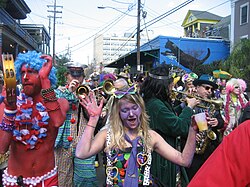
Mardi Gras, also known as Fat Tuesday or Shrove Tuesday, is a carnival celebration held the day before Ash Wednesday, marking the end of the pre-Lenten season. Its origins trace back to ancient Roman festivals honoring Saturn and Lupercus, which were later blended with Christian traditions in medieval Europe. French explorers brought the celebration to North America in 1699, and New Orleans became its most famous home, developing signature traditions such as masked balls, parade floats organized by social clubs called krewes, purple, green, and gold colors, and the throwing of beads and trinkets. Today, Mardi Gras is celebrated around the world, from Rio de Janeiro to Venice to Mobile, Alabama. More Less
1718
% complete
The city of New Orleans was founded by the French in 1718 on land inhabited by the Chitimacha Tribe. Within the first decade, 5,000 enslaved Africans were trafficked to the colony, laying the demographic and cultural foundations for the city's distinctive Carnival traditions.
Image source: New Orleans
1719 - 1743
% complete
From 1719 to 1743, the largest group of enslaved Africans brought to Louisiana came from Senegambia, and the second largest group came from the Kingdom of Kongo. Their musical, spiritual, and masking traditions deeply shaped early New Orleans culture.
Image source: Atlantic slave trade
1729
% complete
During the Natchez Revolt of 1729, 280 enslaved Africans joined forces with Natchez people to prevent French colonists from taking Indigenous land for tobacco production, illustrating early alliances between enslaved Africans and Indigenous peoples.
Image source: Natchez revolt
1776 - 1800
% complete
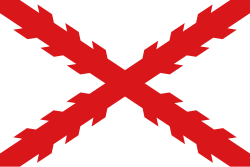
In the late 18th century, Spanish officials increased immigration and trade in the lower Mississippi valley by granting French merchants permission to transport enslaved people from Saint-Domingue and other Caribbean islands.
Image source: Louisiana (New Spain)
1781
% complete
By 1781, under Spanish rule, the attorney general warned the City Commission of problems arising from free negroes and slaves who, under the pretext of the Carnival season, masked and mixed in bands passing through the streets looking for dance-halls.
1807
% complete
After the abolition of the transatlantic slave trade in 1807, the port of New Orleans became the center of the domestic slave trade in the United States before the American Civil War.
Image source: History of slavery in Louisiana
1810
% complete
In 1810, White Creoles, free Mixed Race Creoles and their enslaved came to New Orleans from Saint-Domingue, now known as Haiti, thus doubling the local enslaved population and tripling the population of free people of color.
Image source: Saint-Domingue
1732
% complete
The first recorded slave dances on plantations in Louisiana were recorded by the French in 1732, marking an early documentation of African-derived communal celebration that would later influence Mardi Gras traditions.
1740
% complete
By 1740, New Orleans' Congo Square was a cultural center for African music and dance; the city was also a major southern trade port that became a cultural melting pot.
Image source: Congo Square
1771
% complete
In 1771, free men of color held Mardi Gras in maroon camps and in the city's back areas, carving out spaces of celebration and autonomy within colonial society.
Image source: Free people of color
1800 - 1899
% complete
From the 18th and 19th centuries, free Black people owned businesses and mixed with Louisiana Creoles at Tremé, creating one of the nation's most significant free Black communities.
Image source: Tremé
1800 - 1899
% complete
In the 19th century, Creole dialects developed differently within each neighborhood because of the diversity of Native languages spoken, each having its own syntax and phonetics.
Image source: Louisiana Creole
1804 - 1813
% complete
In 1804 and 1813, a German American and Swiss traveler saw Black men dressed in 'oriental' and Native American attire wearing Turkish turbans of various colors, showing the diversity of early Black carnival masking styles.
Image source: Mardi Gras Indians
1809
% complete
The arrival of Haitian slaves during the Haitian Revolution and Dominican slaves in 1809 assimilated more Africans into the culture of Black Americans of New Orleans, enriching local carnival and musical traditions.
Image source: Haitian Revolution
1819
% complete
According to local oral history, the Skull and Bones Gangs started in 1819 in Tremé, becoming one of the oldest Black masking traditions associated with Mardi Gras morning.
1849
% complete
A source from 1849 refers to Black performers on Congo Square fully covered in 'the plumes of the peacock', illustrating elaborate costuming traditions rooted in Congo Square performances.
1875
% complete
Jazz historian John McCusker found skeleton maskers were referenced in archives dating back to 1875, confirming the long history of the North Side Skull and Bones Gang tradition.
Image source: Mardi Gras
1902
% complete
A 1902 issue of the Times-Democrat referenced young Black maskers on the streets of North Claiborne Avenue, North Robertson and Annette, documenting early 20th century street masking traditions.
Image source: The Times-Picayune/The New Orleans Advocate
1746
% complete
Archival records documented the first enslaved Africans apparently dressing as Indigenous people in a celebratory dance called Mardi Gras in 1746, an early precursor to the Black Masking Indian tradition.
1836
% complete
Accounts describe Black gangs dressed as 'Native American militia' as early as 1836, documenting the growing presence of Native American-inspired masking among Black New Orleanians.
1852
% complete
Native American images were incorporated into the practices of New Orleans Spiritual churches as early as 1852, contributing to the religious context that would later intertwine with Mardi Gras Indian traditions.
Image source: Spiritual church movement
1884 - 1885
% complete
From 1884 to 1885, Buffalo Bill's Wild West show wintered in New Orleans with a multicultural cast and crew of Black, Chinese, Mexican, European and Indigenous people, exposing locals to Native American imagery and performance.
Image source: Buffalo Bill
1885
% complete
In 1885, the first recorded Mardi Gras Indian gang was formed by Becate Batiste, a putative Black Indian; the tribe was named 'The Creole Wild West', marking the formal beginning of the Mardi Gras Indian tradition.
1920
% complete
After Leafy Anderson moved to New Orleans in 1920, many Spiritual churches introduced traditions associated with Mardi Gras Indians, including summoning the spirits of Native American resistance leaders such as Black Hawk, White Eagle, Red Cloud, and White Hawk.
1954
% complete
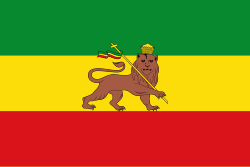
After Emperor Haile Selassie I visited New Orleans in 1954, Rastafari influences also began to appear in Mardi Gras Indian suit designs, reflecting growing pan-African consciousness.
Image source: Rastafari
1960 - 1969
% complete
Scholars have found reports of Native American motifs on costumes and parades since the 18th century, though Mardi Gras Indians began to incorporate more imagery from African cultures and African diaspora religions into their regalia from the 1960s.
1857
% complete
In 1857, The Pickwick Club, an all-white gentleman's club, formed the Mystick Krewe of Comus, a white-only carnival krewe that organized the first modern daytime parade and established segregated patterns in New Orleans carnival.
Image source: Mistick Krewe of Comus
1985
% complete
In response to marginalization and police brutality experienced by Mardi Gras Indians, the Mardi Gras Indian Council formed in 1985 to facilitate better coordination between the 32 tribes and their members.
2005
% complete
In 2005, Hurricane Katrina destroyed African-American neighborhoods in New Orleans, disrupting Mardi Gras Indian communities while spurring powerful expressions of resilience in subsequent carnival seasons.
Image source: Hurricane Katrina
2016
% complete
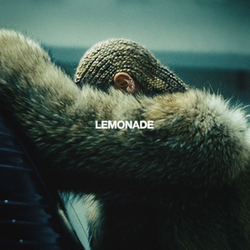
Beyoncé's 2016 visual album Lemonade showcases a Mardi Gras Indian circling a dining table, paying homage to the New Orleans culture and bringing the tradition to a global audience.
Image source: Lemonade (album)
2020
% complete
Tiara Horton, Queen of the 9th Ward Black Hatchet tribe, created a Black Lives Matter suit in 2020 before the murder of George Floyd, showing beaded images of Sandra Bland, Trayvon Martin, and the Obamas.
2020
% complete
Two Black Masking Indians recently incorporated Islamic religious beliefs into their suits: Floyd Edwards made a breastplate honoring Mansa Musa, ruler of the Mali Empire, and Peteh Muhammad Haroon beaded Elijah Muhammad alongside Muslim symbols of a crescent and star.
2024
% complete
To preserve this practice for younger generations, Arts New Orleans' Young Artist Movement provided funding for local young Black artists to create Mardi Gras Indian suits, ensuring the tradition continues into the future.
Or browse the full history timeline directory, with more than 2,000 topics.
This History of Mardi Gras timeline was generated with the help of AI, using information found on the internet.
We work hard to keep these timelines accurate, but mistakes do get through. If you spot one, email us at [email protected] and we'll fix it for future visitors.
Generate yours with AI or build it from scratch, for free.
Export your timeline, add your own events, edit or remove AI-generated events, and much more
No credit card required.
Cancel anytime.
Cancel anytime.
You can create an unlimited number of timelines with up to 10 events on each one, customize how they look, export them to PDF, PNG, PowerPoint, CSV, and Excel, and share them with a link. Paid plans raise the event limit and add features like spreadsheet imports and collaborators.
Yes. You can cancel your subscription from your account page at any time, and you will not be charged again. Your subscription stays active for the rest of the period you already paid for.
Yes. We will email you a reminder before the annual renewal, and we will also email you a receipt.
Yes. You can email us within 15 days of any payment, and we will issue you a full refund.
Check out our pricing docs or send us an email anytime: [email protected].