-
Use Cases
-
Resources
-
Pricing
Mother's Day is a holiday honoring mothers and motherhood, with roots in ancient Greek and Roman festivals celebrating mother goddesses. The modern American holiday was championed by Anna Jarvis, who held the first official Mother's Day celebration in 1908 in West Virginia. After her persistent campaigning, President Woodrow Wilson officially proclaimed Mother's Day a national holiday in 1914, to be celebrated on the second Sunday of May. Today it is observed worldwide, though commercialization led Jarvis herself to later denounce the holiday she created. More Less
Jan 1, 1600
% complete
In 17th-century England, servants were given the fourth Sunday of Lent off to visit their 'mother church' and their mothers. Known as Mothering Sunday, workers would bring gifts such as simnel cake and flowers to their mothers.
Image source: Mothering Sunday
May 1, 1864
% complete
Anna Marie Jarvis was born in Webster, West Virginia. She would later found the modern Mother's Day holiday in memory of her mother, Ann Reeves Jarvis, who had dreamed of a day honoring mothers' contributions.
Image source: Anna Jarvis
Jan 1, 1868
% complete
In West Virginia, Ann Reeves Jarvis organized Mothers' Day Work Clubs to improve health and sanitation conditions and to promote reconciliation between Union and Confederate families after the Civil War.
Jun 2, 1872
% complete
Author of 'The Battle Hymn of the Republic,' Julia Ward Howe issued her Mothers' Day Proclamation calling for women to unite for peace after the Civil War. She proposed an annual Mother's Peace Day, observed informally in Boston for about a decade.
Image source: Julia Ward Howe
May 10, 1908
% complete
Anna Jarvis held a memorial service for her mother at Andrews Methodist Episcopal Church in Grafton, West Virginia, handing out white carnations, her mother's favorite flower. A larger celebration was held the same day in Philadelphia, where Jarvis lived.
Image source: African Methodist Episcopal Church
May 10, 1908
% complete
Merchant John Wanamaker sponsored a Mother's Day celebration attended by thousands at his Philadelphia department store, demonstrating the commercial potential of the holiday and helping spread its popularity nationwide.
Image source: John Wanamaker
Apr 26, 1910
% complete
Governor William E. Glasscock of West Virginia issued the first statewide proclamation of Mother's Day. Other states, cities, and churches soon followed, observing the second Sunday in May.
Image source: William E. Glasscock
May 12, 1912
% complete
Anna Jarvis founded the Mother's Day International Association to promote the holiday and standardize its observance on the second Sunday in May, trademarking the phrases 'second Sunday in May' and 'Mother's Day'.
May 1, 1914
% complete
White carnations, Anna Jarvis's mother's favorite flower, became the traditional emblem of Mother's Day. Wearing a white carnation honored deceased mothers, while red or pink carnations honored living ones.
May 9, 1914
% complete
President Woodrow Wilson signed a proclamation designating the second Sunday in May as Mother's Day, a national holiday honoring mothers. Congress had passed a joint resolution requesting the observance earlier that month.
Image source: Woodrow Wilson
Jan 1, 1920
% complete
Disillusioned by florists, candy makers, and card companies profiting from the holiday she created, Anna Jarvis launched campaigns against what she called a commercialized mockery, even threatening lawsuits against organizations using the name.
Jan 1, 1923
% complete
Anna Jarvis spent her personal wealth and energy protesting Mother's Day commercialization, organizing boycotts and crashing candy conventions. She was arrested for disturbing the peace at a war mothers' convention protest in 1948 and died penniless that year.
May 14, 1933
% complete
During the Great Depression, First Lady Eleanor Roosevelt used Mother's Day messages to highlight the struggles of American families, encouraging citizens to support struggling mothers and promoting social welfare programs.
Image source: Eleanor Roosevelt
May 1, 1942 - Aug 15, 1945
% complete
Throughout World War II, Mother's Day took on patriotic significance as Americans honored mothers whose sons served overseas. Letters, telegrams, and care packages surged around the holiday as soldiers wrote home.
Image source: United States home front during World War II
Jan 1, 1950
% complete
Greeting card companies like Hallmark helped make Mother's Day one of the most card-heavy holidays of the year. It eventually became the third most popular card-sending occasion in the United States after Christmas and Valentine's Day.
Image source: Hallmark Cards
May 8, 1955
% complete
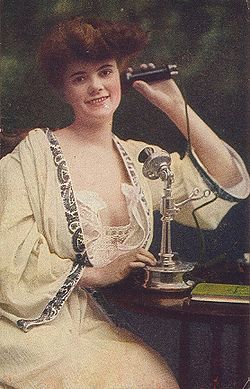
By the mid-1950s, telephone companies reported that Mother's Day generated the highest call volume of any day of the year, as millions of children called their mothers, a trend that continues today.
Image source: Telephone call
Jan 1, 1920 - Dec 31, 1960
% complete
Between the World Wars, Mother's Day observances spread to France, Germany, Switzerland, Italy, and other European countries, often encouraged by florist associations and, in some cases, by governments seeking to boost birth rates.
May 10, 1922
% complete
Mexico and several other Latin American countries adopted May 10 as a fixed date for Mother's Day, influenced by journalist Rafael Alducín's 1922 campaign in Mexico. The holiday is marked with serenades, family meals, and church services.
Dec 1, 1945 - Dec 31, 1985
% complete
Socialist Yugoslavia combined celebrations into three consecutive Sundays in December: Children's Day, Mother's Day, and Fathers' Day, with children tying up parents until they promised treats and gifts.
Mar 6, 1947
% complete
Postwar Japan adopted Mother's Day on the second Sunday of May, promoted initially through schools and churches. Carnations became central to Japanese celebrations, symbolizing maternal love and sacrifice.
Jan 1, 1950
% complete
In the mid-20th century, Britain and Ireland blended the old religious Mothering Sunday tradition with the American Mother's Day, adopting many of its customs such as cards, flowers, and gifts while keeping it on the fourth Sunday of Lent.
May 28, 1950
% complete
France formalized la Fête des Mères by law in 1950, setting it on the last Sunday in May unless it conflicts with Pentecost. Family gatherings and cakes decorated with 'Bonne fête Maman' became customary.
Aug 12, 1950
% complete
Thailand celebrates Mother's Day on August 12, the birthday of Queen Sirikit, regarded as the mother of the nation. The date was established in the 1950s, with jasmine flowers presented to mothers and public ceremonies held nationwide.
Image source: Sirikit
Oct 1, 1960 - Oct 31, 1960
% complete
In Ethiopia, the Antrosht festival honors mothers over several days in autumn after the rains. Families gather for large feasts where children bring ingredients and sing songs celebrating maternal love and family ties.
Image source: Ethiopia
Mar 8, 1977
% complete
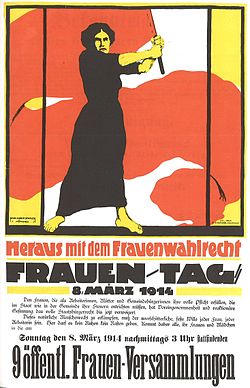
After the United Nations recognized March 8 as International Women's Day in 1977, many countries began treating it as an occasion to honor mothers alongside all women, especially across Eastern Europe and former Soviet states.
Image source: International Women's Day
Nov 30, 1998
% complete
Russia officially established Mother's Day on the last Sunday of November in 1998, complementing International Women's Day on March 8, which remains the more widely observed holiday honoring women.
Image source: Mother's Day
May 1, 2000
% complete
By the turn of the millennium, Mother's Day had become one of the biggest holidays for restaurants, florists, and retailers worldwide. In the United States alone, spending reached tens of billions of dollars annually, with phone calls peaking worldwide.
May 1, 2021
% complete
Today Mother's Day is celebrated on various dates in over 50 countries around the world, from carnation-filled services in Japan to jasmine ceremonies in Thailand, standing as a universal tribute to mothers and maternal bonds.
Or browse the full history timeline directory, with more than 2,000 topics.
This History of Mother's Day timeline was generated with the help of AI, using information found on the internet.
We work hard to keep these timelines accurate, but mistakes do get through. If you spot one, email us at [email protected] and we'll fix it for future visitors.
Generate yours with AI or build it from scratch, for free.
Export your timeline, add your own events, edit or remove AI-generated events, and much more
No credit card required.
Cancel anytime.
Cancel anytime.
You can create an unlimited number of timelines with up to 10 events on each one, customize how they look, export them to PDF, PNG, PowerPoint, CSV, and Excel, and share them with a link. Paid plans raise the event limit and add features like spreadsheet imports and collaborators.
Yes. You can cancel your subscription from your account page at any time, and you will not be charged again. Your subscription stays active for the rest of the period you already paid for.
Yes. We will email you a reminder before the annual renewal, and we will also email you a receipt.
Yes. You can email us within 15 days of any payment, and we will issue you a full refund.
Check out our pricing docs or send us an email anytime: [email protected].