
-
Use Cases
-
Resources
-
Pricing
St. Patrick's Day is celebrated annually on March 17th to honor St. Patrick, the patron saint of Ireland. Originally a religious feast day dating back over 1,000 years, it has evolved into a worldwide celebration of Irish culture featuring parades, traditional foods, music, dancing, and the wearing of green. The holiday commemorates St. Patrick, who is credited with bringing Christianity to Ireland in the 5th century, and today festivities span the globe from Dublin to New York City. More Less
800 - 899
% complete
Saint Patrick's feast day, as a kind of national day, was already being celebrated by the Irish in Europe in the ninth and tenth centuries.
Image source: Saint Patrick's Day
1726
% complete
The famous story of Saint Patrick banishing snakes from Ireland first appears in writing in 1726, though it may be older.
Apr 3, 1940
% complete
In 1940, Saint Patrick's Day was officially observed on 3 April to avoid it coinciding with Palm Sunday. It happened again in 2008, when it was officially observed on 15 March. It will not fall within Holy Week again until 2160.
Mar 30, 2017
% complete
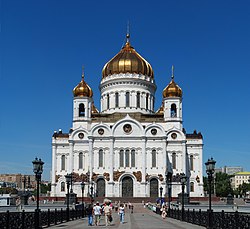
In 2017, the Russian Orthodox Church added the feast day of Saint Patrick to its liturgical calendar, to be celebrated on 30 March according to the Old Style calendar.
Image source: Russian Orthodox Church
1000 - 1099
% complete
The first association of the colour green with Ireland is from a legend in the 11th century Lebor Gabála Érenn (The Book of the Taking of Ireland).
1750
% complete
The Friendly Brothers of St Patrick, an Irish fraternity founded in about 1750, adopted green as its colour.
1783
% complete
The Order of St Patrick, an Anglo-Irish chivalric order founded in 1783, adopted blue as its colour instead of green, which led to blue also being associated with Saint Patrick.
1795
% complete
Ireland was first called "the Emerald Isle" in "When Erin First Rose" (1795), a poem by William Drennan, co-founder of the United Irishmen, which stresses the historical importance of green to the Irish.
1798
% complete
The United Irishmen—a republican organisation founded mostly by Protestants but with a mainly Catholic membership—launched a rebellion in 1798 against British rule, strengthening green as a symbol of Irish nationalism.
Apr 24, 1916
% complete
The flags of the 1916 Easter Rising featured green, such as the Starry Plough banner and the Proclamation Flag of the Irish Republic.
Image source: Easter Rising
1922 - 1924
% complete
When the Irish Free State was founded in 1922, the government ordered all post boxes be painted green, with the slogan "green paint for a green people"; in 1924, the government introduced a green Irish passport.
2010
% complete
Since 2010, famous landmarks around the world have been lit up in green on Saint Patrick's Day as part of Tourism Ireland's "Global Greening Initiative", or "Going Green for St Patrick's Day".
Image source: Tourism in the Republic of Ireland
Mar 17, 2018
% complete
On St Patrick's Day 2018, Ireland defeated England 24–15 at Twickenham, London to claim the third Grand Slam in their history.
Jan 1, 2020
% complete
Traditionally the finals of the All-Ireland Senior Club Football Championship and All-Ireland Senior Club Hurling Championship were held on Saint Patrick's Day in Croke Park, Dublin, but since 2020 these now take place in January.
1700 - 1799
% complete
Saint Patrick's Day parades began in North America in the 18th century but did not spread to Ireland until the 20th century.
Mar 17, 1759
% complete
Saint Patrick's Day has been celebrated in Montreal since as far back as 1759 by Irish soldiers in the Montreal Garrison following the British conquest of New France.
1824
% complete
The Montreal Saint Patrick's Day parade has been held yearly without interruption since 1824, and since 1929 it has been organised by the United Irish Societies of Montreal.
1837 - 1926
% complete
In Quebec City, there was a Saint Patrick's Day parade from 1837 to 1926. It returned in 2010 after more than 84 years.
1863
% complete
There has been a Saint Patrick's Day parade held in Toronto since at least 1863.
1994
% complete
After the meeting between Taoiseach Albert Reynolds and President Bill Clinton in 1994, the presenting of shamrocks became a yearly custom, building on a tradition that began in 1952 when Irish Ambassador John Hearne sent shamrocks to President Harry S. Truman.
1995
% complete
In 1995, the Supreme Court issued its landmark decision in Hurley v. Irish-American Gay, Lesbian, and Bisexual Group of Boston, concerning participation in Saint Patrick's Day parades.
Image source: Hurley v. Irish-American Gay, Lesbian, and Bisexual Group of Boston
2004
% complete
In 2004, the CelticFest Vancouver Society organised its first yearly festival in downtown Vancouver to celebrate the Celtic Nations and their cultures.
2014 - 2015
% complete
The bans on LGBTQ group participation in the New York City and Boston Saint Patrick's Day parades were lifted in 2014 and 2015, respectively.
2022
% complete
Little Compton, Rhode Island has hosted what is billed as the shortest Saint Paddy's Day parade since 2022, measuring at 98 feet, after a previous shortest-parade tradition began in 1999 but ended when one of the pubs closed.
1795
% complete
The first mention of Saint Patrick's Day being celebrated in Australia was in 1795, when Irish convicts and administrators, Catholic and Protestant, in the penal colony came together to celebrate the day as a national holiday, despite a ban against assemblies being in place at the time.
1878 - 1955
% complete
From 1878 to 1955, Saint Patrick's Day was recognised as a public holiday in New Zealand, together with St George's Day (England) and St Andrew's Day (Scotland).
1901
% complete
In England, the Royal Colonel or Colonel-in-chief traditionally presents bowls of shamrock to members of the Irish Guards, a regiment in the British Army, following Queen Alexandra introducing the tradition in 1901.
Image source: Irish Guards
1950
% complete
While female royals are often tasked with presenting bowls of shamrock to the Irish Guards, male royals have also undertaken the role, such as King George VI in 1950 to mark the 50th anniversary of the formation of the Irish Guards.
1992
% complete
The first Saint Patrick's Day parade in Russia took place in 1992. Since 1999, there has been a yearly "Saint Patrick's Day" festival in Moscow and other Russian cities.
Mar 1, 1996
% complete
Since 1996 the city of Munich holds a Saint Patrick's Day parade on the weekend before the 17th of March, which has turned into one of the biggest St Patrick's Day parades in continental Europe.
2000
% complete
Norway has had a Saint Patrick's Day parade in Oslo since 2000, first organized by Irish expatriates living in Norway and partially coordinated with the Irish embassy in Oslo.
2002
% complete
London, since 2002, has had an annual Saint Patrick's Day parade which takes place on weekends around the 17th, usually in Trafalgar Square. In 2008, the water in the Trafalgar Square fountains was dyed green.
2007
% complete
Glasgow, which has a large Irish population due mostly to 19th-century immigration, has held a yearly Saint Patrick's Day parade and festival since 2007.
2012
% complete
Since 2012, Catherine, Princess of Wales has presented the bowls of shamrock to the Irish Guards; male royals have occasionally undertaken the role, such as the Duke of Cambridge in 2016 in place of his wife.
2020 - 2021
% complete
In 2020 and 2021, many Saint Patrick's Day parades and celebrations around the world were cancelled outright due to the COVID-19 pandemic, including London's parade and Dublin's festival, though Brisbane's parade continued as a precautionary exception.
Image source: COVID-19 pandemic
1903
% complete
In 1903, Saint Patrick's Day became an official public holiday in Ireland due to the Bank Holiday (Ireland) Act 1903, introduced by James O'Mara, an MP from the Irish Parliamentary Party.
Mar 15, 1903
% complete
The first Saint Patrick's Day parade in Ireland was held in Waterford in 1903, hundreds of years after the first parade in North America. The week had been declared Irish Language Week by the Gaelic League, and Waterford opted for a procession on Sunday 15 March.
Mar 17, 1916
% complete
On Saint Patrick's Day 1916, the Irish Volunteers—an Irish nationalist paramilitary organisation—held parades throughout Ireland, shortly before the Easter Rising.
Image source: Irish Volunteers
1927
% complete
In 1927, the Irish Free State government banned the selling of alcohol on St Patrick's Day, although it remained legal in Northern Ireland. The ban was not repealed until 1961.
1931
% complete
The first official, state-sponsored Saint Patrick's Day parade in Dublin took place in 1931. Celebrations remained low-key after the creation of the Irish Free State in 1922, with only a military procession and an Irish-language mass attended by government ministers.
1976
% complete
In 1976, loyalists detonated a car bomb outside a pub crowded with Catholics celebrating St Patrick's Day in Dungannon in County Tyrone; four civilians were killed and many injured.
Image source: The Troubles
1985
% complete
Some Protestant unionists attempted to 're-claim' the festival, and in 1985 the Orange Order held its own Saint Patrick's Day parade.
Image source: Orange Order
Mar 17, 1996
% complete
The first Saint Patrick's Festival was held on 17 March 1996. In 1997, it became a three-day event, and by 2006, the festival was five days long.
1998
% complete
Since the end of the conflict in 1998 there have been cross-community St Patrick's Day parades in towns throughout Northern Ireland, which have attracted thousands of spectators.
2006 - 2012
% complete
From 2006 to 2012 the Skyfest formed the centrepiece of the Saint Patrick's Festival in Dublin.
Or browse the full history timeline directory, with more than 2,000 topics.
This History of St. Patrick's Day timeline was generated with the help of AI, using information found on the internet.
We work hard to keep these timelines accurate, but mistakes do get through. If you spot one, email us at [email protected] and we'll fix it for future visitors.
Generate yours with AI or build it from scratch, for free.
Export your timeline, add your own events, edit or remove AI-generated events, and much more
No credit card required.
Cancel anytime.
Cancel anytime.
You can create an unlimited number of timelines with up to 10 events on each one, customize how they look, export them to PDF, PNG, PowerPoint, CSV, and Excel, and share them with a link. Paid plans raise the event limit and add features like spreadsheet imports and collaborators.
Yes. You can cancel your subscription from your account page at any time, and you will not be charged again. Your subscription stays active for the rest of the period you already paid for.
Yes. We will email you a reminder before the annual renewal, and we will also email you a receipt.
Yes. You can email us within 15 days of any payment, and we will issue you a full refund.
Check out our pricing docs or send us an email anytime: [email protected].