-
Use Cases
-
Resources
-
Pricing
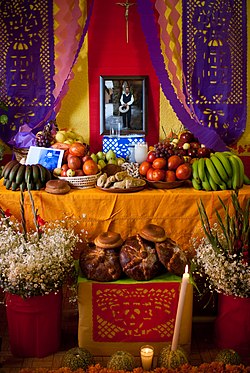
The Day of the Dead, or Día de los Muertos, is a Mexican holiday celebrated on November 1 and 2 to honor deceased loved ones. Rooted in pre-Columbian Aztec and Mesoamerican beliefs blended with Catholic influences brought by Spanish colonizers, the holiday features ofrendas (altars), marigolds, sugar skulls, food offerings, and cemetery visits. Recognized by UNESCO as Intangible Cultural Heritage of Humanity in 2008, it has become a global symbol of remembrance and celebration of life. More Less
1700 - 1899
% complete
The custom of composing mock epitaphs originated in the 18th or 19th century after a newspaper published a poem narrating a dream of a cemetery in the future which included the words 'and all of us were dead', and then proceeding to read the tombstones.
Image source: Day of the Dead
1700 - 1899
% complete
A newspaper published a poem narrating a dream of a cemetery in the future which included the words 'and all of us were dead', inspiring the later custom of writing satirical epitaphs for the living during Day of the Dead season.
1800 - 1899
% complete
A recent trans-Atlantic connection can be observed in the pervasive use of couplets in allegories of death, linking Mexican Day of the Dead customs with literary traditions from Spain.
1800 - 1899
% complete
Theatrical presentations of Don Juan Tenorio by José Zorrilla became a traditional part of Day of the Dead observances, staged around the holiday in both Spain and Mexico.
1844
% complete
Spanish writer José Zorrilla (1817–1893) wrote Don Juan Tenorio, a play whose ghostly apparitions and cemetery scenes made it a traditional theatrical presentation associated with the Day of the Dead period.
Image source: José Zorrilla
1910
% complete
Mexican printmaker José Guadalupe Posada created an iconic image of a skeletal figure with a big hat decorated with two ostrich feathers and flowers, which would become one of the most recognizable symbols of the Day of the Dead.
Image source: La Calavera Catrina
1946 - 1947
% complete
Mexican Muralist Diego Rivera elaborated Posada's skeletal figure into a full-scale figure known as La Calavera Catrina in a fresco painted between 1946 and 1947, cementing her status as a national icon.
Image source: Diego Rivera
1800 - 1899
% complete
Historians highlight that in the 19th-century press there was little mention of the Day of the Dead in the sense that we know it today, evidence used to argue against a deep continuous indigenous lineage for the modern festival.
1900 - 1999
% complete
Other Mexican academics argue that the festivity is not genuinely pre-Hispanic at all, but rather a 20th-century rebranded version of a Spanish tradition developed during the presidency of Lázaro Cárdenas to encourage Mexican nationalism through an 'Aztec' identity.
1900 - 1999
% complete
Historian Elsa Malvido, researcher for the Mexican Instituto Nacional de Antropología e Historia (INAH), was the first to challenge the syncretic narrative in the context of her wider research into Mexican attitudes to death and disease across the centuries.
1900 - 1999
% complete
Elsa Malvido founded the Instituto Nacional de Antropología e Historia's Taller de Estudios sobre la Muerte (Workshop of Studies on Death), an institute dedicated to scholarly study of death-related traditions in Mexico.
Image source: Instituto Nacional de Antropología e Historia
1900 - 1999
% complete
Scholars point out that the Catholic Día de Muertos, during the 20th century, appropriated the elements of an ancient pagan rite, blending Christian observance with older death-related customs.
Dec 1, 1934 - Nov 30, 1940
% complete
During the presidency of Lázaro Cárdenas (1934–1940), the modern form of the Día de Muertos was allegedly developed as a rebranded version of a Spanish tradition, promoted to encourage Mexican nationalism through an 'Aztec' identity.
Image source: Lázaro Cárdenas
1950
% complete
Octavio Paz published his book-length essay The Labyrinth of Solitude in 1950, including the chapter 'All Saints, Day of the Dead,' which framed the Día de Muertos as a continuation of ancient Aztec festivals celebrating death.
Image source: The Labyrinth of Solitude
1950
% complete
Influential Mexican poet and Nobel prize laureate Octavio Paz strongly supported the syncretic view of the Día de Muertos tradition being a continuity of ancient Aztec festivals celebrating death, most evident in the chapter 'All Saints, Day of the Dead' of his 1950 book-length essay The Labyrinth of Solitude.
1975 - 1999
% complete
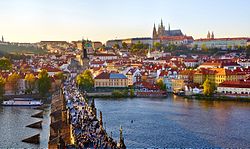
As part of a promotion by the Mexican embassy in Prague, since the late 20th century some local Czech citizens have joined in a Mexican-style Day of the Dead, spreading the tradition beyond the Americas.
Image source: Prague
1990
% complete
The All Souls' Procession, inspired by the Day of the Dead, has been an annual event since 1990 in Tucson, Arizona, drawing thousands of participants each year to honor deceased loved ones.
Image source: All Soul's Weekend
2000 - 2099
% complete
Some Italians take it upon themselves to adopt centuries-old unclaimed bodies and give them offerings like money or jewelry as a way to ease their pain and ask for favors, echoing Day of the Dead practices.
2000 - 2099
% complete
As part of the Italian adoption of unclaimed bodies, offerings such as money or jewelry are given to ease the pain of the forgotten dead and to ask for favors in return.
2002
% complete
The city of Santa Ana, California holds the largest annual Noche de Altares in southern California, an event which began in 2002 and features community-built altars honoring the dead.
Image source: Santa Ana, California
2011
% complete
The Day of the Dead celebration held in the Jamaica Plain neighborhood of Boston, Massachusetts was discontinued in 2011 after years of annual festivities.
Image source: Jamaica Plain
Nov 1, 2015
% complete
On November 1, 2015, an event was held at the Santa Ana Regional Transportation Center for the first time, helping the celebration of the Day of the Dead in Santa Ana, California grow to two large events.
2008
% complete
In 2008, the Day of the Dead tradition was inscribed in the Representative List of the Intangible Cultural Heritage of Humanity by UNESCO, recognizing its cultural significance on a global scale.
2010
% complete
In 2010, Sepulcro Bohemio, an album featuring several songs inspired by Day of the Dead stories, was released, showing the holiday's continued influence on contemporary music.
2015
% complete
In the 2015 James Bond film Spectre, the opening sequence features a Day of the Dead parade in Mexico City, introducing the imagery of the holiday to a massive global audience.
Image source: Spectre (2015 film)
2016
% complete
At the time of Spectre's release, no such parade took place in Mexico City; one year later, due to the interest in the film and the government desire to promote Mexican culture, federal and local authorities decided to organize an actual Día de Muertos parade.
Oct 29, 2016
% complete
On October 29, 2016, the first actual Día de Muertos parade was organized through Paseo de la Reforma and Centro Histórico in Mexico City, attended by 250,000 people.
Image source: Paseo de la Reforma
2021
% complete
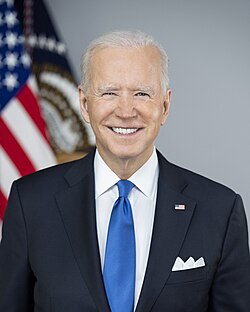
In 2021, the Biden-Harris administration celebrated the Día de los Muertos, marking a high-profile recognition of the holiday at the highest level of United States government.
Image source: Presidency of Joe Biden
Or browse the full history timeline directory, with more than 2,000 topics.
This History of Day of the Dead timeline was generated with the help of AI, using information found on the internet.
We work hard to keep these timelines accurate, but mistakes do get through. If you spot one, email us at [email protected] and we'll fix it for future visitors.
Generate yours with AI or build it from scratch, for free.
Export your timeline, add your own events, edit or remove AI-generated events, and much more
No credit card required.
Cancel anytime.
Cancel anytime.
You can create an unlimited number of timelines with up to 10 events on each one, customize how they look, export them to PDF, PNG, PowerPoint, CSV, and Excel, and share them with a link. Paid plans raise the event limit and add features like spreadsheet imports and collaborators.
Yes. You can cancel your subscription from your account page at any time, and you will not be charged again. Your subscription stays active for the rest of the period you already paid for.
Yes. We will email you a reminder before the annual renewal, and we will also email you a receipt.
Yes. You can email us within 15 days of any payment, and we will issue you a full refund.
Check out our pricing docs or send us an email anytime: [email protected].