-
Use Cases
-
Resources
-
Pricing
The history of Miami traces the transformation of a small settlement on Biscayne Bay into one of America's most dynamic cities. Founded in 1896 after the arrival of the railroad, Miami grew through real estate booms in the 1920s, post-World War II expansion, and waves of immigration—especially from Cuba and Latin America—that shaped its unique multicultural identity. Today, Miami stands as a major center of finance, tourism, culture, and international trade. More Less
1513
% complete
Spanish explorer Juan Ponce de León became the first European to visit the area, mapping Biscayne Bay during his expedition to Florida.
Image source: Juan Ponce de León
1567
% complete
After founding St. Augustine, Spanish admiral Pedro Menéndez de Avilés established a Jesuit mission at the Tequesta settlement on the south bank of the Miami River, one of the first European outposts in South Florida.
Image source: Pedro Menéndez de Avilés
1836
% complete
During the Second Seminole War, the United States Army built Fort Dallas on the north bank of the Miami River, establishing a military presence that would later anchor civilian settlement.
Image source: Dallas Fort Worth International Airport
1871
% complete
Ohio-born merchant William Brickell moved to South Florida with his family and established a trading post on the southern bank of the Miami River, becoming one of the area's first permanent settlers.
Image source: Brickell
1891
% complete
Cleveland businesswoman Julia Tuttle purchased the former Fort Dallas land on the north bank of the Miami River, earning her later recognition as 'the Mother of Miami.'
Image source: Julia Tuttle
Feb 7, 1895
% complete
A devastating freeze destroyed crops across central and northern Florida but spared Miami, convincing railroad tycoon Henry Flagler that South Florida was ideal for agriculture and development. Julia Tuttle famously sent him orange blossoms from her surviving trees.
Image source: Great Freeze
Jul 28, 1896
% complete
Miami was officially incorporated with just over 300 residents after Henry Flagler extended his Florida East Coast Railroad to the settlement, transforming it from an outpost into a planned city.
Image source: History of Miami
Jan 16, 1897
% complete
Henry Flagler opened the lavish Royal Palm Hotel on the north bank of the Miami River, establishing Miami as a premier winter tourist destination and spurring rapid early growth.
Image source: Royal Palm Hotel (Miami)
Sep 14, 1898
% complete
Julia Tuttle, whose negotiations with Henry Flagler had been instrumental in bringing the railroad to Miami, died of tuberculosis just two years after the city's incorporation.
Jul 26, 1925
% complete
The Mediterranean-style Freedom Tower opened as headquarters of The Miami News; decades later it processed documents for Cuban refugees, becoming known as 'the Ellis Island of the South.'
Image source: Freedom Tower (Miami)
1925
% complete
The University of Miami opened in Coral Gables during the height of the land boom, enrolling its first students in October 1926 just days before the great hurricane struck.
Image source: University of Miami
1926 - 1928
% complete
Following the hurricane, speculators abandoned overextended real estate projects, banks failed, and Miami's explosive growth stalled years before the Great Depression began.
Image source: Florida land boom of the 1920s
Sep 18, 1926
% complete
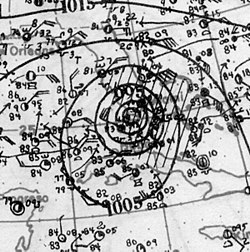
The Great Miami Hurricane struck the booming city with winds exceeding 150 mph, killing more than 100 people and causing catastrophic damage that helped end the Florida land boom of the 1920s.
Image source: 1926 Miami hurricane
1930 - 1941
% complete
Despite economic hardship, architects transformed Miami Beach into a showcase of streamlined Art Deco architecture, constructing hundreds of pastel-colored hotels and apartment buildings that defined the city's image.
Image source: Miami Beach Architectural District
1934
% complete
Pan Am made its Dinner Key seaplane base in Coconut Grove the hub of its Latin American routes, cementing Miami's role as the 'Gateway to the Americas.'
Image source: Pan Am
1941 - 1945
% complete
Hotels were converted into barracks and training centers as hundreds of thousands of servicemen passed through Miami-area bases, many returning after the war to settle there permanently.
Image source: Royal Navy during the Second World War
Jan 1, 1959
% complete
The Cuban Revolution triggered waves of Cuban immigration to South Florida, fundamentally reshaping Miami's demographics, culture, and economy over subsequent decades.
Image source: Cuban Revolution
Apr 17, 1961 - Apr 19, 1961
% complete
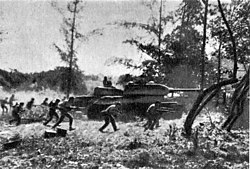
CIA-trained Cuban exiles, many based in Miami, launched the failed invasion of Cuba, deepening Cold War tensions and intensifying Cuban exile activity in the city.
Image source: Bay of Pigs Invasion
1966
% complete
The Miami Dolphins began play as an AFL expansion franchise, later achieving the NFL's only perfect season in 1972 and becoming central to the city's sports culture.
Image source: Miami Dolphins
Apr 1980 - Oct 31, 1980
% complete
Fidel Castro allowed mass emigration from Cuba's Mariel port, and flotillas of boats ferried roughly 125,000 refugees to Miami within six months, straining resources but further diversifying the city.
Image source: Mariel boatlift
May 17, 1980 - May 20, 1980
% complete
Days of rioting followed the acquittal of four police officers in the beating death of Arthur McDuffie, exposing deep racial tensions and causing widespread destruction in Miami's Black neighborhoods.
Nov 12, 1985
% complete
Xavier Suárez's election marked the rising political power of Miami's Cuban-American community, signaling the city's transformation into a majority-Hispanic metropolis.
Image source: Xavier Suarez
Jan 22, 1989
% complete
Joe Montana led the San Francisco 49ers to victory over the Cincinnati Bengals at Joe Robbie Stadium in one of the most famous Super Bowls ever played, highlighting Miami's status as a major sports host city.
Image source: Super Bowl XXIII
Aug 24, 1992
% complete
One of the most destructive hurricanes in U.S. history slammed into Homestead just south of Miami, destroying tens of thousands of homes and prompting sweeping reforms to Florida building codes.
Image source: Hurricane Andrew
Dec 9, 1994 - Dec 11, 1994
% complete
President Bill Clinton welcomed leaders from 34 nations to Miami for the first Summit of the Americas, showcasing the city's emergence as an international diplomatic and commercial crossroads.
Image source: Summit of the Americas
Dec 5, 2002
% complete
Art Basel Miami Beach debuted as the sister fair of the Swiss original, drawing global collectors and catalyzing Miami's rise as a world capital of contemporary art and design, including the Wynwood Arts District.
Image source: Art Basel
Jun 20, 2006
% complete
Led by Dwyane Wade and Shaquille O'Neal, the Miami Heat defeated the Dallas Mavericks in six games to capture the franchise's first championship, sparking celebrations across the city.
Image source: 2006 NBA Finals
Aug 3, 2014
% complete
The PortMiami Tunnel connected Dodge Island directly to I-395 beneath Government Cut, easing downtown traffic and supporting the port's growth as one of the world's busiest cruise terminals.
Image source: Port Miami Tunnel
May 8, 2022 - May 9, 2022
% complete
Formula 1 debuted the Miami Grand Prix around Hard Rock Stadium, joining the Miami Open tennis tournament and Super Bowls in confirming the city's place among the world's premier event destinations.
Image source: Miami International Autodrome
Or browse the full history timeline directory, with more than 2,000 topics.
This History of Miami timeline was generated with the help of AI, using information found on the internet.
We work hard to keep these timelines accurate, but mistakes do get through. If you spot one, email us at [email protected] and we'll fix it for future visitors.
Generate yours with AI or build it from scratch, for free.

Export your timeline, add your own events, edit or remove AI-generated events, and much more
No credit card required.
Cancel anytime.
Cancel anytime.
You can create an unlimited number of timelines with up to 10 events on each one, customize how they look, export them to PDF, PNG, PowerPoint, CSV, and Excel, and share them with a link. Paid plans raise the event limit and add features like spreadsheet imports and collaborators.
Yes. You can cancel your subscription from your account page at any time, and you will not be charged again. Your subscription stays active for the rest of the period you already paid for.
Yes. We will email you a reminder before the annual renewal, and we will also email you a receipt.
Yes. You can email us within 15 days of any payment, and we will issue you a full refund.
Check out our pricing docs or send us an email anytime: [email protected].