-
Use Cases
-
Resources
-
Pricing
700 BC - 601 BC
After arriving on Thassos in the seventh century BC, Parians quarried marble on the island, contributing to the development of major Aegean stone industries.
600 - 1399
Gold became an important African commodity during the trans-Saharan gold trade, linking West African gold-producing regions with North African and Mediterranean markets.
Image source: Trans-Saharan trade
1300 - 1399
The growing use of weapons, armour, stirrups, and horseshoes greatly increased demand for iron and encouraged expanded extraction and processing.
Image source: Iron ore
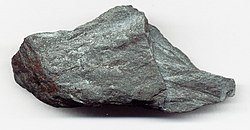
1465
The silver crisis of 1465 occurred when mines reached depths at which available technology could no longer keep their shafts dry, limiting production.
Image source: Silver mining
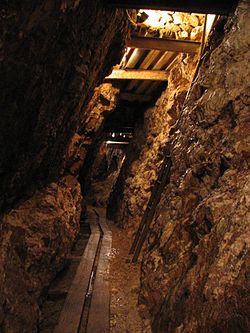
1556
Georg Agricola's De re metallica documented mining and metallurgy and became one of the most important written sources on medieval and early modern mining techniques.
Image source: De re metallica
1550
Differences in social structure helped the increasingly intensive extraction of mineral deposits spread from central Europe to England during the mid-sixteenth century.
1568 - 1688
Judicial action in 1568 and legislation in 1688 restricted English royal mining rights to gold and silver, despite England possessing virtually no deposits of either metal.
1627
Black powder was first used in mining at Selmecbánya in the Kingdom of Hungary, now Banská Štiavnica in Slovakia, marking an important change in excavation methods.
1642
Hundreds of German technicians and skilled workers were brought to England. By 1642, a colony of about 4,000 foreigners was mining and smelting copper at Keswick.
1727
Louis Denys de La Ronde took command of Fort La Pointe at Chequamegon Bay, where Indigenous people informed him of an island containing copper.
1733 - 1740
La Ronde obtained permission from the French crown to operate mines in 1733 and became known as the first practical miner on Lake Superior. Mining stopped seven years later after conflict between Sioux and Chippewa groups.
1762
One of the world's first mining academies was established at Selmecbánya in 1762, formalizing technical education for the mining industry.
1800
After the Great Trek in the nineteenth century, gold and diamond mining in Southern Africa had major political and economic effects.
1800 - 1899
Mining became widespread in the United States during the nineteenth century, expanding alongside settlement, transportation, and industrial development.
Image source: Mining in the United States
1800 - 1899
Gold and coal mining began in Australia and New Zealand during the nineteenth century, helping establish both countries as important mineral-producing regions.
Image source: Mining in Australia
1848 - 1855
The California Gold Rush made mining for precious metals a major driver of United States westward expansion toward the Pacific coast, alongside ranching and settlement.
Image source: California Gold Rush
1872
The United States Congress passed the General Mining Act of 1872 to encourage mining on federal lands.
Image source: General Mining Act of 1872
1900 - 1920
Gold and silver rushes in the western United States stimulated mining for coal and base metals including copper, lead, and iron during the early twentieth century.
1900 - 1920
Canada's mining industry grew more slowly than that of the United States because of transportation, capital, and competitive limitations. Ontario became a major early producer of nickel, copper, and gold.
1934 - 1939
The Emperor Gold Mining Company began operations at Vatukoula in 1934, followed by Loloma Gold Mines in 1935 and Fiji Mines Development. These developments created a major mining boom.
1934 - 1939
Fiji's gold production increased more than one hundredfold, from 931.4 ounces in 1934 to 107,788.5 ounces in 1939, reaching an output comparable to New Zealand and Australia's eastern states.
1870 - 1920
A rise in mining accidents in Queensland led to increased safety measures concerning the use of explosives between 1870 and 1920.
Mar 10, 1906
An explosion and fire at the Courrières mine in northern France killed 1,099 miners, making it Europe's worst mining accident.
Apr 26, 1942
The Benxihu Colliery accident in China killed 1,549 miners, surpassing the Courrières disaster as the deadliest mining accident recorded at that time.
1953
The first landfill mine opened in Tel Aviv in 1953. Further development remained limited because accessible natural ores were generally abundant.
1978
The Mine Safety and Health Administration was established to prevent death, illness, and injury in mining and promote safe and healthful workplaces. US miner fatalities fell from 242 in 1978 to 24 in 2019.
Image source: Mine Safety and Health Administration
1990 - 1999
About 22.3 billion kilograms of explosives were used in US mining, quarrying, construction, and related industries during the 1990s. Coal mining accounted for 66.4 percent of the total.
1992
The UN Centre for Transnational Corporations proposed a draft code of conduct for transnational corporations at the Rio Earth Summit. Business groups successfully argued for self-regulation instead.
Image source: Earth Summit
2000
In 2000, an estimated 3,500 tailings impoundments existed worldwide. Each year, two to five major failures and about 35 minor failures were estimated to occur.
2003 - 2009
As gold prices rose during the 2000s, forest conversion in the Amazon increased sixfold, from 292 hectares per year in 2003–2006 to 1,915 hectares per year in 2006–2009, largely because of artisanal mining.
2007
The Extractive Industries Transparency Initiative was mainstreamed in countries cooperating with the World Bank on mining reform, promoting greater transparency in extractive-sector revenues.
2007 - 2010
Major accidents included the 2007 Ulyanovskaya Mine disaster in Russia, the 2009 Heilongjiang mine explosion in China, and the 2010 Upper Big Branch Mine disaster in the United States.
2007
Waste effluent and saline mine-water leaks from the Talvivaara Terrafame polymetal mine in central Finland caused ecological collapse in a nearby lake.
2010
The International Resource Panel, hosted by the United Nations Environment Programme, published reports on metal stocks held in society and their recycling rates.
Image source: International Resource Panel
2015
Barrick Gold Corporation spilled more than one million litres of cyanide into five rivers in Argentina near its Veladero mine.
1932 - 1999
During the twentieth century, expanding metal use increased copper consumption in the United States from 73 kilograms per person in 1932 to 238 kilograms in 1999.
Image source: Copper
1955 - 1990
The World Bank became involved in mining in 1955, providing about two billion dollars to fifty projects through reform, rehabilitation, mine construction, mineral processing, technical assistance, and engineering.
Image source: World Bank
1987 - 2019
Mponeng, previously known as Western Deep Levels No. 1 Shaft, was commissioned in 1987. By 2019 it was the world's second-deepest mine from ground level, reaching four kilometres underground.
1988
The World Bank solicited feedback from mining companies in 1988 while developing mining codes intended to increase foreign investment.
1992
Beginning in 1992, the World Bank promoted privatization of government-owned mining companies through a new set of codes and its Strategy for African Mining report.
1997
Companhia Vale do Rio Doce, Latin America's largest mining company, was privatized in 1997, illustrating the broader shift toward private and multinational ownership.
2000
As the twenty-first century began, a globalized mining industry dominated by large multinational corporations emerged.
2002
Chile and Peru were reported as the major mining countries of South America in 2002.
2007
The total market capitalization of mining companies was reported at 962 billion US dollars in 2007, compared with about 50 trillion dollars for all publicly traded companies worldwide.
2013
China reportedly controlled 95 percent of rare-earth mineral production in 2013, giving it a dominant position in this strategic commodity sector.
2018
Researchers led by Bradley D. Smith at the University of Notre Dame invented molecules whose shape and size enabled them to capture and contain precious-metal ions.
2022 - 2050
Estimates indicate that seven billion metric tons of metals will need to be extracted between 2022 and 2050.
Image source: Mining
2023
In 2023, approximately 8.5 billion metric tons of coal were extracted from Earth's crust.
Image source: Coal mining
Or browse the full history timeline directory, with more than 2,500 topics.
This History of Mining timeline was generated with the help of AI, using information found on the internet.
We work hard to keep these timelines accurate, but mistakes do get through. If you spot one, email us at [email protected] and we'll fix it for future visitors.
Generate yours with AI or build it from scratch, for free.
Export your timeline, add your own events, edit or remove AI-generated events, and much more
No credit card required.
Cancel anytime.
Cancel anytime.
You can create an unlimited number of timelines with up to 10 events on each one, customize how they look, export them to PDF, PNG, PowerPoint, CSV, and Excel, and share them with a link. Paid plans raise the event limit and add features like spreadsheet imports and collaborators.
Yes. You can cancel your subscription from your account page at any time, and you will not be charged again. Your subscription stays active for the rest of the period you already paid for.
Yes. We will email you a reminder before the annual renewal, and we will also email you a receipt.
Yes. You can email us within 15 days of any payment, and we will issue you a full refund.
Check out our pricing docs or send us an email anytime: [email protected].