-
Use Cases
-
Resources
-
Pricing
1956
The GM-NAA I/O was the first operating system used for real work, developed by General Motors' Research division for the IBM 704 computer in 1956.
1961
The Burroughs Corporation introduced the MCP operating system with the B5000 computer in 1961, providing advanced features such as memory protection and multitasking.
Image source: Burroughs Large Systems
1962
GE introduced the GECOS operating system with the GE-600 series computers in 1962, becoming widely used in commercial applications.
Image source: General Comprehensive Operating System
1962
UNIVAC produced the EXEC I operating system for the UNIVAC 1107, followed by the development of the EXEC II operating system by Computer Sciences Corporation, which was delivered to UNIVAC.
1965
UNIVAC developed the EXEC 8 operating system for the UNIVAC 1108, serving as the basis for operating systems on later members of the UNIVAC family.
Image source: OS 2200
1965
The EXEC II operating system was ported to the UNIVAC 1108, expanding its usage beyond the UNIVAC 1107.
1967
Digital Equipment Corporation developed the TOPS-10 operating system for its PDP-10 line of computers in 1967, offering time-sharing capabilities.
1969
The Data General Nova series of computers introduced in 1969 featured their own operating system, providing a cost-effective solution for small businesses and laboratories.
Image source: Data General Nova
1974
Digital Research's CP/M-80, released in 1974, became one of the most important operating systems for early microcomputers based on the 8080/8085/Z-80 CPUs.
Image source: CP/M
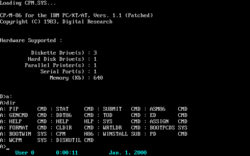
1981
The IBM PC introduced in 1981 featured a BIOS (Basic Input/Output System), which served as an extension of the CP/M-80 concept and evolved over time to include more features and functions.
Image source: BIOS
1968
IBM introduced the notion of a virtual machine in 1968 with CP/CMS on the IBM System/360 Model 67, enabling multiple virtual machines to run on a single physical machine.
Image source: CP/CMS
1999
VMware popularized virtualization with their 1999 product, VMware Workstation, allowing users to run multiple operating systems simultaneously on a single computer.
Image source: VMware Workstation
1996
Palm Computing released the Pilot 1000 and Pilot 5000 in 1996, running the Palm OS, which became popular in personal digital assistants (PDAs).
Image source: Palm OS
1998
Symbian was the world's most widely used smartphone operating system until 2010, with a peak market share of 74% in 2006.
Image source: Symbian
2000
Microsoft Windows CE served as the base for Pocket PC 2000, later renamed Windows Mobile in 2003, becoming the most common operating system for smartphones in the U.S. in 2007.
Image source: Windows Mobile
2007
Apple introduced the iPhone in 2007, running the iPhone OS (later renamed iOS), based on the Unix-like Darwin operating system.
2008
Android, introduced in 2008, is a mobile operating system based on a modified Linux kernel, developed by Google and widely used on smartphones and tablets.
Image source: Android (operating system)
2010
Microsoft re-entered the mobile operating system market with Windows Phone in 2010, which was later replaced by Windows 10 Mobile in 2015.
2005
In 2005, Apple transitioned its Mac computers to Intel processors, aligning their hardware architecture with the x86 platform while retaining PowerPC support until 2009.
Or browse the full history timeline directory, with more than 2,500 topics.
This History of Operating Systems timeline was generated with the help of AI, using information found on the internet.
We work hard to keep these timelines accurate, but mistakes do get through. If you spot one, email us at [email protected] and we'll fix it for future visitors.
Generate yours with AI or build it from scratch, for free.
Export your timeline, add your own events, edit or remove AI-generated events, and much more
No credit card required.
Cancel anytime.
Cancel anytime.
You can create an unlimited number of timelines with up to 10 events on each one, customize how they look, export them to PDF, PNG, PowerPoint, CSV, and Excel, and share them with a link. Paid plans raise the event limit and add features like spreadsheet imports and collaborators.
Yes. You can cancel your subscription from your account page at any time, and you will not be charged again. Your subscription stays active for the rest of the period you already paid for.
Yes. We will email you a reminder before the annual renewal, and we will also email you a receipt.
Yes. You can email us within 15 days of any payment, and we will issue you a full refund.
Check out our pricing docs or send us an email anytime: [email protected].