-
Use Cases
-
Resources
-
Pricing
1755
William Cullen designed a small refrigerating machine in 1755, marking the beginning of the history of artificial refrigeration. His apparatus demonstrated that evaporation could produce cooling, although it was not developed into a practical commercial appliance.
1758
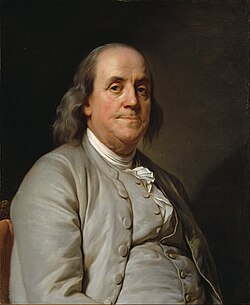
Benjamin Franklin and chemist John Hadley investigated evaporation as a means of rapidly cooling an object at Cambridge University in England. Their work helped establish scientific principles later used in refrigeration.
Image source: Benjamin Franklin
1805
American inventor Oliver Evans described a closed vapor-compression refrigeration cycle in 1805. His design used ether under vacuum to produce ice and anticipated the basic architecture of later mechanical refrigerators.
Image source: Oliver Evans
1820
Michael Faraday liquefied ammonia and other gases in 1820 by using high pressures and low temperatures. The work demonstrated principles that became important to refrigerant-based cooling systems.
Image source: Michael Faraday
1824
Sadi Carnot described the operating principle of the refrigeration cycle mathematically in 1824 as a heat engine. His thermodynamic analysis provided a theoretical foundation for later refrigeration technology.
1834
Jacob Perkins built the world's first working vapor-compression refrigeration system in 1834. His system applied the closed-cycle concept to a practical machine using vapor compression.
1842
John Gorrie built a working refrigeration prototype in 1842 as a similar attempt to create artificial ice. The machine demonstrated the feasibility of mechanical cooling but was unsuccessful commercially.
Image source: John Gorrie
1842
Physician John Gorrie created a system capable of refrigerating water to produce ice in 1842. Although his prototype worked, the commercial attempt failed.
1850
American engineer Alexander Twining took out a British patent in 1850 for a vapor-compression refrigeration system using ether. The patent represented an early American contribution to practical refrigeration machinery.
1851
James Harrison built a mechanical ice-making machine in 1851 on the banks of the Barwon River at Rocky Point in Geelong, Victoria. His work helped establish mechanical ice production in Australia.
1854
Harrison's first commercial ice-making machine followed his earlier work in 1854. It extended artificial ice production beyond laboratory experiments and toward industrial use.
1856
Harrison's 1856 patent covered a vapor-compression system using ether, alcohol, or ammonia. The flexibility of the refrigerant choices supported the development of commercial refrigeration applications.
1859
Ferdinand Carré developed the first gas absorption refrigeration system using gaseous ammonia dissolved in water, known as aqua ammonia, in 1859. Absorption refrigeration offered an alternative to vapor compression.
1860
Ferdinand Carré patented his aqua-ammonia absorption refrigeration system in 1860. The technology became important for producing artificial ice and cooling industrial facilities.
1861
By 1861, a dozen of Harrison's refrigeration systems were in operation. He also introduced commercial vapor-compression refrigeration to breweries and meat-packing houses.
1867 - 1871
In San Antonio in 1867, French immigrant Andrew Muhl built an ice-making machine to serve the expanding beef industry. He moved the machine to Waco in 1871.
1873
In 1873, the patent for Andrew Muhl's ice-making machine was contracted by Columbus Iron Works. The company, later acquired by W.C. Bradley Co., went on to produce the first commercial ice-makers in the United States.
1876
Carl von Linde, responding to brewers' demand for year-round large-scale lager production, researched refrigeration during the 1860s and 1870s. In 1876 he patented an improved method of liquefying gases, an important advance for refrigeration.
1950
Lithium bromide–water absorption refrigeration systems were introduced for industrial applications in the 1950s. They extended the long history of absorption refrigeration beyond the earlier ammonia–water machines.
1803
Thomas Moore patented a metal-lined butter-storage tub in 1803. The design became a prototype for many later iceboxes used to preserve food with natural ice.
1900
By 1900, Chicago meat-packing houses had adopted ammonia-cycle commercial refrigeration. The technology supported large-scale meat processing and storage.
Image source: Absorption refrigerator
1911
In 1911, General Electric released a household refrigeration unit powered by gas. The appliance represented an early attempt to bring mechanical refrigeration into domestic kitchens.
Image source: General Electric
1914
By 1914, almost every location used artificial refrigeration. Mechanical systems had expanded beyond experimental machines into food production, storage, transport, and other commercial applications.
Image source: Refrigeration
1927
General Electric released the Monitor Top in 1927, the first refrigerator to run on electricity. Its design helped establish the electric refrigerator as a major household appliance.
1930
Frigidaire synthesized Freon in 1930. The refrigerant helped make domestic refrigeration safer and more practical than systems relying on some earlier toxic or flammable refrigerants.
Image source: Freon
1940
The lower price of refrigerators helped ownership in American households exceed 50 percent by 1940. Refrigeration was becoming a standard feature of domestic food storage.
Image source: Refrigerator
1970
In the 1970s, compounds used as refrigerants were found to react with atmospheric ozone. Because ozone protects against solar ultraviolet radiation, the discovery prompted international efforts to restrict these substances.
Image source: Ozone depletion
1987
The worldwide use of refrigerants implicated in ozone depletion was curtailed through the Montreal Protocol of 1987. The agreement marked a major environmental turning point in refrigeration technology.
Image source: Montreal Protocol
1825
Nathaniel Wyeth invented a horse-drawn ice cutter in 1825. The device made harvesting ice faster and cheaper, helping expand the commercial ice market associated with Frederic Tudor.
Image source: Nathaniel Jarvis Wyeth
1830
Before 1830, few Americans used ice to refrigerate foods because ice-storehouses and iceboxes were uncommon. The growth of commercial ice harvesting and distribution gradually made household ice preservation more accessible.
1843 - 1856
New York City's ice consumption rose from 12,000 tons in 1843 to 100,000 tons in 1856. The increase illustrates the rapid expansion of the natural-ice market and urban cold storage.
1865
Carré's refrigeration system became a solution to New Orleans' ice problems. By 1865, the city had three of Carré's machines, reducing reliance on distant supplies of natural ice.
1900
By the turn of the twentieth century, pollution and sewage had begun to enter natural ice as the ice-harvesting industry expanded. Contaminated ice became a particular problem in metropolitan suburbs and encouraged the shift toward artificial refrigeration.
1869
In 1869, Thaddeus Lowe and investors purchased an old steamship and installed one of Lowe's refrigeration units. The venture shipped fresh fruit from New York to the Gulf Coast and fresh meat from Galveston to New York, but failed because of Lowe's limited shipping experience.
Image source: Thaddeus S. C. Lowe
1873
Harrison prepared the sailing ship Norfolk for an experimental beef shipment to the United Kingdom in 1873. The ship used a cold-room system rather than a mechanical refrigeration system.
1880
The Strathleven arrived at London's docks on 2 February 1880 with frozen beef, mutton, and butter from Sydney and Melbourne. Although not the first successful overseas transport in every account, the voyage demonstrated the commercial potential of refrigerated shipping.
1881
William Soltau Davidson commissioned the Dunedin to be refitted with a compression refrigeration unit for meat shipment in 1881. The project followed extensive research into transporting frozen goods from New Zealand to Britain.
1882 - 1890
After the Dunedin's voyage, its sister ship Marlborough and the New Zealand Shipping Company vessel Mataurua joined the trade. The German steamer Marsala began carrying frozen New Zealand lamb in December 1882, and by the 1890s the trade had become increasingly profitable.
Feb 15, 1882
The Dunedin sailed for London on 15 February 1882 with a cargo that became the first commercially successful refrigerated shipping voyage. The journey established a foundation for New Zealand's refrigerated meat industry.
1886
J & E Hall of Dartford outfitted the SS Selembria with a vapor-compression system in 1886. The ship transported 30,000 carcasses of mutton from the Falkland Islands.
1891
The United States passed the Meat Inspection Act of 1891 after local butchers argued that the refrigerated railcar system was unwholesome. The law reflected public and industry concerns about the safety of refrigerated meat distribution.
1895 - 1905
California shipments using refrigerated rail cars increased from about 4,500 carloads in 1895 to between 8,000 and 10,000 carloads in 1905. Refrigerated rail connected specialized agricultural regions with distant eastern markets.
Image source: Refrigerator car
1917 - 1950
By 1917, established fruit- and vegetable-producing regions near eastern markets faced increased competition from distant specialized production centers. Refrigerated rail remained important into the mid-twentieth century, but highway trucking increasingly shifted perishable freight away from rail.
Or browse the full history timeline directory, with more than 2,500 topics.
This History of Refrigeration timeline was generated with the help of AI, using information found on the internet.
We work hard to keep these timelines accurate, but mistakes do get through. If you spot one, email us at [email protected] and we'll fix it for future visitors.
Generate yours with AI or build it from scratch, for free.

Export your timeline, add your own events, edit or remove AI-generated events, and much more
No credit card required.
Cancel anytime.
Cancel anytime.
You can create an unlimited number of timelines with up to 10 events on each one, customize how they look, export them to PDF, PNG, PowerPoint, CSV, and Excel, and share them with a link. Paid plans raise the event limit and add features like spreadsheet imports and collaborators.
Yes. You can cancel your subscription from your account page at any time, and you will not be charged again. Your subscription stays active for the rest of the period you already paid for.
Yes. We will email you a reminder before the annual renewal, and we will also email you a receipt.
Yes. You can email us within 15 days of any payment, and we will issue you a full refund.
Check out our pricing docs or send us an email anytime: [email protected].