-
Use Cases
-
Resources
-
Pricing
The history of smartphones traces the evolution of mobile phones from simple communication devices into powerful pocket computers. Beginning with early PDAs and the first touchscreen phone, IBM's Simon Personal Communicator in 1994, the industry was transformed by BlackBerry's email-focused devices, Apple's revolutionary iPhone in 2007, and Google's Android platform. Over the decades, smartphones have integrated cameras, app ecosystems, high-speed internet, and artificial intelligence, reshaping how people communicate, work, and live worldwide. More Less
Nov 23, 1992
% complete
The IBM Simon Personal Communicator was unveiled at the COMDEX trade show in 1992 as a concept device and released to consumers in 1994. Combining a mobile phone with a touchscreen capable of email, fax, a calendar, and apps like an address book and sketch pad, it is widely regarded as the world's first smartphone, predating the term itself.
Image source: IBM Simon
Jan 1, 1996
% complete
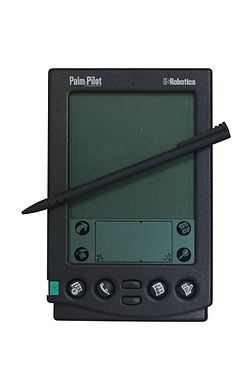
The Palm Pilot 1000 launched in 1996 and became the first widely successful personal digital assistant. Its intuitive stylus-based interface, Graffiti handwriting recognition, and desktop synchronization established design conventions and user expectations that would later shape touchscreen smartphones.
Image source: PalmPilot
Jan 1, 1996
% complete
The Nokia 9000 Communicator, announced at CeBIT in 1996, was a clamshell device that opened to reveal a full QWERTY keyboard and wide screen. It offered email, fax, web browsing, and office applications, establishing Nokia as an early leader in converged phone-computer devices.
Image source: Nokia 9000 Communicator
Jan 1, 1997
% complete
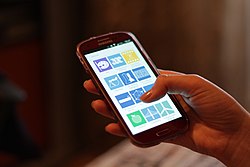
Ericsson's concept device, the GS 88 'Penelope', was presented in 1997 and is credited with coining the word 'smartphone' to describe a phone with advanced computing capabilities. Although never commercially released, it marked the birth of the terminology that would define an entire industry.
Image source: Smartphone
Jan 19, 1999
% complete
Research In Motion released the BlackBerry 850 two-way pager in January 1999, bringing push email to mobile devices. The BlackBerry line evolved into full smartphones beloved by business users, whose secure messaging and physical keyboards defined mobile productivity until the iPhone era.
Image source: BlackBerry
Mar 1, 2002
% complete
Released in March 2002, the BlackBerry 5810 was RIM's first device to integrate voice calling with its famous email capabilities, though it required a headset for calls. It marked BlackBerry's transformation from a pager maker into a full-fledged smartphone manufacturer.
Oct 1, 2003
% complete
The Palm Treo 600, launched in October 2003, integrated a phone, camera, keyboard, and Palm OS organizer into one compact candybar design. Widely praised for finally making the smartphone feel like a cohesive product rather than a mashup, it became a bestseller among professionals.
Image source: Treo 600
Jun 1, 1998
% complete
In June 1998, Psion, Nokia, Ericsson, and Motorola jointly founded Symbian Ltd., building the Symbian OS on Psion's EPOC platform. Symbian would go on to power hundreds of millions of phones and dominate the smartphone market for over a decade before its decline after 2010.
Image source: Symbian
Jan 1, 2000
% complete
The Ericsson R380, released in 2000, was the first device marketed as a 'smartphone' to reach consumers. Running Symbian OS behind a flip cover that revealed a touchscreen, it combined PDA functions with telephony and set the template for early 2000s smartphone design.
Image source: Ericsson R380
Feb 1, 2001
% complete
The Kyocera QCP 6035, released in early 2001, was one of the first phones to run Palm OS, merging a mobile handset with the familiar Palm PDA software suite. It helped establish the idea that mainstream consumers could carry a single device for both communication and organization.
Image source: Kyocera 6035
May 10, 2005
% complete
Microsoft introduced Windows Mobile 5.0 in May 2005, adding persistent storage so data survived battery removal, along with improved Office support and push email via Messaging and Security Feature Pack. It powered smartphones from HTC, Samsung, Motorola, and others through the mid-2000s.
Image source: Windows Mobile
Jul 1, 2005
% complete
In July 2005, Google quietly acquired Android Inc., a small startup founded by Andy Rubin, Rich Miner, Nick Sears, and Chris White. Initially secretive about its plans, Google used the acquisition to develop a Linux-based open-source mobile platform that would eventually become the world's most widely used operating system.
Image source: Android (operating system)
Feb 11, 2011
% complete
On February 11, 2011, Nokia announced a strategic alliance with Microsoft to make Windows Phone the primary operating system for its smartphones, abandoning Symbian and MeeGo as mainline platforms. The partnership produced acclaimed Lumia devices but failed to halt Nokia's market share collapse.
Aug 15, 2011
% complete
Google announced its $12.5 billion acquisition of Motorola Mobility on August 15, 2011, primarily to gain Motorola's vast patent portfolio to defend Android against litigation. Google later sold the hardware division to Lenovo in 2014 while retaining most patents.
Image source: Google Nexus
Jul 13, 2012
% complete
Google's Nexus program partnered with manufacturers like HTC, Samsung, LG, and Huawei to produce reference devices showcasing pure Android. Devices such as the Nexus 4 and Nexus 5 offered flagship specs at aggressive prices, shaping consumer expectations and pressuring competitors on pricing.
Feb 22, 1999
% complete
NTT DoCoMo launched i-mode in Japan in February 1999, offering mobile web browsing, email, and downloadable content over packet-switched networks. It attracted tens of millions of subscribers and demonstrated massive consumer demand for internet-connected mobile devices years before smartphones went mainstream globally.
Image source: I-mode
Oct 1, 2002
% complete
The Danger Hiptop, sold by T-Mobile as the Sidekick, debuted in October 2002 with a swiveling screen revealing a QWERTY keyboard. Its cloud-backed services for email, instant messaging, and web browsing pioneered the always-connected, cloud-synchronized smartphone experience for young consumers.
Image source: T-Mobile Sidekick
Jul 10, 2008
% complete
Apple launched the App Store on July 10, 2008 alongside iPhone OS 2.0, starting with roughly 500 applications. The marketplace created a new app economy, empowering independent developers and turning third-party software into the central value proposition of modern smartphones.
Image source: App Store (Apple)
Oct 22, 2008
% complete
Android Market launched in October 2008 as Google's answer to the App Store, allowing developers to distribute apps to Android users. Renamed and expanded into Google Play in 2012, it grew into one of the largest digital storefronts in the world.
Image source: Google Play
Oct 14, 2011
% complete
Apple introduced Siri, a voice-activated intelligent assistant, with the iPhone 4S on October 14, 2011. Built on technology from a company Apple had acquired in 2010, Siri brought natural-language voice control into the mainstream and sparked an industry-wide race toward AI assistants.
Image source: Siri
Oct 20, 2014
% complete
Apple Pay launched on October 20, 2014, using NFC and Touch ID to enable secure contactless payments with the iPhone 6. It accelerated mainstream adoption of mobile wallets and pushed banks, retailers, and rival platforms to invest heavily in digital payments.
Image source: Apple Pay
Dec 13, 2016
% complete
Apple released AirPods in December 2016, popularizing truly wireless earbuds with effortless pairing and reliable connectivity. Their runaway success spawned a vast accessory ecosystem and made audio wearables a core companion category to smartphones.
Image source: AirPods
Mar 1, 2020
% complete
As lockdowns spread in early 2020, smartphones became essential lifelines for work, education, shopping, and social connection. Video conferencing, contactless payments, and contact-tracing apps saw explosive growth, cementing the smartphone's role as society's primary computing device.
Jul 27, 2004
% complete
The Motorola RAZR V3, released in July 2004, was an ultra-thin clamshell phone crafted from aircraft-grade aluminum. While not a true smartphone, its record-breaking sales and emphasis on industrial design pushed the entire industry toward thinner, more desirable devices.
Image source: Motorola Razr V3
Jun 4, 2010
% complete
Launched on June 4, 2010 with Sprint, the HTC EVO 4G was America's first 4G smartphone, featuring a large 4.3-inch display, HDMI output, and a kickstand. It previewed the shift toward bigger screens and faster mobile broadband that would define the following decade.
Image source: HTC Evo 4G
Jun 24, 2010
% complete
The iPhone 4, released June 24, 2010, featured the high-resolution Retina display, a front-facing camera enabling FaceTime video calls, a glass-and-steel design, and Apple's A4 chip. Despite the 'antennagate' controversy, it became one of the most successful smartphones of its era.
Image source: IPhone 4
Oct 1, 2011
% complete
The original Galaxy Note, launched in October 2011, shocked observers with its enormous 5.3-inch screen and included S Pen stylus. Initially ridiculed, it proved hugely popular and created the 'phablet' category, pushing the entire industry toward larger displays.
Image source: Samsung Galaxy Note
Sep 20, 2013
% complete
With the iPhone 5s, released September 20, 2013, Apple reintroduced biometric authentication to smartphones via Touch ID, a fingerprint sensor embedded in the home button. Touch ID made unlocking and mobile payments seamless and prompted rapid adoption across the Android ecosystem.
Image source: Touch ID
Apr 1, 2015
% complete
Starting with devices like the OnePlus 2 and Nexus 6P in 2015, USB-C rapidly replaced micro-USB as the standard smartphone port. Offering reversible insertion, faster charging, and higher data speeds, USB-C unified charging across phones, tablets, and laptops.
Image source: USB-C
Apr 10, 2015
% complete
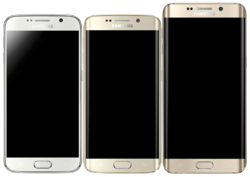
Released April 10, 2015, the Galaxy S6 Edge wrapped its Super AMOLED display around both sides of the phone in a dramatic curved-glass design. Paired with a premium glass-and-metal build and improved camera, it signaled Samsung's pivot to cutting-edge design leadership.
Image source: Samsung Galaxy S6
Sep 7, 2016
% complete
Apple's decision to remove the 3.5mm headphone jack with the iPhone 7 in September 2016 proved deeply controversial but influential. Most flagship Android makers followed suit within a few years, accelerating the adoption of wireless earbuds such as AirPods.
Image source: IPhone 7
Aug 17, 2017
% complete
Andy Rubin's Essential Phone, released August 17, 2017, featured an edge-to-edge display with a small notch before the iPhone X did. Though Essential ultimately failed commercially, its design presaged the industry-wide shift toward near-bezelless screens and punch-hole cameras.
Image source: Essential Phone
Nov 3, 2017
% complete
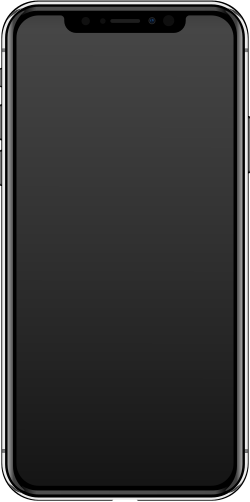
The iPhone X, released November 3, 2017, celebrated the iPhone's tenth anniversary with an edge-to-edge OLED display, the notch, gesture navigation, and Face ID facial recognition replacing Touch ID. Its design language reshaped flagship smartphones across the entire industry.
Image source: IPhone X
Apr 5, 2019
% complete
South Korea launched the world's first commercial 5G networks on April 3, 2019, with the Samsung Galaxy S10 5G among the first compatible handsets. Through 2019 and 2020, chipmakers like Qualcomm brought 5G modems to mainstream phones, beginning the transition to gigabit mobile speeds.
Image source: 5G
Sep 6, 2019
% complete
After a delayed launch following screen failures in review units, the Samsung Galaxy Fold went on sale September 6, 2019 as the first mainstream foldable smartphone. Its flexible OLED display opened a new hardware category pursued by Samsung, Huawei, Motorola, and others.
Image source: Samsung Galaxy Fold
Sep 1, 2020
% complete
The ZTE Axon 20 5G, released September 2020, became the first mass-produced smartphone with an under-display selfie camera, hiding the sensor beneath the screen. Though image quality initially lagged, the technology pointed toward truly uninterrupted full-screen designs.
Image source: ZTE
Jan 9, 2007
% complete
Steve Jobs unveiled the iPhone at Macworld on January 9, 2007, introducing a revolutionary multi-touch screen, a desktop-class web browser, and an iPod in a single device without a physical keyboard. Released in June 2007, it redefined what a smartphone could be and set the industry on a new course.
Image source: IPhone (1st generation)
Oct 22, 2008
% complete
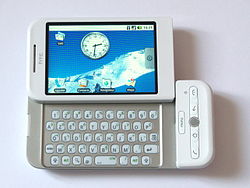
The HTC Dream, sold by T-Mobile USA as the G1, launched on October 22, 2008 as the first commercial Android device. Featuring a slide-out keyboard, trackball, and tight integration with Google services, it opened the Android ecosystem that now powers billions of devices worldwide.
Image source: HTC Dream
Jun 1, 2009
% complete
The Samsung Galaxy i7500, released in June 2009, was Samsung's first Android smartphone and the origin of the Galaxy brand. Its AMOLED display and slim design began Samsung's transformation into the dominant force in Android hardware.
Image source: Samsung Galaxy A series
Nov 6, 2009
% complete
The Motorola Droid arrived on November 6, 2009 as the first Android phone for Verizon Wireless, running Android 2.0 with free Google Maps Navigation. Backed by an aggressive 'iDon't' marketing campaign, it became a major hit and cemented Android's momentum in the United States.
Image source: Motorola Droid
Apr 28, 2011
% complete
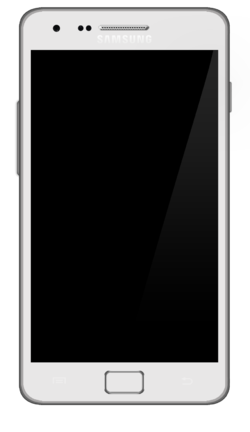
The Galaxy S II, released in April 2011, paired a stunning Super AMOLED Plus display with an ultra-thin 8.49mm body and a powerful dual-core processor. It sold over 20 million units in its first year, establishing Samsung as Apple's chief rival in premium smartphones.
Image source: Samsung Galaxy S II
Nov 1, 2011
% complete
The Nokia Lumia 800, released in November 2011, was the first true Nokia Windows Phone, adapting the striking polycarbonate design of the N9 to Microsoft's tile-based OS. Praised for its hardware and design, it anchored Nokia's ambitious but ultimately unsuccessful Windows Phone revival.
Image source: Nokia Lumia 800
Jul 25, 2014
% complete
Amazon entered the smartphone market in July 2014 with the Fire Phone, notable for dynamic perspective 3D visuals and Firefly object recognition. Poor pricing, a limited app ecosystem, and gimmicky features led to weak sales, and Amazon exited the hardware phone business within a year.
Image source: Fire Phone
Oct 20, 2016
% complete
Google launched the Pixel and Pixel XL on October 20, 2016, marking its move from reference Nexus devices to fully branded flagship phones. With the Google Assistant built in and class-leading computational photography, the Pixel line became Google's showcase for software-driven innovation.
Image source: Google Pixel
Oct 23, 2020
% complete
Announced October 13, 2020, the iPhone 12 family brought 5G connectivity to iPhones for the first time, along with flat-edged designs reminiscent of the iPhone 4 and MagSafe magnetic accessories. It became one of the best-selling smartphone lines ever, driving a global 5G upgrade cycle.
Image source: IPhone 12
Mar 1, 2007
% complete
The Nokia N95, released in March 2007, packed a 5-megapixel camera with Carl Zeiss optics, GPS, a music player, and a dual-slider design into one device. Often called a 'multimedia computer', it represented the peak of pre-iPhone feature-rich smartphone engineering.
Image source: Nokia N95
Mar 1, 2013
% complete
The HTC One M7, released in March 2013, featured an all-aluminum unibody design, front-facing BoomSound speakers, and a 4-megapixel 'UltraPixel' camera focused on low-light performance. It won widespread critical acclaim and raised the bar for smartphone build quality.
Image source: HTC One (M7)
Nov 10, 2016
% complete
By late 2016, augmented reality features like Snapchat Lenses and Pokémon GO had turned smartphone cameras into AR platforms. These experiences drove demand for better sensors and processors optimized for computer vision, foreshadowing ARKit and ARCore releases in 2017.
Image source: Augmented reality
Mar 27, 2018
% complete
The Huawei P20 Pro, unveiled March 27, 2018, introduced the first triple-lens smartphone camera, combining a 40MP main sensor, monochrome sensor, and 3x telephoto lens. Co-engineered with Leica, it topped DxOMark rankings and ignited the multi-camera arms race.
Image source: Huawei P20
Mar 1, 2019
% complete
The Huawei P30 Pro, launched March 2019, introduced a periscope-style folded telephoto lens enabling 5x optical zoom, followed by Samsung's Space Zoom reaching 10x on the Galaxy S20 Ultra in 2020. These innovations dramatically expanded the photographic range of pocket-sized devices.
Image source: Huawei P30
Or browse the full history timeline directory, with more than 2,000 topics.
This History of Smartphones timeline was generated with the help of AI, using information found on the internet.
We work hard to keep these timelines accurate, but mistakes do get through. If you spot one, email us at [email protected] and we'll fix it for future visitors.
Generate yours with AI or build it from scratch, for free.

Export your timeline, add your own events, edit or remove AI-generated events, and much more
No credit card required.
Cancel anytime.
Cancel anytime.
You can create an unlimited number of timelines with up to 10 events on each one, customize how they look, export them to PDF, PNG, PowerPoint, CSV, and Excel, and share them with a link. Paid plans raise the event limit and add features like spreadsheet imports and collaborators.
Yes. You can cancel your subscription from your account page at any time, and you will not be charged again. Your subscription stays active for the rest of the period you already paid for.
Yes. We will email you a reminder before the annual renewal, and we will also email you a receipt.
Yes. You can email us within 15 days of any payment, and we will issue you a full refund.
Check out our pricing docs or send us an email anytime: [email protected].