
-
Resources
-
Pricing
The history of socks traces how foot coverings evolved from simple woven or wrapped fabrics into knitted, elastic, and technologically advanced garments shaped by climate, culture, fashion, and industry. More Less
Build a timeline like this one in minutes, for free. Start Yours →
100 - 400
Romans used several kinds of foot coverings, including wrapped cloth, sewn leather, and wool socks. Military and civilian examples show that socks served both warmth and comfort, especially in colder provinces.
256
A distinctive split-toe wool sock was excavated at Dura-Europos, a Roman military and trading settlement in modern Syria. The find demonstrates the use of tailored foot coverings in the Roman world before modern knitting became widespread.
Image source: Dura-Europos
300 - 500
The earliest known socks made by true knitting date from late antiquity or the early medieval period. Earlier foot coverings were made by wrapping, sewing, or nålebinding rather than by the later two-needle knitting technique.
300 - 500
Colorful wool socks with a split between the big toe and other toes were produced in Egypt during late antiquity. Their shape allowed them to be worn with sandals, illustrating how socks adapted to existing footwear.
800 - 1100
Nålebinding, a looped textile technique made with a single needle, produced durable socks and mittens across Scandinavia and other parts of northern Europe. It predates widespread knitting and remains visible in archaeological textile finds.
Image source: Nålebinding
800 - 1050
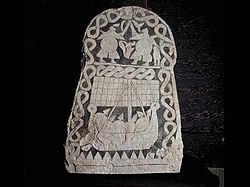
Archaeological finds from Viking-age settlements include woolen foot coverings made by nålebinding, tablet weaving, and related techniques. These objects reveal practical responses to cold climates and long journeys.
Image source: Viking Age
1000 - 1400
In medieval Europe, hose made from woven cloth or knitted fabric increasingly replaced simple foot wraps among many social groups. They could cover the foot and leg and were often held up with garters or attached to clothing.
Image source: Hose (clothing)
1200 - 1500
Egypt remained an important center for sophisticated sock knitting. Coptic and Islamic-period examples show complex colors, geometric patterns, and split toes designed for sandals.
1200 - 1400
Knitting techniques spread through the Mediterranean and into western Europe during the late medieval period. The technique made it possible to create more elastic, closely fitted socks than woven cloth generally allowed.
1600 - 1700
Silk stockings became prestigious goods among European elites during the seventeenth century. Their softness, bright appearance, and high cost associated them with court fashion and social status.
1800 - 1900
Elastic garters and woven bands helped keep long socks and stockings in place before elastic was routinely knitted into the garment. They were especially important as hosiery became closer fitting and more fashionable.
1970 - 1990
Advances in computerized and multicolor knitting made elaborate patterns, novelty motifs, and bold colors inexpensive to produce. Socks increasingly became visible fashion accessories rather than purely functional undergarments.
2010 - 2020
Online retail and subscription services changed how many consumers bought socks. Direct-to-consumer brands used novelty designs, recurring deliveries, personalization, and social media marketing to turn basic hosiery into lifestyle products.
1589
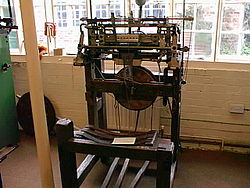
English clergyman William Lee is traditionally credited with inventing the stocking frame in 1589. The machine knitted fabric in rows and laid the foundation for large-scale production of stockings and socks.
1600 - 1700
During the seventeenth century, stocking frames spread through England and continental Europe. Workshops used them to produce knitted hosiery more quickly and consistently than hand knitting, although finishing remained labor intensive.
Image source: Stocking frame
1657
The Worshipful Company of Framework Knitters was established in London in 1657. Its creation reflects the growing economic importance and regulation of mechanized hosiery production in England.
1700 - 1800
Improved access to cotton and developments in spinning helped cotton hosiery become more widely available in the eighteenth century. Cotton socks offered a washable and relatively affordable alternative to wool and silk.
1760 - 1840
Mechanization during the Industrial Revolution changed sock production from a household and workshop craft into an increasingly factory-based industry. Power, improved machinery, and specialized labor lowered costs and increased output.
Image source: Industrial Revolution
1800 - 1850
Nineteenth-century improvements in circular knitting machines allowed tubes of fabric to be made efficiently. This was especially important for socks because the method could produce continuous, stretchy leg and foot sections.
1850 - 1900
Smaller hand-operated knitting machines became available to households and small businesses in the nineteenth century. They supplemented factory production and enabled people to make socks and other garments at home.
Image source: Knitting machine
1980 - 2000
Computer-controlled knitting machines improved the speed and precision of sock production. Manufacturers could program complex patterns, reinforced zones, graduated compression, and multiple sizes with less manual setup.
2000 - 2025
By the twenty-first century, sock design, fiber production, knitting, finishing, and retail were commonly distributed across international supply chains. Specialized factories could produce large volumes while serving global brands and niche markets.
Image source: Textile industry
1920 - 1940
Rayon and related regenerated cellulose fibers began appearing in hosiery during the early twentieth century. They offered a smooth appearance and new price points, although durability and fit varied by product.
1935
A research team led by Wallace Carothers at DuPont developed nylon in 1935. The strong, flexible synthetic fiber would soon revolutionize stockings and socks by offering durability and consistent production.
Image source: Nylon
1940 - 1960
Advances in circular knitting and finishing made seamless or minimally seamed socks increasingly common. Removing bulky seams improved comfort and made mass-produced socks easier to fit and wear.
May 15, 1940
DuPont introduced nylon stockings commercially in the United States on May 15, 1940. Their strength, smooth finish, and affordability made them an immediate success and helped establish synthetic fibers in hosiery.
1942 - 1945
During World War II, nylon was redirected toward parachutes, ropes, aircraft components, and other military uses. Civilian hosiery became scarce, encouraging the use of wool, cotton, rayon, and recycled materials.
1950 - 1970
The development and adoption of elastic fibers, including spandex, improved the ability of socks to stretch and recover. Elastic cuffs could hold socks in place without separate garters while preserving comfort.
1950 - 1970
Acrylic fibers became popular for socks because they were lightweight, inexpensive, colorfast, and resistant to moth damage. They were often blended with wool or other fibers to balance warmth, cost, and durability.
1960 - 1980
Tube socks, knitted as relatively uniform tubes with little or no shaped heel, became popular in casual and athletic clothing. Their simple construction made them economical to manufacture and easy to sell in broad size ranges.
1960 - 1980
Sports socks increasingly used terry-loop cushioning, elastic support, and moisture-managing fiber blends. These features helped protect the feet during running, basketball, tennis, and other high-impact activities.
1990 - 2010
Fine merino wool became popular again in hiking, travel, and outdoor socks. Its ability to regulate temperature and manage moisture helped counter the idea that wool socks were necessarily coarse or uncomfortable.
1990 - 2010
Graduated compression socks became increasingly available to travelers, athletes, medical patients, and people who stand for long periods. They apply controlled pressure to support venous return, though medical use should follow professional advice.
1990 - 2010
Polyester, polypropylene, nylon, and elastane blends became common in technical socks. Engineered fibers and knitted channels moved moisture away from the skin and improved drying during exercise and outdoor activities.
2000 - 2015
Toe socks, which place individual fabric sleeves around the toes, gained renewed visibility in running, yoga, and casual fashion. They draw on the same separated-toe principle seen in some ancient Egyptian and Roman-period socks.
2000 - 2015
Bamboo-derived rayon and other plant-based fibers became widely marketed for socks in the early twenty-first century. Brands emphasized softness and renewable feedstocks, while the environmental effects depend heavily on processing methods.
2015 - 2025
Sock manufacturers increasingly incorporated recycled polyester, recycled nylon, and reclaimed cotton. These initiatives aim to reduce reliance on virgin materials, although fiber blends and dyeing can still complicate recycling.
2015 - 2025
Researchers and companies experimented with socks containing pressure sensors, conductive yarns, temperature monitoring, and connectivity. Applications have included gait analysis, sports feedback, fall prevention, and health monitoring.
Image source: E-textiles
Build a timeline like this one in minutes, for free. Start Yours →
Or browse the full history timeline directory, with more than 2,500 topics.
This History of Socks timeline was generated with the help of AI, using information found on the internet.
We work hard to keep these timelines accurate, but mistakes do get through. If you spot one, email us at [email protected] and we'll fix it for future visitors.
Generate yours with AI or build it from scratch, for free.
Export your timeline, add your own events, edit or remove AI-generated events, and much more
No credit card required.
15-day money-back guarantee.
You can create an unlimited number of timelines with up to 10 events on each one, customize how they look, export them to PDF, PNG, PowerPoint, CSV, and Excel, and share them with a link. Timelines made with Timeline Maker AI keep every event the generator created, and you can add up to 5 events of your own. Paid plans remove the event limit, add spreadsheet imports and hide Preceden's branding, and the higher-priced plan also adds collaborators, a custom logo and a custom domain.
Yes. You can cancel your subscription from your account page at any time, and you will not be charged again. Your subscription stays active for the rest of the period you already paid for.
Yes. We email you a reminder 15 days before your annual renewal, and we email you a receipt after every payment.
Yes. You can email us within 15 days of any payment, and we will issue you a full refund.
Check out our pricing docs or send us an email anytime: [email protected].