-
Use Cases
-
Resources
-
Pricing
The history of superheroes traces the evolution of costumed crime-fighters from mythological figures and pulp adventurers to the birth of the modern superhero with Superman in 1938. It spans comic book golden ages, industry declines and revivals, diverse reinventions, and the rise of superhero films dominating global pop culture. More Less
1877
% complete
Masked vigilantism in American story-telling inspired fictional masked crimefighters, beginning with the character Deadwood Dick in 1877. This laid the groundwork for the later emergence of costumed heroes in pulp fiction and comic books.
Image source: Deadwood Dick
1899
% complete
The word 'superhero' dates back to 1899, long before the modern comic book characters that would popularize the term in the twentieth century.
Image source: Superhero
1903
% complete
The 1903 British play The Scarlet Pimpernel and its spinoffs popularized the idea of a masked avenger and the superhero trope of a secret identity, influencing countless later heroes.
Image source: The Scarlet Pimpernel
1909
% complete
France produced early examples like the superheroine L'Oiselle, created in 1909 by French writer Renée Marie Gouraud d'Ablancourt under her pen name René d'Anjou, one of the earliest superheroines.
Image source: L'Oiselle
1911
% complete
The French cyborg Nyctalope (1911) possessed two revolutionary enhancements for the period—enhanced nocturnal vision and an electromechanical cardiac implant—making him an early example of a technologically enhanced hero.
Image source: Nyctalope
1912 - 1936
% complete
Over the next few decades, masked and costumed pulp fiction characters such as Tarzan (1912), John Carter (1912), Zorro (1919), Buck Rogers (1928), The Shadow (1930), Night Hawk (1930), Lensman (1934) and Flash Gordon (1934), film serial heroes Judex (1916) and Ravengar (1916), and comic strip heroes such as Mandrake the Magician (1934), Magic Phantom (1935) and the Phantom (1936) began appearing, as did non-costumed super-strong characters including Patoruzú (1928), Popeye (1929), Hugo Danner (Gladiator, 1930) and Aarn Munro (The Mightiest Machine, 1934).
Image source: Pulp magazine
1914
% complete
Sarutobi Sasuke, a Japanese superhero ninja from Japanese folklore and children's novels in the 1910s, by 1914 had a number of superhuman powers and abilities, making him an early non-Western superhero.
Image source: Sarutobi Sasuke
Aug 1936
% complete
In August 1936, Thrilling Wonder Stories published Zarnak by Max Plaisted, an early example of a superpowered costumed hero in American pulp magazines.
Image source: Wonder Stories
1937
% complete
Famany, the 'flying man' of a German comic story of 1937, used a winged apparatus to fly over New York and became embroiled in the world of crime; he had only one appearance.
Aug 1937
% complete
Another groundbreaking character emerged in August 1937: Olga Mesmer, 'The Girl with the X-ray Eyes,' featured in a single-page comic strip in Spicy Mystery Stories, an early superpowered heroine.
Image source: Olga Mesmer
1917
% complete
The first use of the phrase 'super hero' dates back to 1917, when it was merely used to describe a 'public figure of great accomplishments.'
Aug 1937
% complete
In August 1937, a letter column of a magazine used the word superhero to define the title character, an early application of the term to a fictional costumed figure.
1967
% complete
In 1967, Ben Cooper, Inc., an American Halloween costume manufacturer, became the first entity to commercialize the phrase 'super hero' when it registered the mark in connection with Halloween costumes.
1972
% complete
In 1972, Mego Corporation, an American toy company, attempted to register the mark 'World's Greatest Superheroes' in connection with its line of action figures.
Image source: Mego Corporation
1981
% complete
After Mego jointly assigned its interest in the trademark to DC Comics in 1977, DC and Marvel applied for the mark in connection with comic books in 1979 and were granted it by the United States Patent and Trademark Office in 1981.
2009
% complete
DC and Marvel filed a trademark application as joint owners for the mark 'SUPER HEROES' for a series of animated motion pictures in 2009, continuing their joint control of the term.
2014
% complete
In 2014, British law student Graham Jules received a cease and desist from DC and Marvel, who claimed his use of the term superhero in his self-help book Business Zero to Superhero would cause confusion and dilute their brands.
2024
% complete
In 2024, Superbabies Limited managed to obtain a default judgement and cancel the 'super heroes' trademarks as genericized, except for the animation pictures mark, a major shift in the ownership of the term.
1931 - 1933
% complete
Prince of Gamma, appearing in the early 1930s, was another early Japanese superpowered costumed hero who debuted in kamishibai alongside Ōgon Bat.
Image source: The Golden Bat
1931
% complete
Japan's Ōgon Bat (1931) was among the earliest superpowered costumed heroes, first appearing in kamishibai, a kind of hybrid media combining pictures with live storytelling.
1952
% complete
In 1952, Osamu Tezuka's manga Tetsuwan Atom, more popularly known in the West as Astro Boy, was published, becoming a foundational work of Japanese superhero media.
Image source: Astro Boy
1957
% complete
In 1957 Japan, Shintoho produced the first film serial featuring the superhero character Super Giant, signaling a shift in Japanese popular culture towards tokusatsu masked superheroes over kaiju giant monsters.
1958
% complete
1958 saw the debut of superhero Moonlight Mask on Japanese television, created by Kōhan Kawauchi, who followed up its success with Seven Color Mask (1959) and Messenger of Allah (1960), both starring a young Sonny Chiba.
1963
% complete
In 1963, Astro Boy was adapted into a highly influential anime television series, shaping the future of animated superhero storytelling worldwide.
Image source: Astro Boy (1963 TV series)
1964
% complete
The kaiju monster Godzilla, originally a villain, began being portrayed as a radioactive superhero in the Godzilla films starting with Ghidorah, the Three-Headed Monster (1964).
Image source: Ghidorah, the Three-Headed Monster
1966
% complete
1966 saw the debut of the sci-fi/horror series Ultra Q created by Eiji Tsuburaya, which would eventually lead to the sequel Ultraman, spawning a successful franchise which pioneered the Kyodai Hero subgenre where superheroes are as big as the kaiju they fight.
Image source: Ultra Q
1971
% complete
In 1971, Kamen Rider launched the 'Henshin Boom' on Japanese television in the early 1970s, greatly impacting the tokusatsu superhero genre in Japan.
Image source: Kamen Rider
1972
% complete
In 1972, the Science Ninja Team Gatchaman anime debuted, building upon the superhero team idea of live-action Phantom Agents while introducing different colors for team members and special vehicles that could combine into a larger one.
Image source: Science Ninja Team Gatchaman
1972
% complete
Go Nagai's Devilman debuted in 1972, part of a trend of darker antiheroic characters that also included Shotaro Ishinomori's Skull Man (1970) and Gerry Conway and John Romita's Punisher (1974).
Image source: Devilman
1973
% complete
Go Nagai wrote the manga Cutey Honey in 1973; although the Magical girl genre already existed, Nagai's manga introduced transformation sequences that would become a staple of Magical Girl media.
Image source: Cutie Honey
1975
% complete
In 1975 Shotaro Ishinomori's Himitsu Sentai Gorenger debuted on what is now TV Asahi, bringing multi-colored teams and supporting vehicles into live-action and beginning the Super Sentai franchise, later adapted into the American Power Rangers series in the 1990s.
Image source: Himitsu Sentai Gorenger
1978
% complete
In 1978, Toei adapted Spider-Man into a live-action Japanese television series, a unique tokusatsu take on the Marvel hero featuring giant robot battles.
Image source: Spider-Man (Japanese TV series)
1938
% complete
Superman's launch in 1938 began the Golden Age of Comic Books, whose span, though disputed, is generally agreed to have started with Superman's debut, ushering in the era of the modern superhero.
Image source: Superman
1939
% complete
Captain Marvel debuted in 1939 at the beginning of the Golden Age of Comic Books, becoming one of the most popular superheroes of the era.
Image source: Shazam (DC Comics)
1939
% complete
At the end of the decade, in 1939, Batman was created by Bob Kane and Bill Finger, becoming one of the most enduring and iconic superheroes in history.
Image source: Batman
1940
% complete
In 1940, Maximo the Amazing Superman debuted in the Big Little Book series by Russell R., part of the wave of Superman-inspired characters following his success.
Image source: Big Little Book series
Mar 1940
% complete
Notable early superheroines include the Woman in Red, introduced in Standard Comics' Thrilling Comics #2 in March 1940, predating many other Golden Age superheroines.
Image source: Woman in Red (comics)
Jun 2, 1940
% complete
Lady Luck debuted in the Sunday-newspaper comic-book insert The Spirit Section on June 2, 1940, among the notable female heroes of the Golden Age.
Image source: Lady Luck (comics)
Jun 3, 1940
% complete
A few months after other heroines, the Invisible Scarlet O'Neil, a non-costumed character who fought crime and wartime saboteurs using the superpower of invisibility, created by Russell Stamm, debuted in her eponymous syndicated newspaper comic strip on June 3, 1940.
Image source: Invisible Scarlet O'Neil
Nov 1940
% complete
The comedic character Red Tornado debuted in All-American Comics #20 in November 1940, one of the notable early superheroines of the Golden Age.
Image source: Ma Hunkel
Dec 1940
% complete
Captain America appeared for the first time in print in December 1940, a year prior to the attack on Pearl Harbor, when America was still in isolationism, making him a patriotic symbol before the US entered World War II.
Image source: Captain America
1941
% complete
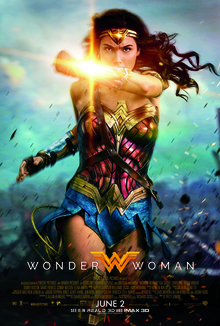
Wonder Woman debuted in 1941, published by All-American Publications, one of two companies that would merge to form DC Comics in 1944, becoming the most famous Golden Age superheroine.
Image source: Wonder Woman
Apr 6, 1941
% complete
Miss Fury debuted in her eponymous comic strip on April 6, 1941, created by female cartoonist Tarpé Mills, a landmark for women creators in comics.
Image source: Miss Fury
Aug 1941
% complete
The Phantom Lady was introduced in Quality Comics Police Comics #1 in August 1941, and the Black Cat was introduced in Harvey Comics' Pocket Comics #1 the same month, adding to the growing roster of Golden Age superheroines.
Image source: Phantom Lady
1943
% complete
In the 1943 cartoon parody of Superman, Super-Rabbit, Bugs Bunny ingests 'super-carrots' created by Professor Cannafraz and acquires various super powers including flight, super strength and invulnerability.
Image source: Super Rabbit
1956
% complete
During this era DC introduced the likes of Batwoman in 1956, Supergirl, Miss Arrowette, and Bat-Girl; all female derivatives of established male superheroes.
Image source: Batwoman
1944
% complete
Kismet, Man of Fate, a Muslim Algerian hero, debuted in 1944 and is considered one of the first Muslim superheroes in comic book history.
Image source: Kismet, Man of Fate
1944
% complete
The Green Turtle, created in 1944 by Chinese-American artist Chu F. Hing, is recognized as an early Asian superhero in American comics.
Image source: Green sea turtle
1947
% complete
Before mainstream black superheroes, a few characters appeared during the Golden Age, such as those featured in the one-shot All-Negro Comics #1 (1947), though they are not generally considered superheroes in the modern sense.
Image source: All-Negro Comics
1966
% complete
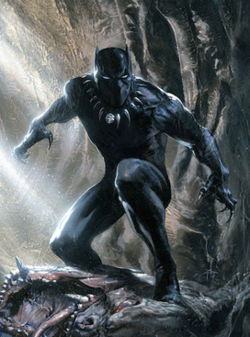
In 1966, Marvel introduced the Black Panther, an African monarch who became the first non-caricatured black superhero in mainstream American comics.
Image source: Black Panther (character)
1969
% complete
The first African-American superhero, the Falcon, followed Black Panther in 1969, marking a milestone in racial representation in American comic books.
Image source: Falcon (comics)
1971
% complete
In 1971, Red Wolf became the first Native American in the superheroic tradition to headline a comic book series.
1972
% complete
Three years after the Falcon, Luke Cage, a self-styled 'hero-for-hire', became the first black superhero to star in his own comic book series in 1972.
Image source: Luke Cage
1973
% complete
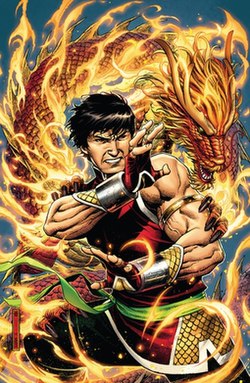
In 1973, Shang-Chi became the first prominent Asian superhero to star in an American comic book, expanding ethnic diversity in mainstream superhero comics.
Image source: Shang-Chi
1975
% complete
The X-Men were revived in 1975 with a line-up of characters drawn from several nations, including the Kenyan Storm, German Nightcrawler, Soviet/Russian Colossus, Irish Banshee, and Japanese Sunfire.
Image source: X-Men '97
1978
% complete
Kitty Pryde, a member of the X-Men, was an openly Jewish superhero in mainstream American comic books as early as 1978, a milestone in religious representation.
Image source: Kitty Pryde
1989
% complete
In 1989, the Monica Rambeau incarnation of Captain Marvel was the first female black superhero from a major publisher to get her own title in a special one-shot issue.
Image source: Monica Rambeau
1992
% complete
In 1992, Marvel revealed that Northstar, a member of the Canadian mutant superhero team Alpha Flight, was homosexual, making him considered the first openly gay superhero appearing in mainstream comic books.
Image source: Northstar (character)
1993
% complete
In 1993, Milestone Comics, an African-American-owned media/publishing company, entered into a publishing agreement with DC Comics that allowed them to introduce a line of comics with characters of many ethnic minorities.
1997
% complete
Poison Ivy uses seduction through poison to take over the minds of her victims as seen in the 1997 film Batman and Robin, exemplifying the sexualization of female supervillains.
Image source: Poison Ivy (character)
2011
% complete
Alysia Yeoh, a supporting character created by writer Gail Simone for DC's Batgirl ongoing series, received substantial media attention in 2011 for being the first major transgender character written in a contemporary context in a mainstream American comic book.
Image source: Alysia Yeoh
2011
% complete
Following The New 52 reboot in 2011, the Golden Age Green Lantern Alan Scott was reimagined as openly gay, part of a broader trend of LGBTQ representation that included Mikaal Tomas (1998), Renee Montoya (2003), Kate Kane (2006), Rictor and Shatterstar (2009), and Iceman (2015).
Image source: Alan Scott
2013
% complete
Volume 4 of the X-Men comic book series featured an all-female team as part of the Marvel NOW! branding initiative in 2013, highlighting female-led superhero teams.
Image source: X-Men (comic book)
2014
% complete
Marvel in 2014 saw Carol Danvers become Captain Marvel, elevating a female character to one of the publisher's flagship heroic identities.
2016
% complete
Harley Quinn in 2016's Suicide Squad uses her sexuality to her advantage, acting in a promiscuous manner, continuing debates about the portrayal of female characters in superhero media.
Image source: Harley Quinn
2017
% complete
In 2017, Pluin introduced Sign Gene, a film featuring a group of deaf superheroes whose powers derive from their use of sign language, the first group of deaf superheroes with superpowers through sign language.
Image source: Sign Gene
2017
% complete
In 2017's Wonder Woman, she had the power of a god, but was still drawn to a much weaker, mortal male character, reflecting ongoing tensions in the depiction of powerful female heroes.
Image source: Wonder Woman (2017 film)
Or browse the full history timeline directory, with more than 2,000 topics.
This History of Superheroes timeline was generated with the help of AI, using information found on the internet.
We work hard to keep these timelines accurate, but mistakes do get through. If you spot one, email us at [email protected] and we'll fix it for future visitors.
Generate yours with AI or build it from scratch, for free.
Export your timeline, add your own events, edit or remove AI-generated events, and much more
No credit card required.
Cancel anytime.
Cancel anytime.
You can create an unlimited number of timelines with up to 10 events on each one, customize how they look, export them to PDF, PNG, PowerPoint, CSV, and Excel, and share them with a link. Paid plans raise the event limit and add features like spreadsheet imports and collaborators.
Yes. You can cancel your subscription from your account page at any time, and you will not be charged again. Your subscription stays active for the rest of the period you already paid for.
Yes. We will email you a reminder before the annual renewal, and we will also email you a receipt.
Yes. You can email us within 15 days of any payment, and we will issue you a full refund.
Check out our pricing docs or send us an email anytime: [email protected].