-
Use Cases
-
Resources
-
Pricing
The Premier League is England's top-flight professional football competition, formed in 1992 when First Division clubs broke away from the Football League to capitalize on lucrative television rights. It has since grown into the world's most-watched and wealthiest football league, featuring legendary clubs like Manchester United, Arsenal, Chelsea, Manchester City, and Liverpool. More Less
Jul 17, 1991
% complete
Representatives of England's top clubs signed the Founder Members Agreement, announcing their intention to break away from the Football League First Division to form a new league with greater commercial independence and lucrative television rights.
Image source: Premier League
May 1992
% complete
BSkyB secured exclusive live broadcast rights for the new Premier League for £191 million over five years, transforming English football's finances and making live televised football a staple of British culture.
May 27, 1992
% complete
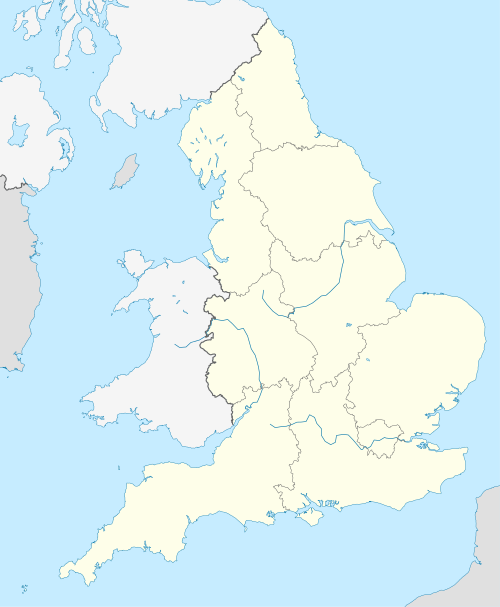
The FA Premier League was formally established as a limited company, with 22 clubs competing in its inaugural season. The move was driven by the desire for a larger share of broadcasting revenue and modernized commercial operations.
Image source: 1992–93 FA Premier League
Aug 15, 1992
% complete
The inaugural Premier League season began, featuring 22 clubs including newly promoted sides. Brian Deane scored the first-ever Premier League goal for Sheffield United against Manchester United.
Aug 1995
% complete
The Premier League was reduced from 22 to 20 teams at the start of the 1995–96 season, following FIFA recommendations, increasing fixture quality and reducing player workload.
Image source: 1995–96 FA Premier League
Aug 2018
% complete
By the late 2010s the Premier League had become the world's most-watched football league, broadcast to over 200 territories, with record domestic and international rights deals worth billions annually.
Image source: 2018–19 Premier League
Oct 2020
% complete
A radical restructuring plan proposed by Liverpool and Manchester United, which would have cut the number of Premier League clubs and concentrated power among the biggest teams, was unanimously rejected.
Apr 18, 2021
% complete
The 'Big Six' Premier League clubs announced they were founding members of a breakaway European Super League, but withdrew within days amid fierce backlash from fans, players, and governments.
Image source: European Super League
Nov 26, 1992
% complete
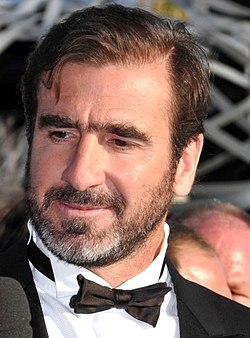
French forward Eric Cantona signed for Manchester United from Leeds United, becoming a transformative figure whose creativity and charisma helped define United's early Premier League dominance.
Image source: Eric Cantona
Jun 2004
% complete
Fresh off winning the Champions League with Porto, José Mourinho joined Chelsea backed by Roman Abramovich's wealth, declaring himself 'the Special One' and transforming the club into title contenders.
Image source: José Mourinho
Sep 1, 2008
% complete
Abu Dhabi's Sheikh Mansour acquired Manchester City, launching an era of enormous investment that would eventually turn City into one of Europe's dominant forces.
Image source: History of Manchester City F.C.
Jul 2011
% complete
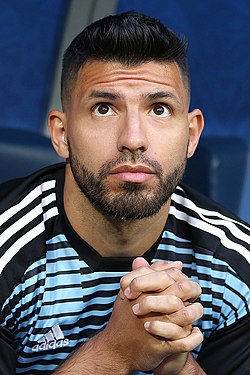
Argentine striker Sergio Agüero joined Manchester City from Atlético Madrid, going on to become the club's all-time leading scorer and author of one of the league's most iconic moments.
Image source: Sergio Agüero
May 2013
% complete
Sir Alex Ferguson stepped down as Manchester United manager after winning 13 Premier League titles, closing the most successful managerial tenure in English football history.
Image source: Alex Ferguson
Jul 2016
% complete
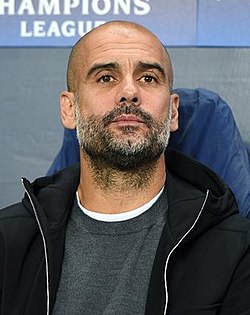
Pep Guardiola took charge of Manchester City, bringing his possession-based philosophy and eventually presiding over the most sustained period of dominance in Premier League history.
Image source: Pep Guardiola
May 3, 1993
% complete
Manchester United won the first Premier League championship, ending a 26-year wait for a top-flight title and beginning an era of dominance under manager Alex Ferguson.
May 14, 1995
% complete
Backed by Jack Walker's investment and led by Alan Shearer's goals, Blackburn Rovers edged out Manchester United to claim the 1994–95 Premier League title, one of the competition's biggest surprises.
May 1998
% complete
Arsène Wenger's Arsenal won both the Premier League and FA Cup in 1997–98, ending Manchester United's early dominance and ushering in a new competitive era.
Apr 2005 - Apr 2006
% complete
Chelsea claimed consecutive Premier League titles in 2005 and 2006, setting a then-record 95 points in 2004–05 and conceding only 15 goals, breaking the duopoly of Manchester United and Arsenal.
Image source: 2004–05 Chelsea F.C. season
May 2, 2016
% complete
5000-1 outsiders Leicester City, led by Jamie Vardy and Riyad Mahrez under Claudio Ranieri, won the Premier League, widely regarded as the greatest upset in the history of team sport.
Image source: 2015–16 Leicester City F.C. season
Jun 25, 2020
% complete
Jürgen Klopp's Liverpool clinched the club's first top-flight title in 30 years, wrapping up the 2019–20 season with seven games to spare during the COVID-affected campaign.
Image source: 2019–20 Liverpool F.C. season
May 2021
% complete
Manchester City secured their third consecutive Premier League crown in 2020–21, cementing Guardiola's side as the competition's dominant force of the decade.
Image source: 2020–21 Manchester City F.C. season
Jul 1996
% complete
Newcastle United signed Alan Shearer from Blackburn Rovers for £15 million, a world-record fee that highlighted the rapidly inflating transfer market of the Premier League era.
Image source: Alan Shearer
May 26, 1999
% complete
Manchester United won the Premier League, FA Cup, and UEFA Champions League in one season, becoming the first English club to achieve the treble after injury-time goals beat Bayern Munich in the final.
Image source: 1998–99 Manchester United F.C. season
May 2004
% complete
Arsenal's 'Invincibles' finished the 2003–04 season without losing a single league match, earning a special gold version of the Premier League trophy — a feat unmatched since.
Image source: The Invincibles (English football)
Feb 2006
% complete
Alan Shearer retired as the Premier League's all-time leading scorer with 260 goals, a record that has stood ever since and remains one of English football's most celebrated benchmarks.
May 13, 2012
% complete
With Manchester City needing a win on the final day, Sergio Agüero scored in the 94th minute against QPR to snatch the title from Manchester United in one of the most dramatic finishes in sports history.
May 2013
% complete
Ryan Giggs collected his 13th Premier League winner's medal when Manchester United won the 2012–13 title, more than any other player in the competition's history.
Image source: Ryan Giggs
Nov 2015
% complete
Leicester striker Jamie Vardy set a Premier League record by scoring in 11 straight games during the 2015–16 season, breaking Ruud van Nistelrooy's previous mark en route to the title.
Image source: Jamie Vardy
May 2018
% complete
Liverpool's Mohamed Salah scored 32 goals in the 2017–38 38-game Premier League season, breaking the previous record of 31 shared by Alan Shearer, Cristiano Ronaldo, and Luis Suárez.
May 6, 2018
% complete
Guardiola's Manchester City became the first team to reach 100 points in a Premier League season, dubbed the 'Centurions', while scoring a record 106 goals.
Image source: 2017–18 Manchester City F.C. season
Or browse the full history timeline directory, with more than 2,000 topics.
This History of the Premier League timeline was generated with the help of AI, using information found on the internet.
We work hard to keep these timelines accurate, but mistakes do get through. If you spot one, email us at [email protected] and we'll fix it for future visitors.
Generate yours with AI or build it from scratch, for free.
Export your timeline, add your own events, edit or remove AI-generated events, and much more
No credit card required.
Cancel anytime.
Cancel anytime.
You can create an unlimited number of timelines with up to 10 events on each one, customize how they look, export them to PDF, PNG, PowerPoint, CSV, and Excel, and share them with a link. Paid plans raise the event limit and add features like spreadsheet imports and collaborators.
Yes. You can cancel your subscription from your account page at any time, and you will not be charged again. Your subscription stays active for the rest of the period you already paid for.
Yes. We will email you a reminder before the annual renewal, and we will also email you a receipt.
Yes. You can email us within 15 days of any payment, and we will issue you a full refund.
Check out our pricing docs or send us an email anytime: [email protected].