-
Use Cases
-
Resources
-
Pricing
The history of vegetarianism spans thousands of years, beginning with religious and philosophical traditions in ancient India, such as Hinduism, Buddhism, and Jainism, which promoted ahimsa (non-violence toward animals). The practice spread to the ancient Mediterranean world through thinkers like Pythagoras and Plato. Vegetarianism declined in Europe during the Middle Ages but re-emerged during the Renaissance and Enlightenment, gaining momentum in the 19th century with the founding of the Vegetarian Society in 1847. The 20th and 21st centuries have seen vegetarianism grow into a global movement driven by health, environmental, and ethical concerns. More Less
1500 BCE - 500 BCE
% complete
In the ancient Vedic period, although the laws permitted the consumption of some types of meat, vegetarianism was encouraged. Hinduism has been described as having the most profound connection with a vegetarian way of life and the strongest claim to fostering and supporting it.
Image source: Vegetarianism in Hinduism
900 BCE
% complete
Lord Parshvanath, the 23rd Jain leader whom modern historians consider a historical figure, lived in the 9th century BCE. He is said to have preached nonviolence no less strictly than it was practiced in the Jain community during the times of Mahavira.
Image source: Parshvanatha
600 BCE
% complete
Jain and Buddhist sources show that the principle of nonviolence toward animals was an established rule in both religions as early as the 6th century BCE. All those sources were put into writing several centuries after the death of the Buddha.
Image source: Ahimsa
600 BCE
% complete
The earliest reliable evidence for vegetarian theory and practice in Greece dates from the 6th century BCE, marking the beginning of philosophical debate about meatless diets in the Western world.
Image source: Vegetarianism

500 BCE
% complete
In the 5th century BCE the philosopher Empedocles distinguished himself as a radical advocate of vegetarianism specifically and of respect for animals in general.
Image source: Empedocles
300 CE
% complete
Among the Manicheans, a major religious movement founded in the third century CE, there was an elite group called Electi (the chosen) who were Lacto-Vegetarians for ethical reasons and abided by a commandment which strictly banned killing.
Image source: Manichaeism
400 CE - 500 CE
% complete
In the Mahayana school some scriptures advocated vegetarianism; a particularly uncompromising one was the famous Lankavatara Sutra written in the fourth or fifth century CE.
Image source: Laṅkāvatāra Sūtra
500 CE
% complete
Tirukkural, dated to the late 5th century CE, contains chapters on veganism or moral vegetarianism, emphasizing unambiguously on non-animal diet (Chapter 26), non-harming (Chapter 32), and non-killing (Chapter 33).
Image source: Kural
1027 BCE - 771 BCE
% complete
The character associated with vegetarianism is first seen in bronze inscriptions from the Western Zhou Dynasty (1027–771 BCE), though it is likely older.
700 CE - 1868 CE
% complete
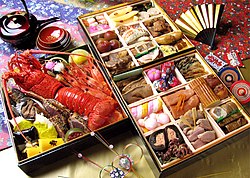
During the twelve hundred years from the Nara period to the Meiji Restoration in the latter half of the 19th century, Japanese people enjoyed vegetarian-style meals.
Image source: Japanese cuisine
1000 CE
% complete
Records show that as early as the Song dynasty (10th century), monks were consuming 'vegetarian meat' made from tofu, an early example of plant-based meat substitutes.
Image source: Buddhist cuisine
1872
% complete
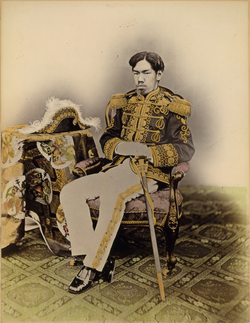
In 1872 of the Meiji restoration, as part of the opening up of Japan to Western influence, Emperor Meiji lifted the ban on the consumption of red meat, ending centuries of largely vegetarian-style eating in Japan.
Image source: Meiji Restoration
1912 - 1949
% complete
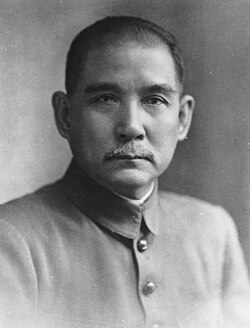
China's vegetarian culture remained relatively unchanged until the Republican era (1912–1949), when political reformers such as Sun Yat-Sen and Cai Yuanpei promoted vegetarianism as a more hygienic and cost-effective diet to strengthen the nation.
Image source: Sun Yat-sen
300 CE - 600 CE
% complete
Following the Christianization of the Roman Empire in late antiquity (4th–6th centuries), vegetarianism nearly disappeared from Europe.
400 CE
% complete
Many ancient intellectual dissidents, such as the Encratites, the Ebionites, and the Eustathians who followed the fourth century monk Eustathius of Antioch, considered abstention from meat-eating an essential part of their asceticism.
Image source: Encratites
600 CE
% complete
The Rule of St Benedict allowed the Benedictines to eat fish and fowl, but forbade the consumption of the meat of quadrupeds unless the religious was ill.
Image source: Rule of Saint Benedict
1400 CE - 1600 CE
% complete
Vegetarianism reemerged somewhat in Europe during the Renaissance and became a more widespread practice during the 19th and 20th centuries.
Image source: Renaissance
1452 - 1519
% complete
Among the first figures who supported vegetarianism in the Renaissance were Leonardo da Vinci (1452–1519) and Pierre Gassendi (1592–1655).
Image source: Leonardo da Vinci
1683
% complete
In the 17th century the paramount theorist of the meatless or Pythagorean diet was the English writer Thomas Tryon (1634–1703), who published the vegetarian text The Way to Health, Long Life and Happiness in 1683.
Image source: Thomas Tryon
1699
% complete
In 1699, English writer John Evelyn published the vegetarian treatise and cookbook Acetaria: A Discourse of Sallets.
Image source: Acetaria: A Discourse of Sallets
1724
% complete
Scottish physician George Cheyne (1672–1743) was a vegetarian and authored An Essay of Health and Long Life, first published in 1724.
1743 - 1745
% complete
Italian physician Antonio Cocchi authored the book Del vitto pitagorico per uso della medicina in 1743. It was translated by Robert Dodsley into English as The Pythagorean Diet, of Vegetables Only in 1745.
Image source: Antonio Cocchi
1767
% complete
The anonymously authored Primitive Cookery, the second edition of which was published in 1767, advocated affordable, lacto-vegetarian meals, although some of its recipes contain meat.
Image source: Primitive Cookery
1802
% complete
In 1802, Joseph Ritson authored An Essay on Abstinence from Animal Food, as a Moral Duty, advancing ethical arguments for vegetarianism in England.
Image source: Joseph Ritson
1809
% complete
Reverend William Cowherd founded the Bible Christian Church in 1809, whose members promoted and practiced vegetarianism.
Image source: Bible Christian Church
1812
% complete
Martha Brotherton authored Vegetable Cookery in 1812, the first vegetarian cookbook ever published.
Image source: Vegetable Cookery
1813
% complete
Poet Percy Bysshe Shelley was a prominent advocate of ethically motivated vegetarianism in the early 19th century. Influenced by John Frank Newton's Return to Nature (1811), he published A Vindication of Natural Diet in 1813.
Image source: Percy Bysshe Shelley
1847
% complete
The first Vegetarian Society of the modern western world was established in England in 1847 by the 140 participants of a conference at Ramsgate. By 1853 it had 889 members, and by the end of the century almost 4,000.
Image source: Vegetarian Society
1848 - 1870
% complete
In Germany, the politician, publicist, and revolutionary Gustav Struve (1805–1870) was a key figure in the early vegetarian movement. In the late 19th century numerous vegetarian associations were founded in Germany.
Image source: Gustav Struve
1867
% complete
The German Vegetarierbund Deutschland, established in 1867 in Nordhausen, is the second-oldest vegetarian organization in the world.
Image source: ProVeg Deutschland
Mar 1880
% complete
The Cornishman newspaper reported in March 1880 that a vegetarian restaurant had existed in Manchester for some years and one had just opened in Oxford Street, London.
1886
% complete
The modern vegetarian movement saw the involvement of figures like Elisabeth Förster-Nietzsche and her husband Bernhard Förster, who founded the utopian colony Nueva Germania in Paraguay in 1886 with vegetarian ideals.
Image source: Nueva Germania
1895
% complete
In 1895, The Women's Vegetarian Union was established by Alexandrine Veigele, a French woman living in London, connecting vegetarianism with women's advocacy.
1961 - 2001
% complete
Cranks opened in Carnaby Street, London, in 1961, as the first successful vegetarian restaurant in the UK. Eventually there were five Cranks restaurants in London, all of which closed in 2001.
1722
% complete
Sébastien Rale (1657–1724), a French Catholic priest in an Abenaki town in Maine, wrote a 1722 letter describing his strict ascetic vegetarianism.
Image source: Sébastien Rale
1732
% complete
The best known 18th century vegetarian community in the U.S. was the Ephrata Cloister in Pennsylvania, a religious community founded by Conrad Beissel in 1732. There were also small groups of Christian vegetarians across the country.
Image source: Ephrata Cloister
1770
% complete
Writer and abolitionist Benjamin Lay (1682–1759) was a vegetarian. He later introduced tofu to America in 1770.
Image source: Benjamin Lay
1835
% complete
In 1835, Asenath Nicholson authored the first American vegetarian cookbook, bringing vegetarian cooking guidance to readers in the United States.
Image source: Asenath Nicholson
1845
% complete
Margaret Fuller advocated for vegetarianism in her work, Women of the Nineteenth Century (1845). In the same year, the vegetarian newspaper The Pleasure Boat began publication in the United States.
Image source: Margaret Fuller
1850
% complete
Reverend William Metcalfe, a pacifist prominent member of the Bible Christian Church, and Sylvester Graham, inventor of the Graham crackers, were among the founders of the American Vegetarian Society in 1850.
1915
% complete
In her feminist utopia Herland (1915), Charlotte Perkins Gilman imagined a vegetarian society, linking vegetarian ideals with visions of social reform.
Image source: Herland (novel)
1908
% complete
In 1908, the International Vegetarian Union (IVU), a union of national societies, was founded in Dresden, coordinating vegetarian organizations worldwide.
Nov 1944
% complete
After British Vegetarian Society members asked in August 1944 for a non-dairy section and were turned down, Donald Watson, secretary of the Leicester branch, set up a quarterly newsletter called The Vegan News in November 1944, founding the vegan movement.
Image source: The Vegan Society
1975
% complete
The IVU's 1975 World Vegetarian Congress in Orono, Maine caused significant impact on the United States' vegetarian movement, energizing American activism.
Image source: International Vegetarian Union
2013
% complete
In 2013, PS 244 in Queens became the first public school in New York to adopt an all-vegetarian menu, marking growing mainstream acceptance of plant-based diets.
2014
% complete
In 2014, the Jain pilgrimage destination of Palitana City in Indian state of Gujarat became the first city in the world to be legally vegetarian.
Image source: Palitana
Or browse the full history timeline directory, with more than 2,000 topics.
This History of Vegetarianism timeline was generated with the help of AI, using information found on the internet.
We work hard to keep these timelines accurate, but mistakes do get through. If you spot one, email us at [email protected] and we'll fix it for future visitors.
Generate yours with AI or build it from scratch, for free.
Export your timeline, add your own events, edit or remove AI-generated events, and much more
No credit card required.
Cancel anytime.
Cancel anytime.
You can create an unlimited number of timelines with up to 10 events on each one, customize how they look, export them to PDF, PNG, PowerPoint, CSV, and Excel, and share them with a link. Paid plans raise the event limit and add features like spreadsheet imports and collaborators.
Yes. You can cancel your subscription from your account page at any time, and you will not be charged again. Your subscription stays active for the rest of the period you already paid for.
Yes. We will email you a reminder before the annual renewal, and we will also email you a receipt.
Yes. You can email us within 15 days of any payment, and we will issue you a full refund.
Check out our pricing docs or send us an email anytime: [email protected].