
-
Use Cases
-
Resources
-
Pricing
Starbucks is an American multinational coffeehouse chain founded in Seattle in 1971. Originally a retailer of roasted coffee beans, it transformed under Howard Schultz into a global café chain inspired by Italian espresso bars. Today, Starbucks operates tens of thousands of stores worldwide and is credited with popularizing specialty coffee culture. More Less
1971
% complete
Starbucks took its name from the first mate in Herman Melville's Moby-Dick and adopted a twin-tailed siren logo derived from a 16th-century Norse woodcut, symbolizing the seafaring history of coffee.
Image source: Starbucks
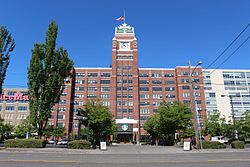
Mar 30, 1971
% complete
The first Starbucks opened at Pike Place Market in Seattle, founded by Jerry Baldwin, Zev Siegl, and Gordon Bowker. The store sold roasted whole coffee beans rather than brewed coffee, inspired by Alfred Peet's roasting style.
1982
% complete
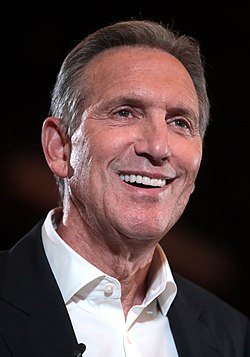
Howard Schultz joined Starbucks as director of retail operations and marketing. A trip to Milan later exposed him to Italy's espresso bar culture, which would shape the company's future direction.
Image source: Howard Schultz
1985
% complete
After Starbucks' owners declined to serve beverages, Schultz left to found Il Giornale, a chain of espresso bars modeled on Italian cafes. The concept proved successful in Seattle.
Aug 1987
% complete
Howard Schultz led an investor group that purchased Starbucks for $3.8 million and merged it with Il Giornale, becoming CEO. The combined company began aggressively expanding beyond Seattle.
1991
% complete
Starbucks became one of the first private U.S. companies to offer comprehensive health benefits and stock options (Bean Stock) to part-time employees, reflecting Schultz's commitment to treating workers as partners.
1987
% complete
Following the acquisition, Starbucks opened locations in Chicago and Vancouver, British Columbia, marking the beginning of its expansion outside its Seattle home market.
1991
% complete
Starbucks expanded to the East Coast with a store in Washington, D.C., signaling its ambition to become a national chain and accelerating its growth across the United States.
Jun 26, 1992
% complete
Starbucks completed its initial public offering on NASDAQ under the ticker SBUX at $17 per share. At the time it had 165 stores, and the IPO provided capital for rapid nationwide expansion.
2005
% complete
Starbucks surpassed 10,000 stores worldwide, cementing its status as the largest coffeehouse chain on the planet just over three decades after opening its first location.
2005
% complete
Orin Smith retired and Jim Donald became CEO of Starbucks, overseeing continued rapid expansion while Schultz remained chairman, focusing on long-term strategy.
Nov 2012
% complete
Starbucks acquired the specialty tea retailer Teavana for approximately $620 million, aiming to build a major tea business alongside its coffee operations.
Image source: Teavana
Apr 2017
% complete
Longtime president Kevin Johnson became CEO as Howard Schultz transitioned to executive chairman, marking a generational leadership change for the company.
Mar 2023
% complete
Laxman Narasimhan, former CEO of Reckitt, succeeded Howard Schultz (who had returned as interim CEO) to lead Starbucks, focusing on reinvention plans and improving store operations.
Image source: Laxman Narasimhan
1995
% complete
Starbucks launched the Frappuccino, a blended ice coffee drink developed after acquiring the Coffee Connection of Boston. It became one of the company's best-selling products, especially among younger customers.
Image source: Frappuccino
2000
% complete
Starbucks began offering Fair Trade certified coffee in partnership with TransFair USA, responding to activist pressure and committing to pay premium prices to smallholder farmers.
2004
% complete
Starbucks partnered with Conservation International to launch Coffee and Farmer Equity (C.A.F.E.) Practices, a set of guidelines promoting ethically sourced, environmentally sustainable coffee.
2005
% complete
Starbucks acquired Ethos Water, a bottled water brand that donates a portion of proceeds to water access projects in developing countries, expanding its social responsibility initiatives.
Image source: Ethos Water
Jan 2008
% complete
With same-store sales falling during the financial crisis, Jim Donald was ousted and founder Howard Schultz returned as CEO, launching a turnaround plan focused on restoring quality and customer experience.
Mar 2008
% complete
Starbucks launched My Starbucks Idea, a crowdsourcing website where customers could submit suggestions, many of which influenced new products and services such as free Wi-Fi and loyalty rewards.
Jul 2008
% complete
Starbucks announced the closure of approximately 600 underperforming U.S. stores and cut thousands of jobs as part of Schultz's restructuring to combat overexpansion and the economic downturn.
2011
% complete
Starbucks introduced mobile payment functionality in its app, allowing customers to pay with their smartphones. It became one of the most widely used mobile payment systems in the United States.
Dec 2014
% complete
The first Starbucks Reserve Roastery opened in Seattle's Capitol Hill neighborhood, a large-format experiential store featuring small-batch roasted coffees, tasting rooms, and theatrical brewing methods.
Mar 2015
% complete
Starbucks launched Race Together, encouraging baristas to write the phrase on cups to spark conversations about race in America. The campaign drew widespread criticism and was quickly scaled back.
Apr 12, 2018
% complete
Two Black men were arrested at a Philadelphia Starbucks while waiting for a friend, sparking accusations of racial profiling. Starbucks closed more than 8,000 U.S. stores for an afternoon of anti-bias training.
Image source: Starbucks
Jul 2018
% complete
Starbucks announced it would phase out single-use plastic straws across its more than 28,000 stores worldwide, replacing them with strawless lids as part of its environmental sustainability goals.
1996
% complete
Starbucks opened its first store outside North America in Tokyo's Ginza district through a joint venture with Sazaby Inc., followed by Singapore, launching its global expansion strategy.
May 1998
% complete
Starbucks acquired the British chain Seattle Coffee Company for about $86 million, giving it an established foothold in the UK market and rebranding those stores as Starbucks.
Jan 1999
% complete
Starbucks entered mainland China with a store in Beijing, beginning what would become its most important international market, where it would eventually operate thousands of stores.
Dec 2017
% complete
Starbucks opened its largest store ever, a 30,000-square-foot Reserve Roastery in Shanghai, underscoring China's importance to the company's global growth strategy.
Or browse the full history timeline directory, with more than 2,000 topics.
This History of Starbucks timeline was generated with the help of AI, using information found on the internet.
We work hard to keep these timelines accurate, but mistakes do get through. If you spot one, email us at [email protected] and we'll fix it for future visitors.
Generate yours with AI or build it from scratch, for free.
Export your timeline, add your own events, edit or remove AI-generated events, and much more
No credit card required.
Cancel anytime.
Cancel anytime.
You can create an unlimited number of timelines with up to 10 events on each one, customize how they look, export them to PDF, PNG, PowerPoint, CSV, and Excel, and share them with a link. Paid plans raise the event limit and add features like spreadsheet imports and collaborators.
Yes. You can cancel your subscription from your account page at any time, and you will not be charged again. Your subscription stays active for the rest of the period you already paid for.
Yes. We will email you a reminder before the annual renewal, and we will also email you a receipt.
Yes. You can email us within 15 days of any payment, and we will issue you a full refund.
Check out our pricing docs or send us an email anytime: [email protected].