-
Use Cases
-
Resources
-
Pricing
The History of Xbox covers Microsoft's entry into the video game console market in 2001 and the evolution of its gaming hardware and services across four generations: the original Xbox, Xbox 360, Xbox One, and Xbox Series X|S. The timeline highlights major launches, technological advancements, online gaming via Xbox Live, and Microsoft's expansion into subscription services like Game Pass. More Less
1999
% complete
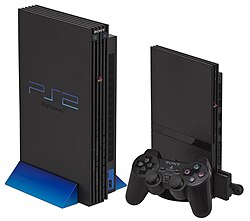
When Sony Computer Entertainment first announced the PlayStation 2 in 1999, it positioned the console as a centerpiece for home entertainment, as it would not only play video games but also audio CDs and video DVDs. This positioning influenced Microsoft's decision to enter the console market with its own home entertainment device.
Image source: PlayStation 2
Nov 15, 2001
% complete
The brand was first introduced in the United States in November 2001, with the launch of the original Xbox console. The original Xbox was released in North America on November 15, 2001, marking Microsoft's debut in the gaming console market. It was the first video game console offered by an American company after the Atari Jaguar stopped sales in 1996.
Feb 22, 2002
% complete
Following its North American launch, the original Xbox was released in Japan on February 22, 2002, continuing Microsoft's rollout of its debut gaming console to international markets.
Mar 14, 2002
% complete
The original Xbox launched in Australia and Europe on March 14, 2002, completing Microsoft's initial worldwide release of its first gaming console and marking the company's debut in the console market.
Image source: Xbox (console)
May 12, 2005
% complete
The Xbox 360 was officially unveiled on MTV on May 12, 2005, with detailed launch and game information divulged later that month at the Electronic Entertainment Expo (E3).
Nov 2005
% complete
Microsoft's second console, the Xbox 360, was released as the successor of the original Xbox in November 2005, competing with Sony's PlayStation 3 and Nintendo's Wii as part of the seventh generation of video game consoles. It has sold 86 million units as of October 2015.
2010
% complete
The Xbox 360 S (typically considered as "Slim"), launched in 2010, featured the same core hardware but with a redesigned, slimmer form factor with a smaller-sized 250 GB hard drive. A cheaper Xbox 360 S unit, removing the 250 GB drive while adding 4 GB of internal storage, was also released later in 2010; the unit allowed users to hook up an external storage solution or purchase a 250 GB internal add-on.
Image source: Xbox 360
May 21, 2013
% complete
Announced on May 21, 2013, the Xbox One has an emphasis on internet-based features, including the ability to record and stream gameplay, and the ability to integrate with a set-top box to watch cable or satellite TV through the console with an enhanced guide interface and Kinect-based voice control. Additional information on the Xbox One Kinect was released on June 6, 2013, including how to turn off the "always on" feature.
Nov 22, 2013
% complete
The third console, the Xbox One, was released on November 22, 2013, in North America, as the successor to the Xbox 360. The second major revision of the Xbox 360, the Xbox 360 E, was also released in 2013. In November 2014, Microsoft stated it would not release sales numbers for the Xbox One line, and in July 2023, Microsoft revealed that the line sold over 58 million units.
Jun 13, 2016
% complete
On June 13, 2016, Microsoft announced the Xbox One S at E3 2016, which featured a smaller form factor, as well as support for 4K video (including streaming and Ultra HD Blu-ray) and HDR.
Jun 2017
% complete
At E3 2017, Microsoft unveiled Xbox One X, a high-end model with improved hardware designed to facilitate the playing of games at 4K resolution.
Image source: Xbox One
Nov 10, 2020
% complete
The fourth generation of Xbox models, simply named Xbox, includes the Xbox Series X and Xbox Series S that launched on November 10, 2020. In the latter half of the console's timeframe, the effects of global tariffs and RAM shortage led to price increases of both consoles since 2025.
Image source: Xbox Series X and Series S
2001
% complete
Released in 2001, the Xbox control pad was the first controller made for the original Xbox, providing players with the primary input device for Microsoft's debut console.
Image source: Xbox controller
Nov 15, 2001
% complete
Built around a 733 MHz 32-bit Intel Pentium III CPU and a 233 MHz Nvidia GeForce 3-based NV2A GPU with 64 MB of memory, the Xbox was the first console offered by an American company after the Atari Jaguar stopped sales in 1996.
2005
% complete
Released in 2005, the Xbox 360 controller for the Xbox 360 succeeded its predecessor, the original Xbox control pad, becoming the standard input device for Microsoft's second console.
Image source: Xbox 360 controller
Nov 2005
% complete
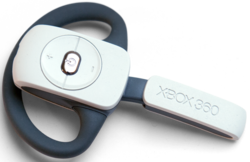
Microsoft announced the Xbox 360 Wireless Headset, a first-party single-ear headset accessory designed for and released with the Xbox 360 console in November 2005.
Image source: List of Xbox 360 accessories
2010
% complete
An updated Xbox 360 Headset was released in 2010 with black cosmetics, bundled with the Xbox 360 S; for the revised wired headset, the mute/volume controls were moved to a position inline along the cable. Special editions of the wireless headset were also released themed for Halo: Reach (silver, September 2010).
Nov 4, 2010 - Nov 20, 2010
% complete
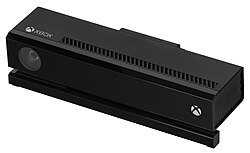
Kinect was launched in North America on November 4, 2010, in Europe on November 10, 2010, in Australia, New Zealand and Singapore on November 18, 2010, and in Japan on November 20, 2010. By January 2012, 24 million units of the Kinect sensor had been shipped.
Image source: Kinect
2011
% complete
The original Xbox 360 Wireless Headset was replaced by the Xbox 360 Wireless Headset with Bluetooth in 2011, which could be used with the console (using the Xbox wireless protocol) or a phone (using Bluetooth).
Feb 1, 2012
% complete
A version of the Xbox 360 controller for Windows was released on February 1, 2012, allowing PC gamers to use the popular controller on Windows computers.
Nov 22, 2013
% complete
Microsoft bundled the Xbox One Chat Headset with each console starting from launch in 2013; the headset was permanently wired to an interface module that plugged into the controller's expansion port and provided microphone mute and volume controls. The initial revision of the Xbox One Wireless Controller (Model 1537) also included a 2.5mm monaural jack compatible with standard cellular phone headsets.
Mar 2014
% complete
In addition to the Chat Headset, Microsoft released the Xbox One Stereo Headset in early March 2014, bundled with a Stereo Headset Adapter, which allowed players to listen to in-game audio blended with chat simultaneously. A white-colored special edition was released in fall 2016.
Feb 2021
% complete
A new Xbox Wireless Headset was introduced in February 2021, targeted for use on the Xbox One, Xbox Series X/S, and Windows computers. A corresponding Xbox Stereo Headset, which omits wireless connections in favor of a standard 3.5mm plug, was introduced in August 2021 with a reduced price.
Image source: Xbox 360 Wireless Headset
Jun 2025
% complete
At the June 2025 Xbox Showcase, Microsoft revealed the Asus ROG Xbox Ally and ROG Xbox Ally X handheld devices, which run Windows and support Xbox games alongside other PC storefronts, planned for release by the end of 2025.
Image source: ROG Xbox Ally
Nov 15, 2002
% complete
The integrated Xbox Live service launched in November 2002 allowed players to play games online with a broadband connection. Online gaming on the Xbox first started on November 15, 2002, worldwide. When the service launched, the Xbox Communicator headset was included with the Live Starter Kit. Since 2002, the Dashboard has been integrated with the Xbox network which provides online functionality and storefront options.
Nov 2004
% complete
Although competing services were free while Xbox Live required a subscription and a broadband-only connection, Xbox Live was a success due to better servers, features such as a buddy list, and milestone titles such as Halo 2 (released in November 2004), which became the best-selling Xbox video game and was by far the most popular online game for the original Xbox system.
Image source: Halo 2
Jun 16, 2011
% complete
Microsoft released Kinect software development kit for Windows 7 on June 16, 2011, enabling developers to build applications using the Kinect motion-sensing technology on PCs.
Jun 2012
% complete
The Xbox app is a companion application available for Windows 8, Windows 10, Windows 11, iOS, Android (version 4.0 and above), and Windows Server 2012. It was announced by Microsoft during E3 2012 and released on October 26, 2012, coinciding with the release of Windows 8.
Image source: Xbox (app)
May 2013
% complete
Xbox Wire is Xbox's news blog, launched by Microsoft in May 2013 in preparation for the announcement of the Xbox One. It was Microsoft's first Xbox-focused blog since it shut down Gamerscore in early 2009. In March 2022, a Japanese-language version of the site was published as part of Microsoft's focus on the Japanese gaming market.
Jun 2015
% complete
Backward compatibility with Xbox 360 titles was added to Xbox One a year-and-a-half after its launch in June 2015, with specific titles requiring Kinect or USB peripherals not being supported.
Jun 1, 2017
% complete
The subscription service was launched on June 1, 2017, giving players access to a library of games for a monthly fee and becoming a cornerstone of Microsoft's gaming strategy.
Image source: Xbox Game Pass
2019
% complete
In 2019, Microsoft released content filtering to stop toxicity in online gaming across the Xbox network, which had over 65 million users worldwide as of July 2019.
Image source: Xbox network
May 2020
% complete
In May 2020, Xbox presented a preview version of an app that allows parents and guardians to set daily limits for their children's playing time, provides weekly activity reports, filters out age-restricted games, and places limits on online communication.
Image source: Xbox
2012 - 2015
% complete
The Xbox branding was formerly, from 2012 to 2015, used as Microsoft's digital media entertainment brand replacing Zune, extending the brand beyond gaming into broader entertainment services.
2016
% complete
In 2016, Microsoft announced that it would hold its own Xbox FanFest instead of a press conference at the Gamescom annual European video game convention. Microsoft held an Xbox FanFest in Sydney in September 2016.
2019
% complete
In 2019, Microsoft Studios was renamed Xbox Game Studios, reflecting a shift in focus toward games, subscriptions and services rather than solely hardware sales. Microsoft has been working to leverage the branding of "Xbox" beyond the console hardware but as a general video game brand.
Image source: Xbox Game Studios
Jun 2019
% complete
Phil Spencer said in June 2019 that Xbox's success was measured by how many players played its games and used its services, not by unit sales, stating that "the business isn't how many consoles you sell."
Image source: Phil Spencer (business executive)
Feb 2020
% complete
Later in February 2020, Spencer said that moving forward, the company does not see "traditional gaming companies" like Nintendo and Sony as their competitors but instead those that offer cloud computing services such as Amazon and Google, with Microsoft Azure powering Xbox Cloud Gaming and related services.
Nov 15, 2021
% complete
Microsoft held a 20th anniversary celebration stream for the Xbox on November 15, 2021, marking two decades since the launch of the original console. A documentary about Xbox history was released in six parts starting on December 13, 2021.
2022
% complete
In 2022, Microsoft expanded its gaming business and reorganized Xbox to become part of its newly formed Microsoft Gaming division.
Image source: Microsoft Gaming
Feb 2024
% complete
In February 2024, Phil Spencer reiterated Microsoft's commitment to Xbox console hardware, stating that first-party games would continue to launch "first and foremost" on Xbox platforms and that Microsoft planned to publicly discuss its next generation of hardware later in 2024.
Jun 2025
% complete
Microsoft announced in June 2025 that it was partnering with AMD to co-engineer silicon for the next generation of Xbox hardware, which could take on a range of device types including future consoles, computers, and cloud infrastructure.
Oct 2025
% complete
Amid industry rumors that Microsoft was abandoning hardware in favor of game development that emerged around Google in October 2025, Xbox president Sarah Bond confirmed they had already started development work for the next console.
Feb 2026
% complete
The head of Xbox is Asha Sharma, who succeeded former head Phil Spencer following his retirement in February 2026.
Image source: Asha Sharma
Mar 2026
% complete
The codename for the next Xbox, Project Helix, was announced in March 2026. As of 2026, Microsoft has not announced a release date for its next-generation Xbox hardware; leaked FTC documents had indicated a 2028 timeframe, which Microsoft described as based on outdated plans, although reporting citing AMD CEO Lisa Su has suggested that a 2027 launch is possible.
May 13, 2026
% complete
On May 13, 2026, Asha Sharma posted a poll on X (formerly Twitter) to determine whether the Xbox brand moving forward should be displayed with capitalization ("Xbox") or with all capitals ("XBOX").
Jun 2026
% complete
An internal memo from Sharma in June 2026 indicated that Microsoft was likely planning to release the next-generation console in late 2027.
Or browse the full history timeline directory, with more than 2,000 topics.
This History of Xbox timeline was generated with the help of AI, using information found on the internet.
We work hard to keep these timelines accurate, but mistakes do get through. If you spot one, email us at [email protected] and we'll fix it for future visitors.
Generate yours with AI or build it from scratch, for free.
Export your timeline, add your own events, edit or remove AI-generated events, and much more
No credit card required.
Cancel anytime.
Cancel anytime.
You can create an unlimited number of timelines with up to 10 events on each one, customize how they look, export them to PDF, PNG, PowerPoint, CSV, and Excel, and share them with a link. Paid plans raise the event limit and add features like spreadsheet imports and collaborators.
Yes. You can cancel your subscription from your account page at any time, and you will not be charged again. Your subscription stays active for the rest of the period you already paid for.
Yes. We will email you a reminder before the annual renewal, and we will also email you a receipt.
Yes. You can email us within 15 days of any payment, and we will issue you a full refund.
Check out our pricing docs or send us an email anytime: [email protected].