-
Use Cases
-
Resources
-
Pricing
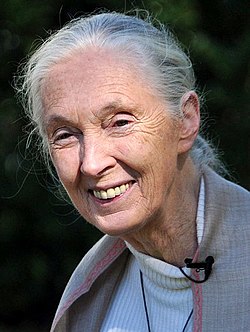
Jane Goodall is a world-renowned British primatologist, ethologist, and anthropologist best known for her revolutionary 60-year study of wild chimpanzees in Gombe Stream National Park, Tanzania. Her discoveries about chimpanzee tool use, social behavior, and emotions transformed scientific understanding of primates and redefined the relationship between humans and animals. She later became a leading global advocate for wildlife conservation, animal welfare, and environmental education through the Jane Goodall Institute and the Roots & Shoots program. More Less
Apr 3, 1934
% complete
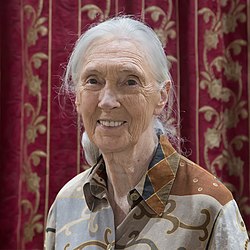
Valerie Jane Morris-Goodall was born in London, England, to Mortimer Herbert Morris-Goodall, a businessman and racing car driver, and Margaret Myfanwe Joseph, a novelist who wrote under the name Vanne Morris-Goodall.
Image source: Jane Goodall
Jan 1, 1935
% complete
As a young child, Jane received a stuffed chimpanzee named Jubilee from her father, which sparked her lifelong fascination with animals. Friends warned it would give her nightmares, but instead she cherished the toy, which she still keeps today.
Jan 1, 1950
% complete
After finishing school, Goodall trained as a secretary at a secretarial school in London, gaining skills that would later prove invaluable in organizing her research fieldwork and writing her scientific publications.
Jan 1, 1956 - Dec 31, 1956
% complete
Invited by a friend to visit Kenya, Goodall worked as a waitress at a hotel to save money for the sea voyage to Africa, where she hoped to pursue her childhood dream of studying wild animals.
Jan 1, 1957
% complete
In Nairobi, Goodall met Louis Leakey, curator of the Coryndon Museum, who hired her as his assistant and secretary. Recognizing her passion and patience, he saw in her an ideal candidate for a pioneering long-term study of wild chimpanzees.
Image source: Louis Leakey
Jan 1, 1958 - Dec 31, 1958
% complete
Goodall accompanied Leakey and his wife Mary on excavations at Olduvai Gorge in Tanganyika, gaining hands-on experience in field research and further convincing Leakey that she was suited for primate studies.
Image source: Olduvai Gorge
Jan 1, 1962
% complete
Leakey arranged for Goodall to pursue a doctorate in ethology at Darwin College, Cambridge, making her one of very few students admitted without a bachelor's degree. She was one of only eight students of Robert Hinde's accepted that year.
Image source: University of Cambridge
Mar 28, 1964
% complete
Goodall married Dutch wildlife photographer Baron Hugo van Lawick, whom National Geographic had sent to document her work at Gombe. His iconic photographs and films brought the chimpanzees' world into living rooms around the globe.
Image source: Hugo van Lawick
Jan 1, 1965
% complete
Goodall completed her doctoral thesis, 'Behaviour of Free-Living Chimpanzees,' based on her first five years of Gombe observations, becoming Dr. Jane Goodall and one of the few candidates ever to receive a PhD from Cambridge without an undergraduate degree.
Image source: Darwin College, Cambridge
Mar 4, 1967
% complete
Goodall gave birth to her only child, Hugo Eric Louis van Lawick, nicknamed 'Grub.' Her experiences raising him alongside the Gombe chimpanzee families later informed her book on motherhood and infant development.
Image source: Hugo van Lawick
Jan 1, 1974
% complete
Goodall and van Lawick divorced after a decade of marriage, though they remained professionally connected through his continuing photography and film work in Africa.
Feb 1, 1975
% complete
Goodall married Derek Bryceson, a member of Tanzania's parliament and head of its national parks service. His position helped protect Gombe and Tanzania's other conservation areas until his death from cancer in 1980.
Jul 14, 1960
% complete
Accompanied by her mother Vanne, Goodall established herself at Gombe Stream Chimpanzee Reserve on the shores of Lake Tanganyika. Her patient observation eventually allowed her to approach and habituate wild chimpanzees, launching what became the longest-running wild animal research project in history.
Image source: Gombe Stream National Park
Oct 1, 1960 - Nov 4, 1960
% complete
Goodall observed a chimpanzee she called David Greybeard stripping leaves off twigs to fish termites from mounds — the first recorded instance of toolmaking by a wild nonhuman animal. When Leakey learned of it, he famously wrote: 'Now we must redefine tool, redefine Man, or accept chimpanzees as humans.'
Image source: Kasakela chimpanzee community
Dec 1, 1963
% complete
A National Geographic article and documentary film about 'Miss Goodall and the Wild Chimpanzees' introduced her work to millions worldwide, securing funding and public support for continued research at Gombe.
Image source: National Geographic Society
Jan 1, 1965
% complete
To ensure continuity of research and train Tanzanian scientists, Goodall founded the Gombe Stream Research Centre, which remains a hub for chimpanzee field research and has generated decades of continuous behavioral data.
Jan 1, 1972
% complete
The death of Flo, the matriarch whose life Goodall had documented extensively, devastated her son Flint, who stopped eating and died shortly afterward. This observation offered powerful evidence of grief and attachment in chimpanzees.
Jan 1, 1974 - Dec 31, 1978
% complete
Researchers observed a violent four-year conflict in which the Kasakela community systematically attacked and killed members of the splinter Kahama group, shattering assumptions that chimpanzees were inherently peaceful and revealing their capacity for lethal aggression.
Image source: Gombe Chimpanzee War
May 1, 1975
% complete
Armed militants crossed Lake Tanganyika from Zaire and kidnapped four American research students at Gombe, holding them hostage. The incident temporarily disrupted research but all students were released unharmed, and work soon resumed.
Jan 1, 1967
% complete
Goodall published her first book, an accessible account of her early years at Gombe illustrated with van Lawick's photographs, introducing the general public to individual chimpanzees such as David Greybeard and Flo.
Jan 1, 1971
% complete
Her landmark popular science book chronicled the lives of the Gombe chimpanzees, portraying them as individuals with personalities, emotions, and minds. It became an international bestseller translated into dozens of languages.
Image source: Jane Goodall
Jan 1, 1986
% complete
This comprehensive scientific synthesis of twenty-five years of Gombe research earned the Urban Book Award and solidified Goodall's standing as one of the world's foremost primatologists.
Image source: Gombe Chimpanzee War
Sep 1, 1999
% complete
In this spiritual autobiography, Goodall reflected on her life journey, the lessons chimpanzees taught her about human nature, and her grounds for optimism despite environmental crises.
Apr 1, 2002
% complete
UN Secretary-General Kofi Annan appointed Goodall a United Nations Messenger of Peace, recognizing her decades of advocacy; she used the platform to champion conservation, sustainable development, and peace.
Image source: United Nations Messengers of Peace
Jan 1, 2004
% complete
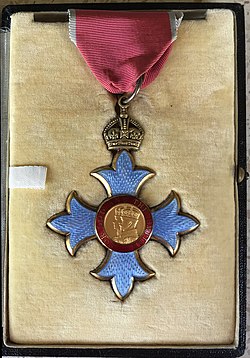
Queen Elizabeth II honored Goodall with the title Dame Commander of the British Empire in recognition of her extraordinary contributions to science and conservation.
Image source: Order of the British Empire
Apr 9, 2013
% complete
Goodall's book explored her love of plants and urgent case for protecting the natural world, emphasizing reforestation and sustainable agriculture as keys to planetary health.
Oct 10, 2017
% complete
Using newly restored footage shot by Hugo van Lawick in the 1960s, the acclaimed documentary 'Jane' reintroduced audiences to her early years at Gombe and won numerous awards including an Emmy for its score and cinematography.
Image source: Jane (2017 film)
May 20, 2021
% complete
John Templeton Foundation awarded Goodall the 2021 Templeton Prize, honoring her achievements blending rigorous science with deep spiritual reflection and reverence for the interconnectedness of all life.
Image source: Templeton Prize
Jul 1, 1968
% complete
The Tanzanian government upgraded the Gombe Stream reserve to national park status, providing formal legal protection to the habitat of the chimpanzees Goodall had studied for nearly a decade.
Apr 27, 1977
% complete
Goodall established the Jane Goodall Institute to support ongoing Gombe research and expand chimpanzee conservation efforts globally. The institute has since grown into a leading organization for wildlife research, community-centered conservation, and youth education.
Image source: Jane Goodall Institute
Oct 1, 1986
% complete
At a landmark primatology conference in Chicago, papers on deforestation, bushmeat hunting, and laboratory conditions of captive chimps shocked Goodall into shifting from primarily a scientist to a full-time activist and advocate for chimpanzees worldwide.
Jan 1, 1987
% complete
Goodall founded ChimpanZoo, a program coordinating volunteers at zoos across the United States to study captive chimpanzee behavior and improve their welfare in captivity.
Image source: Simian
Jan 1, 1991
% complete
Together with a group of Tanzanian students, Goodall launched Roots & Shoots, a global environmental and humanitarian education program empowering young people to undertake projects benefiting people, animals, and the environment. It now operates in over 60 countries.
Image source: Roots & Shoots
Jan 1, 1994
% complete
The institute launched TACARE (Lake Tanganyika Catchment Reforestation and Education), a community-centered conservation program around Gombe addressing poverty, agriculture, health, and forest restoration — a model now replicated across chimpanzee range countries.
Image source: Tacares
Jan 21, 2005
% complete
Goodall inaugurated a giant peace dove campaign for UN Peace Day, mobilizing thousands of young people worldwide to fly handmade dove puppets as symbols of hope and commitment to peace.
Or browse the full history timeline directory, with more than 2,000 topics.
This Jane Goodall timeline was generated with the help of AI, using information found on the internet.
We work hard to keep these timelines accurate, but mistakes do get through. If you spot one, email us at [email protected] and we'll fix it for future visitors.
Generate yours with AI or build it from scratch, for free.
Export your timeline, add your own events, edit or remove AI-generated events, and much more
No credit card required.
Cancel anytime.
Cancel anytime.
You can create an unlimited number of timelines with up to 10 events on each one, customize how they look, export them to PDF, PNG, PowerPoint, CSV, and Excel, and share them with a link. Paid plans raise the event limit and add features like spreadsheet imports and collaborators.
Yes. You can cancel your subscription from your account page at any time, and you will not be charged again. Your subscription stays active for the rest of the period you already paid for.
Yes. We will email you a reminder before the annual renewal, and we will also email you a receipt.
Yes. You can email us within 15 days of any payment, and we will issue you a full refund.
Check out our pricing docs or send us an email anytime: [email protected].