
-
Use Cases
-
Resources
-
Pricing
Louis Armstrong (1901–1971), nicknamed 'Satchmo,' was an American jazz trumpeter, vocalist, and composer who rose from humble beginnings in New Orleans to become one of the most influential figures in jazz history. His virtuosic playing, distinctive gravelly voice, and charismatic stage presence transformed jazz into a solo art form and brought it to audiences worldwide. More Less
Aug 4, 1901
% complete
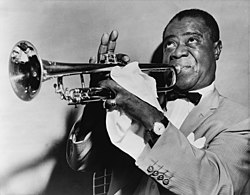
Louis Armstrong was born into poverty in New Orleans, Louisiana, often claiming a birth date of July 4, 1900, though his actual birth date was August 4, 1901. Raised in a rough neighborhood known as 'The Battlefield,' he grew up surrounded by the rich musical culture of New Orleans.
Image source: Louis Armstrong
Jan 1, 1912
% complete
After firing a pistol during a New Year's celebration, young Louis was sent to the Colored Waifs' Home for Boys. There he received formal instruction on the cornet from Professor Peter Davis, laying the foundation for his future as a musician.
Jan 1, 1918 - Dec 31, 1921
% complete
Armstrong honed his craft playing cornet on Mississippi River steamboats with Fate Marable's band, gaining experience performing written arrangements and sight-reading music while entertaining passengers along the river.
Image source: Fate Marable
Aug 1, 1922
% complete
Armstrong moved to Chicago at the invitation of his mentor, cornetist Joe 'King' Oliver, to join his Creole Jazz Band as second cornetist. This position launched his professional career in the vibrant jazz scene of Chicago's South Side.
Image source: King Oliver
Feb 5, 1924
% complete
Armstrong married Lil Hardin, the pianist in King Oliver's band. She would become an influential force in his career, encouraging him to seek greater recognition and pursue opportunities beyond his role as a sideman.
Image source: Lil Hardin Armstrong
Sep 1, 1924 - Sep 1, 1925
% complete
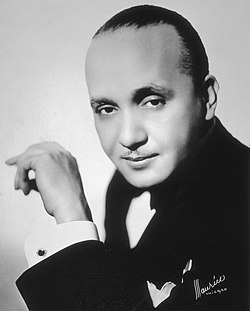
Armstrong joined the Fletcher Henderson Orchestra in New York City, where his innovative solos transformed the band's sound and influenced the entire ensemble to adopt hotter, more swinging rhythms that shaped the future of big band jazz.
Image source: Fletcher Henderson
Jan 1, 1927
% complete
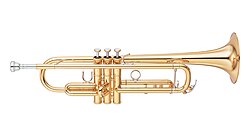
Around this time Armstrong transitioned permanently from the cornet to the trumpet, whose brighter tone helped define the bold sound that became his signature and influenced generations of trumpeters.
Image source: Trumpet
Jun 20, 1929
% complete
Armstrong made his Broadway debut in the revue 'Hot Chocolates,' where he performed Fats Waller's 'Ain't Misbehavin',' transforming the song into a hit and establishing himself as a major popular entertainer.
Jan 1, 1930 - Dec 31, 1935
% complete
During the early 1930s Armstrong led his own big bands, touring extensively across the United States and Europe while recording numerous popular songs that broadened his appeal as both a jazz virtuoso and a pop vocalist.
Jan 1, 1932
% complete
Armstrong made his first trip to Europe, performing in London and Paris to enthusiastic audiences and critical acclaim, cementing his international reputation and spreading American jazz across the Atlantic.
Jan 1, 1935 - Dec 31, 1943
% complete
Armstrong assumed leadership of Luis Russell's big band, which served as his backing group for nearly a decade of recordings and performances, yielding hits like 'Jubilee' and solidifying his status as America's leading jazz performer.
Image source: Luis Russell
Nov 25, 1936
% complete
Armstrong appeared alongside Bing Crosby in the film 'Pennies from Heaven,' one of several Hollywood roles that showcased his charisma and brought jazz music to mainstream movie audiences nationwide.
Image source: Pennies from Heaven (1981 film)
Apr 9, 1943
% complete
Armstrong appeared in the all-Black musical film 'Cabin in the Sky,' directed by Vincente Minnelli, delivering memorable performances that further established him as a beloved figure in American entertainment.
Image source: Cabin in the Sky (film)
Aug 1, 1947
% complete
Armstrong disbanded his big band and formed a smaller group, the All Stars, featuring Jack Teagarden and Earl Hines among others. The combo revitalized his career and allowed his improvisational brilliance to shine anew.
Image source: Louis Armstrong discography
Nov 30, 1947
% complete
A celebrated Town Hall concert in New York captured the newly formed All Stars in top form, and the resulting live recording is considered one of the finest documents of Armstrong's mature small-group style.
Jan 1, 1955 - Dec 31, 1955
% complete
Sponsored by the U.S. State Department, Armstrong embarked on extensive world tours through Africa, Asia, and Europe, earning him the nickname 'Ambassador Satch' and serving as a cultural representative of America abroad.
Jan 1, 1968
% complete
Armstrong delivered a poignant television performance of 'What a Wonderful World,' which helped introduce the song to a global audience and showcased the enduring emotional power of his voice late in his career.
Image source: What a Wonderful World
Nov 12, 1925
% complete
Armstrong began recording under his own name with the studio group Louis Armstrong and His Hot Five, producing a series of records that showcased his virtuosic cornet playing and introduced his distinctive gravelly singing voice.
Image source: Louis Armstrong Hot Five and Hot Seven Sessions
Jun 28, 1928
% complete
With His Hot Five, Armstrong recorded 'West End Blues,' featuring his legendary opening cadenza. The recording is widely regarded as one of the most important in jazz history and demonstrated the artistic heights the genre could reach.
Sep 28, 1955
% complete
Armstrong recorded his definitive version of Kurt Weill's 'Mack the Knife' from The Threepenny Opera, complete with improvised lyrics. The recording became a major hit and a signature song of his career.
Image source: Mack the Knife
Feb 1, 1956
% complete
Armstrong collaborated with singer Ella Fitzgerald on the acclaimed album 'Ella and Louis,' a landmark pairing of two jazz legends whose warm duets and individual brilliance produced some of the most cherished vocal jazz recordings ever made.
Image source: Ella and Louis
Oct 1, 1957
% complete
Armstrong and Fitzgerald recorded a celebrated album of selections from Gershwin's opera Porgy and Bess, arranged by Russ Garcia, widely regarded as one of the greatest interpretations of the Gershwin classic.
Image source: Porgy and Bess (Ella Fitzgerald and Louis Armstrong album)
May 9, 1964
% complete
Armstrong's recording of 'Hello, Dolly!' knocked The Beatles off the top of the Billboard Hot 100, making him, at age 62, the oldest artist ever to score a number-one hit and winning him a Grammy Award.
Image source: Hello, Dolly! (song)
Aug 16, 1967
% complete
Armstrong recorded 'What a Wonderful World,' a hopeful ballad that initially saw modest chart success in the U.S. but later became one of the most beloved and recognizable songs of the twentieth century.
Jan 1, 1936
% complete
Armstrong published his first autobiography, 'Swing That Music,' chronicling his rise from New Orleans poverty to international stardom and offering readers a personal account of the birth of jazz.
Image source: Swing music
Jan 1, 1954
% complete
Armstrong published 'Satchmo: My Life in New Orleans,' a vivid memoir detailing his childhood in New Orleans, his apprenticeship in the city's musical scene, and the people who shaped his early years.
Image source: Louis Armstrong
Sep 17, 1957
% complete
In response to Governor Orval Faubus's attempt to block integration at Little Rock Central High School, Armstrong publicly criticized President Eisenhower and canceled a planned State Department tour of Russia, taking a courageous civil rights stand.
Image source: Little Rock Nine
Mar 10, 1971
% complete
Despite serious health problems, Armstrong gave his last public performance at the Empire Room of the Waldorf-Astoria hotel in New York City, capping a five-decade career that had transformed American music.
Jul 6, 1971
% complete
Louis Armstrong died of a heart attack in his sleep at his home in Corona, Queens, at the age of 69. His death prompted worldwide tributes honoring the man who had done more than anyone to shape jazz as an art form.
Jan 1, 1972
% complete
The Recording Academy posthumously honored Armstrong with a Grammy Lifetime Achievement Award, recognizing his monumental contributions to American music and his role as jazz's foremost ambassador.
Or browse the full history timeline directory, with more than 2,000 topics.
This Louis Armstrong timeline was generated with the help of AI, using information found on the internet.
We work hard to keep these timelines accurate, but mistakes do get through. If you spot one, email us at [email protected] and we'll fix it for future visitors.
Generate yours with AI or build it from scratch, for free.
Export your timeline, add your own events, edit or remove AI-generated events, and much more
No credit card required.
Cancel anytime.
Cancel anytime.
You can create an unlimited number of timelines with up to 10 events on each one, customize how they look, export them to PDF, PNG, PowerPoint, CSV, and Excel, and share them with a link. Paid plans raise the event limit and add features like spreadsheet imports and collaborators.
Yes. You can cancel your subscription from your account page at any time, and you will not be charged again. Your subscription stays active for the rest of the period you already paid for.
Yes. We will email you a reminder before the annual renewal, and we will also email you a receipt.
Yes. You can email us within 15 days of any payment, and we will issue you a full refund.
Check out our pricing docs or send us an email anytime: [email protected].