-
Use Cases
-
Resources
-
Pricing
Louis Pasteur (1822–1895) was a French chemist and microbiologist whose discoveries revolutionized medicine and science. He proved the germ theory of disease, developed the process of pasteurization to make milk and wine safe, created the first vaccines for rabies and anthrax, and refuted the theory of spontaneous generation. His work laid the foundation for modern microbiology and saved millions of lives. More Less
Dec 27, 1822
% complete
Louis Pasteur was born in Dole, in the Jura region of France, the son of a poor tanner. He would grow up to become one of the most influential scientists in history, founding microbiology and revolutionizing medicine.
Image source: Louis Pasteur
1842
% complete
Pasteur earned his Bachelor of Science degree from the Royal College of Besançon. His early academic career was unremarkable at first, but his growing passion for chemistry led him to pursue advanced studies in Paris.
1847
% complete
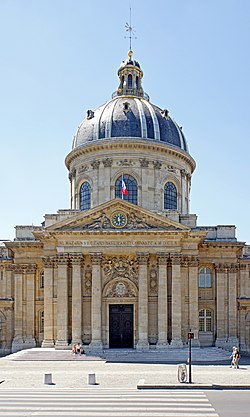
Pasteur received his doctorate in physical chemistry from the École Normale Supérieure in Paris, where he had also studied. His doctoral work on crystallography set the stage for his first major scientific discoveries.
Image source: École normale supérieure (Paris)
Jan 1849
% complete
Pasteur became professor of chemistry at the University of Strasbourg, where he married Marie Laurent in May 1849. Marie would become an essential partner in his scientific career, assisting with his research for decades.
Image source: University of Strasbourg
1857
% complete
Pasteur returned to Paris to serve as director of scientific studies at the École Normale Supérieure, where he reformed scientific education and established laboratories that would produce major advances in fermentation research.
1867
% complete
Pasteur accepted a chair in chemistry at the Sorbonne while retaining his position at the École Normale, giving him one of the most prominent scientific platforms in France from which to promote germ theory.
Image source: University of Paris
1868
% complete
At age 45, Pasteur suffered a cerebral hemorrhage that left him partially paralyzed on his left side. Remarkably, he continued working for decades despite this disability, producing some of his most famous achievements afterward.
1848
% complete
While studying tartaric acid crystals, Pasteur discovered that molecules could exist as mirror-image forms that rotate polarized light differently. This discovery of molecular asymmetry founded stereochemistry and was a landmark in chemistry.
Image source: Chirality (chemistry)
1857
% complete
Pasteur showed that lactic acid fermentation was caused by living microorganisms rather than spontaneous chemical processes. This insight launched the field of microbiology and transformed the brewing and wine industries.
Image source: Fermentation
1861
% complete
Pasteur discovered that some microorganisms could live without oxygen, identifying anaerobic life for the first time. This expanded understanding of microbial diversity and explained processes like butyric acid fermentation.
Image source: Anaerobic organism
1865 - 1870
% complete
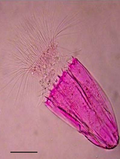
Summoned to investigate a disease devastating silkworms in southern France, Pasteur identified the parasitic cause of pébrine and developed methods to select healthy eggs, rescuing the economically crucial French silk industry.
1871 - 1876
% complete
After France's defeat in the Franco-Prussian War, Pasteur studied beer fermentation to help improve French brewing against German competition. His work resulted in the book 'Études sur la Bière' and improved industrial fermentation practices.
Image source: Louis Pasteur
1859 - 1861
% complete
Through elegant experiments using swan-neck flasks, Pasteur demonstrated that life does not arise spontaneously from non-living matter. His swan-neck flask experiment showed that microorganisms came from the air, disproving the doctrine of spontaneous generation.
Image source: Spontaneous generation
1861
% complete
Building on his fermentation work, Pasteur proposed that many diseases are caused by microscopic organisms. This germ theory of disease overturned miasma theory and laid the foundation for modern hygiene, antiseptic surgery, and infectious disease control.
Image source: Germ theory of disease
1861
% complete
Pasteur published his detailed memoir on organized bodies in the air, presenting rigorous evidence against spontaneous generation. The memoir persuaded much of the scientific community of the role of airborne microbes.
1864
% complete
Pasteur developed a method of briefly heating liquids such as wine and milk to kill harmful microorganisms without spoiling their flavor. This process, now called pasteurization, remains vital for food safety worldwide.
Image source: Pasteurization
1867
% complete
Inspired by Pasteur's germ theory, British surgeon Joseph Lister introduced carbolic acid antisepsis into surgery, dramatically reducing post-operative infections. Lister later credited Pasteur's work as the foundation of antiseptic principles.
Image source: Joseph Lister
1874
% complete
The Royal Society of London awarded Pasteur its highest honor, the Copley Medal, recognizing his researches on fermentation and spontaneous generation and cementing his international scientific reputation.
Image source: Copley Medal
1881
% complete
In recognition of his towering contributions to science and society, Pasteur was elected to France's most prestigious literary institution, the Académie française, a rare honor for a scientist.
Image source: Académie Française
1887 - 1888
% complete
A global public subscription campaign raised funds to build a scientific institute honoring Pasteur. The Pasteur Institute opened in Paris in November 1888, dedicated to research, teaching, and the treatment of rabies.
Image source: Pasteur Institute
1888
% complete
Following a second stroke, Pasteur retired from active laboratory work shortly after the Pasteur Institute opened. He continued to follow developments in science from home until his death.
Nov 14, 1888
% complete
The Pasteur Institute opened its doors in Paris, becoming a world-leading center for microbiological research. It trained generations of scientists and spawned a network of institutes across the globe that continue its mission today.
Sep 28, 1895
% complete
Louis Pasteur died at age 72 at his estate near Saint-Cloud after complications from strokes. France honored him with a state funeral, reflecting his stature as a national hero who had saved countless lives.
Dec 1896
% complete
Pasteur's remains were transferred to an ornate Byzantine-style crypt within the Pasteur Institute in Paris, where they rest today beneath inscriptions commemorating his achievements in science and humanity.
1900 - Sep 2021
% complete
The network of Pasteur Institutes expanded worldwide, conducting research on infectious diseases including plague, yellow fever, tuberculosis, HIV, and COVID-19. Pasteur's methods of vaccination, pasteurization, and germ-based medicine continue to save millions of lives annually.
Image source: Pasteur Institute
1879
% complete
Working on chicken cholera, Pasteur accidentally discovered that aged cultures of the bacterium lost virulence. Chickens inoculated with weakened cultures became immune, establishing the principle of attenuation as a basis for vaccination.
Image source: Fowl cholera
May 1881 - Jun 1881
% complete
In a dramatic public trial, Pasteur vaccinated sheep, cows, and goats against anthrax using heat-attenuated bacteria. Unvaccinated animals died while vaccinated ones survived, convincing skeptics and launching modern immunization campaigns.
Image source: Anthrax vaccine
1883
% complete
Pasteur's team developed a vaccine against swine erysipelas, extending the attenuation approach to another livestock disease and further demonstrating that vaccines could combat a range of bacterial infections.
Image source: Erysipelothrix rhusiopathiae
Jul 6, 1885
% complete
Nine-year-old Joseph Meister, bitten by a rabid dog, was treated by Pasteur with his experimental rabies vaccine made from dried spinal cords of infected rabbits. The boy survived, marking the first successful human vaccination against rabies.
Image source: Rabies vaccine
Oct 1885
% complete
Shepherd boy Jupille, who saved children from a rabid dog, became Pasteur's second human patient. His successful treatment helped establish the reliability of rabies vaccination and attracted patients from around the world.
Or browse the full history timeline directory, with more than 2,000 topics.
This Louis Pasteur timeline was generated with the help of AI, using information found on the internet.
We work hard to keep these timelines accurate, but mistakes do get through. If you spot one, email us at [email protected] and we'll fix it for future visitors.
Generate yours with AI or build it from scratch, for free.
Export your timeline, add your own events, edit or remove AI-generated events, and much more
No credit card required.
Cancel anytime.
Cancel anytime.
You can create an unlimited number of timelines with up to 10 events on each one, customize how they look, export them to PDF, PNG, PowerPoint, CSV, and Excel, and share them with a link. Paid plans raise the event limit and add features like spreadsheet imports and collaborators.
Yes. You can cancel your subscription from your account page at any time, and you will not be charged again. Your subscription stays active for the rest of the period you already paid for.
Yes. We will email you a reminder before the annual renewal, and we will also email you a receipt.
Yes. You can email us within 15 days of any payment, and we will issue you a full refund.
Check out our pricing docs or send us an email anytime: [email protected].