
-
Resources
-
Pricing
Morse Code is a system of representing letters, numbers, and symbols with sequences of dots and dashes, created for long-distance telegraph communication. More Less
Build a timeline like this one in minutes, for free. Start Yours →
1801 - 1830
Early in the nineteenth century, European experimenters advanced electrical signalling systems using static electricity and Voltaic piles, which produced electrochemical and electromagnetic changes.
Image source: Electrical telegraph
1820
Hans Christian Ørsted's discovery of electromagnetism in 1820 helped establish the scientific basis for later electromagnetic telegraph systems.
Image source: Electromagnetism
1824
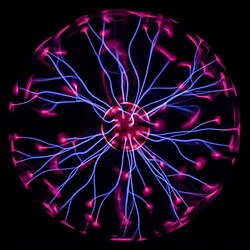
William Sturgeon's invention of the electromagnet in 1824 enabled important developments in electromagnetic telegraphy in Europe and America.
Image source: Electromagnet
1833
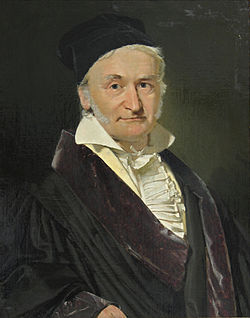
Carl Friedrich Gauss and Wilhelm Eduard Weber used a code with varying word lengths for their telegraph system.
Image source: Carl Friedrich Gauss
1837
Carl August von Steinheil used a code with varying word lengths in his 1837 telegraph system, contributing to the development of coded electrical communication.
Image source: Carl August von Steinheil
1837
Around 1837, Samuel Morse developed a signalling method that became an early forerunner of modern International Morse code.
1840
Alfred Vail expanded Morse's code in 1840 to include letters and special characters, allowing it to be used more generally.
1848
Friedrich Clemens Gerke created the modern International Morse code, initially using it for telegraphy between Hamburg and Cuxhaven in Germany.
1848
Gerke's much-improved proposal became known as the Hamburg alphabet. Its principal defect was an excessively long code for the frequently used vowel O.
Image source: Morse code
1851
Gerke's code was adopted in Germany and Austria in 1851, helping establish the form that developed into International Morse code.
May 17, 1865
After minor changes to letters and a complete revision of numerals, International Morse code was standardized by the International Telegraph Convention at its final session in Paris on 17 May 1865.
May 24, 2004
On 24 May 2004, the 160th anniversary of the first public Morse telegraph transmission, the Radiocommunication Bureau formally added the @ character to the official Morse set using the AC digraph.
1837
Cooke and Wheatstone demonstrated their telegraph on the London and Birmingham Railway, making it the first commercial telegraph.
Image source: Cooke and Wheatstone telegraph
Jun 1837
Cooke and Wheatstone obtained an English patent in June 1837 for their telegraph system.
1841
In 1841, Cooke and Wheatstone built a telegraph that printed letters from a wheel of typefaces struck by a hammer.
1844 - 1955
Railroads in the United States used the Morse code first deployed in 1844, later called American Morse or Railroad Morse, until most systems phased it out by the mid-1950s.
Image source: American Morse code
1844
The code first used in 1844 later became known as Morse landline code, American Morse code, or Railroad Morse.
1870 - 1910
In the late nineteenth and early twentieth centuries, most high-speed international communication used Morse code on telegraph lines, undersea cables, and radio circuits.
1870 - 1910
The very long time constants of nineteenth- and early twentieth-century submarine communications cables required a different form of Morse signalling.
Image source: Submarine communications cable
1927
In the 1920s, no radio system was used by Charles Lindbergh's important 1927 flight from New York to Paris, illustrating the limited availability of aeronautical radio.
Image source: Spirit of St. Louis
1928
During the first airplane flight from California to Australia in 1928, one of the Southern Cross's four crewmen operated a radio and communicated with ground stations via radio telegraph.
Image source: Southern Cross (aircraft)
1910
In 1910, the U.S. Navy experimented with sending Morse code from an airplane, an early attempt at aeronautical radio communication.
1910
In 1910, a radio aboard the airship America helped coordinate the rescue of its crew, demonstrating the practical value of wireless Morse communication.
Image source: America (airship)
1914 - 1918
Although aeronautical radio was limited during World War I, Morse remained important in military and wireless communication during the conflict.
1914 - 1916
During early World War I, Germany briefly experimented with dotty and dashy Morse, adding a dot or dash at the end of each Morse symbol. Allied signal intelligence quickly broke both systems, and standard Morse returned by spring 1916.
1939 - 1945
Morse code was used extensively during World War II, including by German forces in Europe and North Africa and by British and U.S. forces in campaigns across Europe and the Mediterranean.
1966
In 1966, prisoner of war Jeremiah Denton blinked the word TORTURE in Morse code during a televised appearance arranged by his North Vietnamese captors.
Image source: Jeremiah Denton
Jan 31, 1997
When the French Navy ceased using Morse code on 31 January 1997, its final transmitted message began “Calling all.”
1999
Morse code was used as an international standard for maritime distress until 1999, when it was replaced by the Global Maritime Distress and Safety System.
2015
As of 2015, the United States military taught Morse code through an 81-day self-paced course, having phased out more traditional classes.
2015
As of 2015, the United States Air Force was still training ten people each year in Morse code.
2017
As of 2017, the U.S. Navy was experimenting with automated signalling using lights. Signal lamps remained useful in special circumstances such as replenishment at sea while maintaining radio silence.
Image source: Signal lamp
1936
German engineer Ludwig Koch published the Koch method in 1936. It teaches Morse at full target speed from the outset, beginning with only two characters.
Jul 1939
At a July 1939 contest in Asheville, North Carolina, Theodore Roosevelt McElroy set a still-standing Morse copying record of 75.2 words per minute.
1942
Harry Turner achieved the fastest speed ever sent with a straight key in 1942, reaching 35 words per minute during a demonstration at a U.S. Army base.
Jul 12, 1999
The final commercial Morse transmission in the United States took place on 12 July 1999. It signed off with Samuel Morse's original 1844 message, “What hath God wrought,” followed by the prosign SK.
2003
The World Radiocommunication Conference of 2003 made Morse code proficiency optional for amateur radio licensing, ending its status as a worldwide licensing requirement.
Jun 2005
At the International Amateur Radio Union's sixth World Championship in High Speed Telegraphy in Primorsko, Bulgaria, Andrei Bindasov transmitted 230 mixed-text Morse marks in one minute, according to the Guinness Book of Records.
Feb 23, 2007
Effective 23 February 2007, the U.S. Federal Communications Commission eliminated Morse code proficiency requirements from all amateur radio licenses.
May 2013
Through May 2013, the United States continued issuing First, Second, and Third Class commercial Radiotelegraph Licenses using code tests based on the CODEX standard word.
2025
At the end of 2025, the Australian Defence Force was continuing to teach Morse code.
2025
At the end of 2025, the club's ambassador for Oceania estimated that Australia's 12,000 amateur radio users included about 700 Morse practitioners, with approximately 300 regular users.
Image source: Amateur radio
Build a timeline like this one in minutes, for free. Start Yours →
Or browse the full history timeline directory, with more than 3,000 topics.
This Morse Code timeline was generated with the help of AI, using information found on the internet.
We work hard to keep these timelines accurate, but mistakes do get through. If you spot one, email us at [email protected] and we'll fix it for future visitors.
Generate yours with AI or build it from scratch, for free.
Export your timeline, add your own events, edit or remove AI-generated events, and much more
No credit card required.
15-day money-back guarantee.
You can create an unlimited number of timelines with up to 10 events on each one, customize how they look, export them to PDF, PNG, PowerPoint, CSV, and Excel, and share them with a link. Timelines made with Timeline Maker AI keep every event the generator created, and you can add up to 5 events of your own. Paid plans remove the event limit, add spreadsheet imports and hide Preceden's branding, and the higher-priced plan also adds collaborators, a custom logo and a custom domain.
Yes. You can cancel your subscription from your account page at any time, and you will not be charged again. Your subscription stays active for the rest of the period you already paid for.
Yes. We email you a reminder 15 days before your annual renewal, and we email you a receipt after every payment.
Yes. You can email us within 15 days of any payment, and we will issue you a full refund.
Check out our pricing docs or send us an email anytime: [email protected].