-
Use Cases
-
Resources
-
Pricing
The Olympic Games are a major international sporting event featuring summer and winter competitions among athletes from around the world. Originating in ancient Greece as a religious festival honoring Zeus at Olympia, the Games were revived in 1896 by Pierre de Coubertin and have since grown into the world's foremost sports competition, symbolizing unity, excellence, and fair play. More Less
776 BC
% complete
The first recorded Ancient Olympic Games were held at Olympia in Greece in 776 BC, dedicated to the god Zeus. The only event was a footrace won by Coroebus of Elis. The games were held every four years and became the most prestigious athletic competition in the Greek world.
Image source: Ancient Olympic Games
776 BC
% complete
The ekecheiria, or Olympic truce, allowed athletes and spectators to travel safely to Olympia. Wars were suspended during the games, making the Olympics one of the few occasions of pan-Hellenic peace.
Image source: Olympic Truce
648 BC
% complete
The pankration, a brutal combination of boxing and wrestling with few rules, was added to the Olympic program in 648 BC and became one of the most popular events of antiquity.
Image source: Pankration
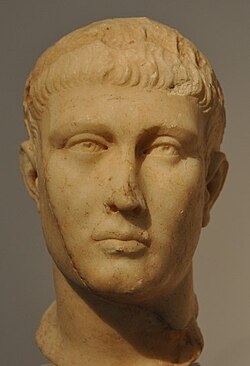
393 AD
% complete
Emperor Theodosius I banned all pagan festivals, including the Olympic Games, as part of his campaign to promote Christianity. The games had been held for nearly 1,200 years before coming to an end.
Image source: Theodosius I
1875 - 1881
% complete
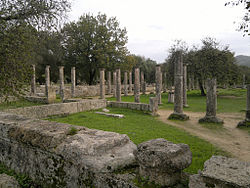
German archaeologists led by Ernst Curtius began systematic excavations at Olympia, unearthing the stadium, temples, and artifacts that inspired renewed interest in reviving the Olympic Games.
Image source: Olympia, Greece
Jun 23, 1894
% complete
At a congress at the Sorbonne in Paris, French educator Pierre de Coubertin founded the International Olympic Committee (IOC) to revive the Olympic Games as an international sporting competition promoting peace and athletic excellence.
Image source: International Olympic Committee
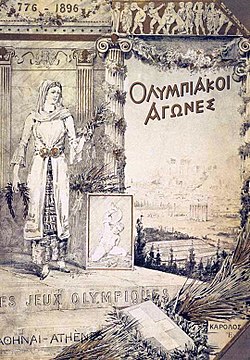
Apr 6, 1896 - Apr 15, 1896
% complete
The first modern Olympic Games opened in Athens with 241 athletes from 14 nations competing in 43 events. American James Connolly became the first modern Olympic champion, and Spyridon Louis won the marathon to Greek national celebration.
Image source: 1896 Summer Olympics
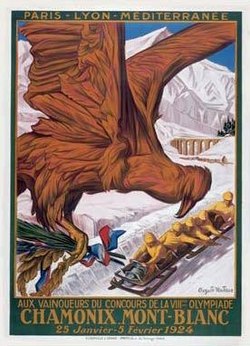
Jan 25, 1924 - Feb 5, 1924
% complete
The inaugural Winter Olympics took place in Chamonix, France, featuring sports such as skiing, skating, and ice hockey. Sixteen nations participated, establishing winter sports as part of the Olympic tradition.
Image source: 1924 Winter Olympics
May 17, 1928
% complete
The 1928 Amsterdam Games introduced the tradition of lighting an Olympic flame, and also marked the first time women were allowed to compete in track and field athletics.
Image source: 1928 Summer Olympics
Jul 20, 1936 - Aug 1, 1936
% complete
The Berlin Games introduced the torch relay, carrying the flame from Olympia to the host city. Jesse Owens won four gold medals, undermining Nazi claims of Aryan supremacy, though the games were used extensively for propaganda.
Image source: 1936 Summer Olympics
1940 - 1944
% complete
The 1940 Tokyo/Helsinki Games and 1944 London Games were cancelled due to World War II, marking the longest interruption in modern Olympic history after the wartime cancellations of 1916.
Image source: 1940 Summer Olympics
Jul 29, 1948 - Aug 14, 1948
% complete
London hosted the first postwar Olympics amid rationing and reconstruction. Fanny Blankers-Koen of the Netherlands won four gold medals in athletics, becoming the first woman to achieve this feat at a single Games.
Image source: 1948 Summer Olympics
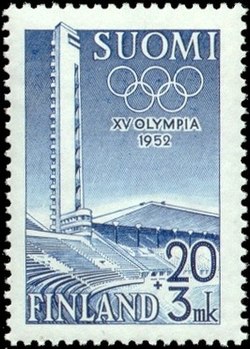
Jul 19, 1952 - Aug 3, 1952
% complete
The Soviet Union made its Olympic debut at Helsinki, immediately rivaling the United States in the medal table and beginning the intense Cold War sporting rivalry that would define the Olympics for decades.
Image source: 1952 Summer Olympics
Dec 6, 1956
% complete
Following the Soviet invasion of Hungary, a notoriously violent water polo match between the two nations at Melbourne became known as 'Blood in the Water,' with Hungarian players leaving the pool bloodied before their team's victory.
Sep 10, 1960
% complete
Ethiopian runner Abebe Bikila won the Rome marathon running barefoot through the streets lit by ancient Roman torches, becoming the first Black African Olympic champion and an iconic figure in Olympic history.
Image source: Abebe Bikila
Sep 18, 1960 - Sep 25, 1960
% complete
The ninth International Stoke Mandeville Games, held in Rome alongside the Olympics, are now recognized as the first Paralympic Games, opening competitive sport to athletes with disabilities on a global stage.
Image source: 1960 Summer Paralympics
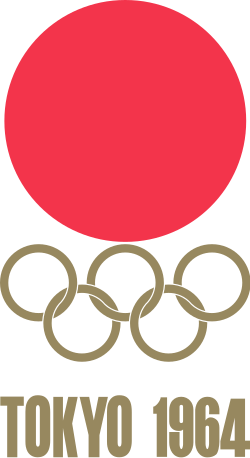
Oct 10, 1964 - Oct 24, 1964
% complete
The Tokyo Games were broadcast live via satellite to North America and Europe for the first time, transforming the Olympics into a truly global spectacle and ushering in the era of mass television audiences.
Image source: 1964 Summer Olympics
Oct 16, 1968
% complete
American sprinters Tommie Smith and John Carlos raised gloved fists on the podium after the 200 meters, creating one of the most iconic images of protest in sports history and sparking global debate about racism and athlete activism.
Image source: 1968 Olympics Black Power salute
Sep 5, 1972
% complete
Palestinian terrorists of the Black September group killed 11 members of the Israeli Olympic team after taking them hostage in the Munich Olympic Village, forever changing security at international sporting events.
Image source: Munich massacre
Jul 18, 1976
% complete
Fourteen-year-old Romanian gymnast Nadia Comăneci received the first perfect score of 10.0 in Olympic gymnastics history at Montreal, going on to win three gold medals and revolutionizing the sport.
Image source: Nadia Comăneci
Jul 19, 1980 - Aug 3, 1980
% complete
Led by President Jimmy Carter, more than 60 nations boycotted the Moscow Games in protest of the Soviet invasion of Afghanistan, significantly diminishing the competition and politicizing the Olympic movement.
Image source: 1980 Summer Olympics boycott
Jul 28, 1984 - Aug 12, 1984
% complete
In retaliation for the 1980 boycott, the Soviet Union and 13 allied nations stayed away from Los Angeles. The United States dominated the medal count, and the games proved commercially successful under Peter Ueberroth's leadership.
Image source: 1984 Summer Olympics
Sep 24, 1988
% complete
Canadian sprinter Ben Johnson tested positive for stanozolol days after winning the 100 meters in world record time, shocking the world and launching the modern era of high-profile anti-doping enforcement.
Image source: Ben Johnson (Canadian sprinter)
Jul 25, 1992 - Aug 9, 1992
% complete
The US basketball 'Dream Team,' featuring Michael Jordan, Magic Johnson, and Larry Bird, captivated audiences in Barcelona and is widely credited with globalizing the sport of basketball.
Jul 27, 1996
% complete
A pipe bomb exploded in Centennial Olympic Park in Atlanta, killing two people and injuring over 100. Despite the tragedy, the games continued, honoring the centennial of the modern Olympics.
Image source: Centennial Olympic Park bombing
Sep 15, 2000 - Oct 1, 2000
% complete
The Sydney Games were widely praised for their organization, atmosphere, and volunteer spirit. Cathy Freeman's victory in the 400 meters before a home crowd became a defining moment for Australian reconciliation.
Image source: 2000 Summer Olympics
Aug 9, 2008 - Aug 17, 2008
% complete
American swimmer Michael Phelps won eight gold medals at Beijing, breaking Mark Spitz's single-Games record and cementing his status as the most decorated Olympian of all time.
Image source: Michael Phelps
Aug 16, 2008 - Aug 20, 2008
% complete
Jamaican sprinter Usain Bolt broke world records in both the 100 and 200 meters at Beijing, then repeated his sprint double at London 2012 and Rio 2016, becoming the greatest sprinter in history.
Image source: Usain Bolt
Jul 27, 2012 - Aug 12, 2012
% complete
London hosted the Olympics for the third time (after 1908 and 1948), with memorable performances including Mo Farah's distance double and the 'Super Saturday' of British athletics.
Image source: 2012 Summer Olympics
Aug 5, 2016 - Aug 21, 2016
% complete
A team of ten Refugee Olympic Athletes competed in Rio under the Olympic flag, symbolizing hope for displaced people worldwide and marking a humanitarian milestone for the Olympic movement.
Image source: 2016 Summer Olympics
Mar 24, 2020
% complete
For the first time in history, the Olympic Games were postponed rather than cancelled, as the COVID-19 pandemic forced Tokyo 2020 to be rescheduled to 2021 and held largely without spectators.
Image source: 2020 Summer Olympics
Feb 4, 2022 - Feb 20, 2022
% complete
Beijing hosted the Winter Olympics, becoming the first city to have hosted both Summer and Winter editions of the Games, amid pandemic restrictions and diplomatic boycotts over human rights concerns.
Image source: 2022 Winter Olympics
Or browse the full history timeline directory, with more than 2,000 topics.
This Olympic Games timeline was generated with the help of AI, using information found on the internet.
We work hard to keep these timelines accurate, but mistakes do get through. If you spot one, email us at [email protected] and we'll fix it for future visitors.
Generate yours with AI or build it from scratch, for free.
Export your timeline, add your own events, edit or remove AI-generated events, and much more
No credit card required.
Cancel anytime.
Cancel anytime.
You can create an unlimited number of timelines with up to 10 events on each one, customize how they look, export them to PDF, PNG, PowerPoint, CSV, and Excel, and share them with a link. Paid plans raise the event limit and add features like spreadsheet imports and collaborators.
Yes. You can cancel your subscription from your account page at any time, and you will not be charged again. Your subscription stays active for the rest of the period you already paid for.
Yes. We will email you a reminder before the annual renewal, and we will also email you a receipt.
Yes. You can email us within 15 days of any payment, and we will issue you a full refund.
Check out our pricing docs or send us an email anytime: [email protected].