-
Use Cases
-
Resources
-
Pricing
The Special Olympics is a global movement that provides sports training and athletic competition for children and adults with intellectual disabilities. Founded by Eunice Kennedy Shriver, it began with Camp Shriver in 1962 and held its first International Summer Games in Chicago in 1968. Today, it serves millions of athletes in more than 170 countries, promoting inclusion, acceptance, and the transformative power of sport. More Less
Jun 1, 1958
% complete
Dr. James Oliver of England conducted pioneering research, including a ground-breaking study showing that physical exercise and activities for children with intellectual disabilities had positive effects that also carried over into the classroom. The study was published in the British Journal of Educational Psychology in June 1958.
Image source: Special Olympics
Jan 1, 1963
% complete
It has often been said that Rosemary Kennedy's disability was the inspiration behind her sister Eunice Kennedy Shriver's decision to form Special Olympics. However, in a 1995 interview with The New York Times, Eunice clarified that this was not exactly the case.
Jun 1, 1963
% complete
In June 1963, Eunice Kennedy Shriver started a day camp called Camp Shriver for children with intellectual and physical disabilities at her home in Potomac, Maryland. This camp is widely regarded as a precursor to the Special Olympics movement.
Image source: Eunice Kennedy Shriver
Jun 1, 1964
% complete
In 1964, Dr. James Oliver, whose research had demonstrated the benefits of physical conditioning for children with intellectual disabilities, served as a consultant to Camp Shriver.
Jan 1, 1967
% complete
In 1967, Anne McGlone Burke approached the Kennedy Foundation to help fund a sporting event for people with intellectual disabilities. The foundation agreed, laying the groundwork for what would become the first Special Olympics games.
Sep 1, 1968
% complete
With the help of a local school that offered space in its gym, Frank Hayden started one of the first publicly organized sports programs, floor hockey for individuals with intellectual disabilities, in the fall of 1968.
Image source: Frank Hayden
Jan 1, 1972
% complete
Dr. Frank Hayden served as the games' executive director through 1972, after which he worked in international development for the games, helping expand the movement worldwide.
Jan 1, 1968
% complete
In 1968, track and field, swimming, and floor hockey were the first three official sports offered by Special Olympics.
Jul 20, 1968
% complete
The Special Olympics athlete's oath, 'Let me win. But if I cannot win, let me be brave in the attempt,' was first introduced by Eunice Kennedy Shriver at the inaugural Special Olympics international games in Chicago in 1968.
Jul 20, 1968
% complete
At the July 1968 games in Chicago, Eunice Kennedy Shriver announced the formation of Special Olympics and that more games would be held every two years as a 'Biennial International Special Olympics'.
Jan 1, 1986 - Dec 31, 1986
% complete
The United Nations declared 1986 the year of the Special Olympics, recognizing the growing global significance of the movement for people with intellectual disabilities.
Feb 15, 1988
% complete
In 1988, the Special Olympics was officially recognized by the International Olympic Committee (IOC), cementing its status within the international sports community.
Jan 1, 1997
% complete
In 1997, Healthy Athletes became an official Special Olympics initiative, offering health information and screenings to Special Olympics athletes worldwide who might otherwise lack access to such care.
Image source: Special Olympics
Jan 1, 2004
% complete
Scholar Keith Storey summarized common objections to the Special Olympics in a 2004 article published in the Journal of Disability Policy Studies, contributing to ongoing academic debate about the movement.
Oct 30, 2004
% complete
On October 30, 2004, President George W. Bush signed legislation supporting the Special Olympics, demonstrating continued federal commitment to the movement in the United States.
Jul 2, 2006 - Jul 7, 2006
% complete
In July 2006, the first Special Olympics USA Games were held at Iowa State University, providing a national-level competition for American athletes within the movement.
Jan 1, 2010
% complete
By 2010, the Healthy Athletes program had given free health screenings and treatment to more than 1 million people with intellectual disabilities around the world.
Jan 1, 2012
% complete
In 2012, the Special Olympics Healthy Communities initiative launched in eight countries—Kazakhstan, Malawi, Malaysia, Mexico, Peru, Romania, South Africa and Thailand—as well as six U.S. states, expanding access to health services for people with intellectual disabilities.
Jan 1, 2016
% complete
Unified Robotics, a program that pairs Special Olympics students with FIRST Robotics students to build robots, began in 2016. It has been bringing opportunities for technological skill development to Special Olympics students in Washington state, Arizona, and other regions since.
May 1, 2016
% complete
In May 2016, Mary Davis of Dublin, Ireland, was named chief executive officer of Special Olympics International, becoming the leader of the global movement.
Image source: Mary Davis (activist)
Jul 20, 2018
% complete
As part of the Special Olympics 50th Anniversary celebration in 2018, a new mission called the 'Inclusion Revolution' was launched, aiming to promote inclusion of people with intellectual disabilities throughout society.
Jul 20, 2018
% complete
In 2018, the Chicago Park District dedicated the 'Eternal Flame of Hope' in honor of the Special Olympics. The 30-foot sculpture by Richard Hunt stands in a plaza next to Soldier Field, where the first games were held 50 years earlier in 1968.
Image source: Eternal flame
May 1, 2023
% complete
As of May 2023, there are 204 countries and territories participating in Special Olympics, grouped into seven geographic regions, demonstrating the truly global scale of the movement.
Jul 20, 1968
% complete
The first Special Olympics International Games were held on July 20, 1968, at Soldier Field in Chicago, Illinois, with about 1,000 athletes from across the United States competing. The event took place six weeks after the assassination of Robert F. Kennedy, Eunice Kennedy Shriver's younger brother.
Aug 13, 1970
% complete
The second Special Olympics games were held in 1970 at Soldier Field in Chicago, engaging some 2,500 participants. France sent the first athletes from outside North America to compete in these games.
Aug 1, 1972
% complete
The third Special Olympics games were held in 1972, seeing 10 nations send athletes to compete, reflecting the growing international reach of the movement.
Aug 8, 1979 - Aug 13, 1979
% complete
The State University of New York at Brockport played host to the 1979 Special Olympics World Summer Games. Sculptor Zurab Tsereteli was then a visiting artist in residence at the university.
Jun 21, 2003 - Jun 29, 2003
% complete
In 2003, the first summer games held outside the United States took place in Dublin, Ireland, with 7,000 athletes from 150 countries participating. It was the largest sporting event ever hosted in Ireland at that time.
Image source: 2003 Special Olympics World Summer Games
Jun 21, 2003 - Jun 29, 2003
% complete
The 2003 Special Olympics World Summer Games dramatically changed the perceptions and attitudes of international society regarding the abilities and limitations of people with intellectual disabilities.
Jun 21, 2003
% complete
The opening ceremony of the 2003 Games has been described by Irish President Mary McAleese as 'a time when Ireland was at its superb best', capturing the spirit and pride of the host nation.
Jun 16, 2023 - Jun 25, 2023
% complete
The most recent Special Olympics World Summer Games were hosted in Berlin, Germany, from June 16 to 25, 2023.
Image source: 2023 Special Olympics World Summer Games
Feb 5, 1977 - Feb 11, 1977
% complete
The first Special Olympics World Winter Games were held in February 1977 in Steamboat Springs, Colorado, United States, expanding the movement beyond summer sports.
Image source: Special Olympics World Games
Mar 20, 1993 - Mar 27, 1993
% complete
Austria hosted the first Special Olympics World Winter Games outside the United States in 1993. The games took place in Salzburg and Schladming, marking a milestone in the internationalization of the winter games.
Jan 1, 2009
% complete
Sarajevo, Bosnia and Herzegovina, was originally selected to host the 2009 Special Olympics World Winter Games. Due to financial problems and constant delays in reconstructing venues from the 1984 Winter Olympics, the city gave up hosting, and Boise, Idaho, was invited to host instead.
Image source: 2009 Special Olympics World Winter Games
Jan 29, 2013 - Feb 5, 2013
% complete
During the World Winter Games of 2013 in Pyeongchang, South Korea, the first Special Olympics Global Development Summit was held on 'Ending the Cycle of Poverty and Exclusion for People with Intellectual Disabilities,' gathering government officials, activists, and business leaders from around the world.
Image source: 2013 Special Olympics World Winter Games
Dec 20, 2019
% complete
Åre and Östersund, Sweden were planned to host the 2021 World Winter Games between February 2 to 13, 2021. However, on December 20, 2019, it was announced that the Swedish Paralympic Committee vetoed the necessary financing for the continuity of the event in the country, invalidating a promise made during the bid process. Special Olympics was forced to delay the event, and in 2020 the COVID-19 pandemic arose.
Image source: 2022 Special Olympics World Winter Games
Jun 29, 2020
% complete
On June 29, 2020, Kazan, Russia was announced as the winter host for the 2022 Special Olympics World Winter Games.
Mar 4, 2022
% complete
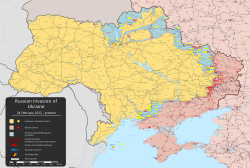
On March 4, 2022, it was announced that the Kazan games would be cancelled due to safety and economic concerns arising from the 2022 Russian invasion of Ukraine.
Image source: Russian invasion of Ukraine
Mar 8, 2025 - Mar 15, 2025
% complete
The most recent Special Olympics World Winter Games were held in Turin, Italy, from March 8, 2025, to March 15, 2025.
Image source: 2025 Special Olympics World Winter Games
Or browse the full history timeline directory, with more than 2,000 topics.
This History of Special Olympics timeline was generated with the help of AI, using information found on the internet.
We work hard to keep these timelines accurate, but mistakes do get through. If you spot one, email us at [email protected] and we'll fix it for future visitors.
Generate yours with AI or build it from scratch, for free.
Export your timeline, add your own events, edit or remove AI-generated events, and much more
No credit card required.
Cancel anytime.
Cancel anytime.
You can create an unlimited number of timelines with up to 10 events on each one, customize how they look, export them to PDF, PNG, PowerPoint, CSV, and Excel, and share them with a link. Paid plans raise the event limit and add features like spreadsheet imports and collaborators.
Yes. You can cancel your subscription from your account page at any time, and you will not be charged again. Your subscription stays active for the rest of the period you already paid for.
Yes. We will email you a reminder before the annual renewal, and we will also email you a receipt.
Yes. You can email us within 15 days of any payment, and we will issue you a full refund.
Check out our pricing docs or send us an email anytime: [email protected].