-
Use Cases
-
Resources
-
Pricing
The Winter Olympics are a major international multi-sport event held every four years, featuring sports practiced on snow and ice such as skiing, skating, ice hockey, and bobsledding. First held in Chamonix, France in 1924, the Games have grown from 16 events to over 100, showcasing athletic excellence in cold-weather disciplines and uniting nations across the globe. More Less
Jan 25, 1924 - Feb 5, 1924
% complete
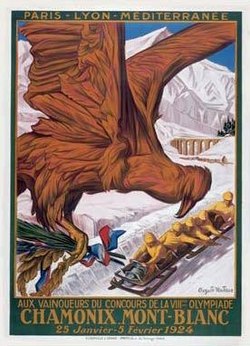
The inaugural Winter Olympic Games were held in Chamonix, France, featuring 16 events across six sports. Originally called International Winter Sports Week, it was retroactively designated the first Winter Olympics. Norway dominated the medal table, and the games established winter sports as a permanent part of the Olympic movement.
Image source: 1924 Winter Olympics
Feb 13, 1928
% complete
Norwegian figure skater Sonja Henie won her first Olympic gold at St. Moritz in 1928, beginning a run of three consecutive titles (1928, 1932, 1936). She became one of the most celebrated athletes of her era and later starred in Hollywood films.
Image source: Sonja Henie
Feb 4, 1932 - Feb 15, 1932
% complete
The 1932 Winter Olympics were held in Lake Placid, New York, during the Great Depression. The United States topped the medal table for the only time in its history, aided by home advantage and controversial speed skating rules favoring American skaters.
Image source: 1932 Winter Olympics
Feb 6, 1936 - Feb 16, 1936
% complete
Held in Garmisch-Partenkirchen, Germany, these games took place under Nazi rule just months before the Berlin Summer Olympics. Alpine skiing debuted as an Olympic sport, and Norwegian skier Ivar Ballangrud won four gold medals.
Image source: 1936 Winter Olympics
Jan 1, 1940 - Dec 31, 1945
% complete
The planned 1940 games in Sapporo and 1944 games in Cortina d'Ampezzo were cancelled due to World War II. The Winter Olympics did not resume until 1948, marking a twelve-year gap in the competition's history.
Image source: 1940 Winter Olympics
Jan 30, 1948 - Feb 8, 1948
% complete
St. Moritz, Switzerland hosted the first postwar Winter Olympics in 1948. Twenty-eight nations participated, including returning teams from Japan and Germany. Barbara Ann Scott of Canada won figure skating gold, and Henri Oreiller of France won two alpine golds.
Image source: 1948 Winter Olympics
Feb 14, 1952 - Feb 25, 1952
% complete
The 1952 Winter Olympics in Oslo, Norway introduced the tradition of lighting the Olympic flame in the fireplace of the home of skiing pioneer Sondre Nordheim. Norway celebrated its centennial with a dominant performance on home snow.
Image source: 1952 Winter Olympics
Jan 26, 1956 - Feb 5, 1956
% complete
The Soviet Union made its Winter Olympic debut at Cortina d'Ampezzo, Italy, immediately topping the medal table. The games also featured the first televised Winter Olympics broadcast to a wide international audience.
Image source: 1956 Winter Olympics
Feb 18, 1960 - Feb 28, 1960
% complete
The 1960 Winter Olympics in Squaw Valley, California introduced computerized scoring and live television coverage. Bobsled was omitted due to cost, while biathlon and women's speed skating debuted as Olympic sports.
Image source: 1960 Winter Olympics
Jan 29, 1964 - Feb 9, 1964
% complete
Innsbruck, Austria hosted the 1964 Winter Olympics, which saw the debut of luge and the use of artificial refrigeration for bobsled and luge tracks. Tragically, two athletes died during training runs before the opening ceremony.
Image source: 1964 Winter Olympics
Feb 6, 1968 - Feb 18, 1968
% complete
French skier Jean-Claude Killy won all three men's alpine skiing events at the 1968 Grenoble Olympics, replicating Toni Sailer's 1956 feat. Peggy Fleming also won figure skating gold for the United States.
Image source: Jean-Claude Killy
Feb 3, 1972 - Feb 13, 1972
% complete
Sapporo, Japan hosted the first Winter Olympics held outside Europe or North America. Galina Kulakova of the USSR won three cross-country golds, and Ard Schenk of the Netherlands swept three speed skating titles.
Image source: 1972 Winter Olympics
Jan 31, 1976
% complete
Austrian downhill skier Franz Klammer delivered one of the most thrilling runs in Olympic history at Innsbruck 1976, narrowly beating Bernhard Russi to win gold before his home crowd. Dorothy Hamill also charmed audiences with her figure skating gold.
Image source: Franz Klammer
Feb 13, 1980 - Feb 24, 1980
% complete
American Eric Heiden achieved an unprecedented sweep of all five men's speed skating events at Lake Placid 1980, winning gold from 500 meters to 10,000 meters. It remains one of the greatest individual performances in Olympic history.
Image source: Eric Heiden
Feb 22, 1980
% complete
At Lake Placid 1980, a young United States hockey team composed largely of amateurs defeated the heavily favored Soviet Union 4-3 in a semifinal widely known as the Miracle on Ice. The Americans went on to win gold against Finland.
Image source: Miracle on Ice
Feb 14, 1984
% complete
British ice dancers Jayne Torvill and Christopher Dean received perfect artistic impression scores for their Boléro free dance at the 1984 Sarajevo Olympics, earning gold in one of figure skating's most iconic performances.
Image source: Torvill and Dean
Feb 13, 1988 - Feb 28, 1988
% complete
Calgary hosted the 1988 Winter Olympics, expanding the program to sixteen days and introducing curling and freestyle skiing as demonstration sports. Matti Nykänen won three ski jumping golds, and Eddie 'the Eagle' Edwards became a beloved underdog story.
Image source: 1988 Winter Olympics
Feb 8, 1992 - Feb 23, 1992
% complete
The 1992 Albertville Games were the final Winter Olympics held the same year as the Summer Olympics. Beginning in 1994, the IOC staggered the games so winter and summer editions alternated every two years.
Image source: 1992 Winter Olympics
Feb 12, 1994 - Feb 27, 1994
% complete
Lillehammer, Norway hosted the first Winter Olympics on the new two-year offset cycle. The Nancy Kerrigan-Tonya Harding controversy dominated headlines, while Johann Olav Koss won three speed skating golds for Norway.
Image source: 1994 Winter Olympics
Feb 7, 1998 - Feb 22, 1998
% complete
Nagano, Japan added snowboarding and women's ice hockey to the Olympic program in 1998. Tara Lipinski became the youngest figure skating champion in history at age fifteen, and Hermann Maier overcame a horrific crash to win two alpine golds.
Image source: 1998 Winter Olympics
Feb 8, 2002 - Feb 24, 2002
% complete
Following a bid corruption scandal that surfaced in 1998, Salt Lake City hosted the 2002 Winter Olympics. Skeleton returned to the program, and Canada won its first men's hockey gold in fifty years after a judging controversy in pairs skating led to dual gold medals.
Image source: 2002 Winter Olympics
Feb 10, 2006 - Feb 26, 2006
% complete
Turin, Italy hosted the 2006 Winter Olympics, where Michael Greis won three biathlon golds and Cindy Klassen earned five speed skating medals. South Korea's short track speed skaters dominated their sport with multiple victories.
Image source: 2006 Winter Olympics
Feb 12, 2010 - Feb 28, 2010
% complete
The Vancouver 2010 Winter Olympics began under a cloud when Georgian luger Nodar Kumaritashvili died in a training crash hours before the opening ceremony. Canada rebounded to win a record fourteen golds, including Sidney Crosby's overtime winner in the hockey final.
Image source: 2010 Winter Olympics
Feb 7, 2014 - Feb 23, 2014
% complete
Sochi, Russia hosted the most expensive Olympics in history, costing an estimated $51 billion. Russia topped the medal table, but a later investigation revealed a state-sponsored doping program that led to sanctions and stripped medals.
Image source: 2014 Winter Olympics
Jul 31, 2015
% complete
The IOC selected Beijing to host the 2022 Winter Olympics, making it the first city to host both Summer and Winter Games. The decision drew criticism due to concerns over human rights and the lack of natural snow in the region.
Image source: 121st IOC Session
Dec 5, 2017
% complete
The IOC banned Russia from the 2018 PyeongChang Winter Olympics following revelations of state-sponsored doping at Sochi 2014. Clean Russian athletes competed as neutrals under the designation 'Olympic Athletes from Russia.'
Image source: 2014 Winter Olympics
Feb 9, 2018 - Feb 25, 2018
% complete
PyeongChang, South Korea hosted the 2018 Winter Olympics amid diplomatic thawing on the Korean peninsula. North and South Korea marched together under a unified flag and fielded a joint women's hockey team, while Norway set a record with fourteen golds.
Image source: 2018 Winter Olympics
Jun 24, 2019
% complete
The IOC awarded the 2026 Winter Olympics to Milan and Cortina d'Ampezzo, Italy, forty years after Cortina first hosted in 1956. The games are scheduled to feature a record number of events across northern Italian venues.
Image source: 2026 Winter Olympics
Feb 4, 2022 - Feb 20, 2022
% complete
Beijing hosted the 2022 Winter Olympics under strict COVID-19 protocols inside a closed bubble with no spectators. Norway again led the medal table, and Eileen Gu won two golds for China while Kamila Valieva's doping case overshadowed figure skating.
Image source: 2022 Winter Olympics
Or browse the full history timeline directory, with more than 2,000 topics.
This Winter Olympics timeline was generated with the help of AI, using information found on the internet.
We work hard to keep these timelines accurate, but mistakes do get through. If you spot one, email us at [email protected] and we'll fix it for future visitors.
Generate yours with AI or build it from scratch, for free.
Export your timeline, add your own events, edit or remove AI-generated events, and much more
No credit card required.
Cancel anytime.
Cancel anytime.
You can create an unlimited number of timelines with up to 10 events on each one, customize how they look, export them to PDF, PNG, PowerPoint, CSV, and Excel, and share them with a link. Paid plans raise the event limit and add features like spreadsheet imports and collaborators.
Yes. You can cancel your subscription from your account page at any time, and you will not be charged again. Your subscription stays active for the rest of the period you already paid for.
Yes. We will email you a reminder before the annual renewal, and we will also email you a receipt.
Yes. You can email us within 15 days of any payment, and we will issue you a full refund.
Check out our pricing docs or send us an email anytime: [email protected].