-
Use Cases
-
Resources
-
Pricing
The Summer Olympics are a major international multi-sport event held every four years, featuring thousands of athletes from around the world competing in various summer sports. Originating in ancient Olympia, Greece, the modern Games were revived in 1896 by Pierre de Coubertin and have since grown into the world's premier sporting competition. More Less
Apr 6, 1896 - Apr 15, 1896
% complete
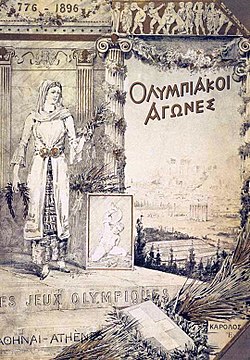
The first modern Olympic Games were held in Athens, Greece, reviving the ancient Greek tradition after a 1,500-year hiatus. Organized by the International Olympic Committee under Pierre de Coubertin, the games featured 14 nations and around 240 athletes competing in 43 events across nine sports. American James Connolly became the first Olympic champion of the modern era.
Image source: 1896 Summer Olympics
May 14, 1900 - Oct 28, 1900
% complete
The 1900 Summer Olympics in Paris were held as part of the Exposition Universelle world's fair. The games stretched over five months and featured women competing for the first time, with tennis player Charlotte Cooper becoming the first female Olympic champion. The disorganized format made it difficult for athletes to know which events were Olympic competitions.
Image source: 1900 Summer Olympics
Jul 1, 1904 - Nov 23, 1904
% complete
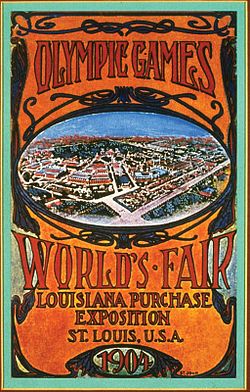
The 1904 Summer Olympics in St. Louis were the first held outside Europe. Tied to the Louisiana Purchase Exposition, the games suffered from poor organization and low international participation, with most competitors coming from North America. The marathon was famously chaotic, with winner Fred Lorz briefly disqualified for riding in a car partway through the race.
Image source: 1904 Summer Olympics
Apr 22, 1906 - May 2, 1906
% complete
The 1906 Intercalated Games in Athens were an unofficial Olympic event organized by Greece to restore prestige to the games after the poorly received 1900 and 1904 editions. Though later not officially recognized by the IOC, the games introduced important traditions such as the opening ceremony as a separate event and the parade of nations.
Image source: 1906 Intercalated Games
Apr 27, 1908 - Oct 31, 1908
% complete
London stepped in to host the 1908 Summer Olympics after Rome withdrew due to the eruption of Mount Vesuvius in 1906. The games established the marathon distance of 26 miles 385 yards, standardized for future Olympics. Dorando Pietri's dramatic collapse near the marathon finish line, where he was helped across by officials before being disqualified, became one of the most famous moments in early Olympic history.
Image source: 1908 Summer Olympics
May 5, 1912 - Jul 22, 1912
% complete
The 1912 Stockholm Olympics are often considered the best-organized games of the early era, introducing automatic timing devices and electronic timing for track events. American Jim Thorpe won the pentathlon and decathlon but was later stripped of his medals for violating amateurism rules; they were restored posthumously in 1982.
Image source: 1912 Summer Olympics
Jan 1, 1916
% complete
The 1916 Summer Olympics, scheduled to be held in Berlin, were cancelled due to the outbreak of World War I. It marked the first cancellation in modern Olympic history. A winter sports week had been planned alongside the games, foreshadowing the creation of the Winter Olympics.
Image source: 1916 Summer Olympics
Aug 14, 1920 - Sep 12, 1920
% complete
The 1920 Antwerp Olympics were the first games held after World War I. Germany, Austria, Hungary, Bulgaria, and Turkey were excluded due to their roles in the war. The games introduced the Olympic flag with its five interlocking rings and the Olympic oath, both proposed by Pierre de Coubertin.
Image source: 1920 Summer Olympics
May 4, 1924 - Jul 27, 1924
% complete
The 1924 Paris Olympics were the first games to use the motto 'Citius, Altius, Fortius' (Faster, Higher, Stronger) and the first to feature an Olympic village. The games inspired the film 'Chariots of Fire,' chronicling British runners Harold Abrahams and Eric Liddell, who both won gold medals in Paris.
Image source: 1924 Summer Olympics
May 17, 1928 - Aug 12, 1928
% complete
The 1928 Amsterdam Olympics introduced the tradition of lighting an Olympic flame, carried from Olympia, Greece. Women competed in athletics and gymnastics for the first time. Japan's Mikio Oda became Asia's first Olympic champion, winning gold in the triple jump.
Image source: 1928 Summer Olympics
Jul 30, 1932 - Aug 14, 1932
% complete
Despite the Great Depression limiting participation, the 1932 Los Angeles Olympics set new standards for organization, introducing the photo-finish camera and the victory podium. Mildred 'Babe' Didrikson won two gold medals in athletics, while Japan dominated men's swimming events.
Image source: 1932 Summer Olympics
Aug 1, 1936 - Aug 16, 1936
% complete
The 1936 Berlin Olympics were used by Nazi Germany as propaganda for its regime. Jesse Owens, an African American athlete, defied Hitler's ideology of Aryan supremacy by winning four gold medals in track and field. The games also introduced the torch relay from Olympia to the host city.
Image source: 1936 Summer Olympics
Jan 1, 1940 - Dec 31, 1944
% complete
The 1940 Tokyo Olympics were forfeited when Japan withdrew amid the Second Sino-Japanese War; Helsinki was named replacement host before the games were cancelled entirely due to World War II. The 1944 London games were likewise cancelled, marking the only period besides 2020 when consecutive Olympics were called off.
Image source: 1940 Summer Olympics
Jul 29, 1948 - Aug 14, 1948
% complete
Held just three years after World War II ended, the 1948 London Olympics were known as the 'Austerity Games' due to rationing and economic hardship. No new venues were built, and athletes brought their own food. Fanny Blankers-Koen of the Netherlands won four gold medals in athletics, becoming the first woman to achieve that feat at a single games.
Image source: 1948 Summer Olympics
Jul 19, 1952 - Aug 3, 1952
% complete
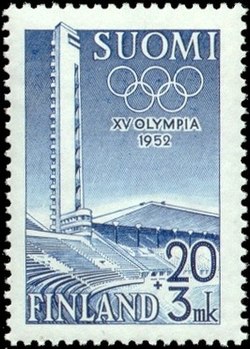
The 1952 Helsinki Olympics marked the Olympic debut of the Soviet Union, beginning decades of intense Cold War competition with the United States. Czechoslovakia's Emil Zátopek won three distance running golds, including his first-ever marathon, one of the greatest achievements in Olympic history.
Image source: 1952 Summer Olympics
Nov 22, 1956 - Dec 8, 1956
% complete
The 1956 Melbourne Olympics were the first held in the Southern Hemisphere and outside Europe or North America. Due to Australian quarantine laws, equestrian events were staged separately in Stockholm. The games were affected by boycotts related to the Suez Crisis and the Soviet invasion of Hungary, which sparked a bloody water polo match between Hungary and the USSR.
Image source: 1956 Summer Olympics
Aug 25, 1960 - Sep 11, 1960
% complete
The 1960 Rome Olympics were the first fully televised live internationally, bringing the games to a global audience. Cassius Clay (later Muhammad Ali) won boxing gold, and Abebe Bikila of Ethiopia won the marathon running barefoot, becoming the first Black African Olympic champion.
Image source: 1960 Summer Olympics
Oct 10, 1964 - Oct 24, 1964
% complete
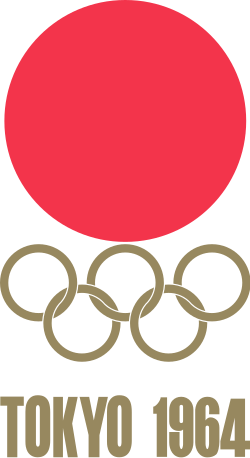
The 1964 Tokyo Olympics were the first games held in Asia and symbolized Japan's post-war recovery. The games introduced satellite broadcasting worldwide, computerized timing, and synthetic tracks. Judo debuted as an Olympic sport, and volleyball was added for women.
Image source: 1964 Summer Olympics
Oct 12, 1968 - Oct 27, 1968
% complete
The 1968 Mexico City Olympics, held at high altitude, saw Bob Beamon shatter the long jump world record by nearly two feet. Tommie Smith and John Carlos raised black-gloved fists on the podium in a civil rights protest, one of the most iconic political images in Olympic history.
Image source: 1968 Summer Olympics
Sep 5, 1972
% complete
During the 1972 Munich Olympics, Palestinian terrorists from Black September took eleven Israeli athletes and coaches hostage, ultimately killing all of them after a failed rescue attempt. The tragedy profoundly changed security at all subsequent Olympic Games. American swimmer Mark Spitz won seven gold medals at these games.
Image source: Munich massacre
Jul 17, 1976 - Aug 1, 1976
% complete
The 1976 Montreal Olympics were marred by massive cost overruns that left the city in debt for decades and prompted a boycott by over 20 African nations protesting New Zealand's rugby ties with apartheid South Africa. Nadia Comăneci scored the first perfect 10 in Olympic gymnastics history, earning seven perfect scores overall.
Image source: 1976 Summer Olympics
Jul 19, 1980 - Aug 3, 1980
% complete
Led by President Jimmy Carter, the United States boycotted the 1980 Moscow Olympics in protest of the Soviet invasion of Afghanistan. Around 60 other nations joined the boycott. Despite reduced competition, the games produced memorable performances, including Miruts Yifter's double gold in distance running.
Image source: 1980 Summer Olympics boycott
Jul 28, 1984 - Aug 12, 1984
% complete
In retaliation for the 1980 boycott, the Soviet Union and 13 allied nations skipped the 1984 Los Angeles Olympics. The games were a commercial triumph, pioneering corporate sponsorship models that transformed Olympic financing. Carl Lewis matched Jesse Owens' feat with four gold medals in track and field.
Image source: 1984 Summer Olympics
Sep 17, 1988 - Oct 2, 1988
% complete
The 1988 Seoul Olympics showcased South Korea's emergence as a democratic, industrialized nation. Canadian sprinter Ben Johnson won the 100 meters in world record time but was disqualified days later for doping, one of the most infamous scandals in Olympic history. Tennis returned as a full medal sport.
Image source: 1988 Summer Olympics
Jul 25, 1992 - Aug 9, 1992
% complete
The 1992 Barcelona Olympics celebrated the end of the Cold War, with a unified German team and post-Soviet states competing together. The US basketball 'Dream Team,' featuring Michael Jordan, Magic Johnson, and Larry Bird, captivated global audiences. South Africa returned to the games after the end of apartheid.
Image source: 1992 Summer Olympics
Jul 19, 1996 - Aug 4, 1996
% complete
Marking the centennial of the modern Olympics, the 1996 Atlanta games featured Muhammad Ali lighting the cauldron despite his Parkinson's disease. A pipe bomb exploded in Centennial Olympic Park, killing two people. Michael Johnson set a stunning world record in the 200 meters, and the US women's gymnastics team won team gold.
Image source: 1996 Summer Olympics
Sep 15, 2000 - Oct 1, 2000
% complete
Widely praised for their organization, the 2000 Sydney Olympics featured Cathy Freeman lighting the cauldron and winning the 400 meters for Aboriginal Australia. Eric Moussambani of Equatorial Guinea became a beloved figure after swimming alone in a qualifying heat. Taekwondo and triathlon debuted as Olympic sports.
Image source: 2000 Summer Olympics
Aug 13, 2004 - Aug 29, 2004
% complete
The 2004 Athens Olympics returned the games to their birthplace after 108 years. Michael Phelps began his historic career with six gold and two bronze medals. Hicham El Guerrouj won both the 1500 meters and 5000 meters, a rare double last achieved in 1924.
Image source: 2004 Summer Olympics
Aug 8, 2008 - Aug 24, 2008
% complete
The 2008 Beijing Olympics announced China's arrival as a global power, featuring spectacular ceremonies directed by Zhang Yimou. Michael Phelps won eight gold medals, breaking Mark Spitz's single-games record, while Usain Bolt set world records in the 100 and 200 meters with electrifying performances.
Image source: 2008 Summer Olympics
Jul 27, 2012 - Aug 12, 2012
% complete
The 2012 London Olympics made the city the first to host the Summer Games three times. Usain Bolt defended his titles in the 100 and 200 meters, Michael Phelps retired as the most decorated Olympian ever with 22 total medals, and women's boxing debuted as an Olympic sport.
Image source: 2012 Summer Olympics
Aug 5, 2016 - Aug 21, 2016
% complete
The 2016 Rio Olympics were the first held in South America. A refugee team competed for the first time under the Olympic flag. Michael Phelps added five more golds to finish with 23 career titles, and Fiji won its first-ever medal, gold in rugby sevens, which debuted along with golf's return.
Image source: 2016 Summer Olympics
Jul 23, 2021 - Aug 8, 2021
% complete
Originally scheduled for 2020, the Tokyo Olympics were postponed for the first time in history due to the COVID-19 pandemic and held largely without spectators. Simone Biles withdrew from several events citing mental health concerns, sparking global conversation about athlete wellbeing. Karate, surfing, skateboarding, and sport climbing made their Olympic debuts.
Image source: 2020 Summer Olympics
Or browse the full history timeline directory, with more than 2,000 topics.
This Summer Olympics timeline was generated with the help of AI, using information found on the internet.
We work hard to keep these timelines accurate, but mistakes do get through. If you spot one, email us at [email protected] and we'll fix it for future visitors.
Generate yours with AI or build it from scratch, for free.
Export your timeline, add your own events, edit or remove AI-generated events, and much more
No credit card required.
Cancel anytime.
Cancel anytime.
You can create an unlimited number of timelines with up to 10 events on each one, customize how they look, export them to PDF, PNG, PowerPoint, CSV, and Excel, and share them with a link. Paid plans raise the event limit and add features like spreadsheet imports and collaborators.
Yes. You can cancel your subscription from your account page at any time, and you will not be charged again. Your subscription stays active for the rest of the period you already paid for.
Yes. We will email you a reminder before the annual renewal, and we will also email you a receipt.
Yes. You can email us within 15 days of any payment, and we will issue you a full refund.
Check out our pricing docs or send us an email anytime: [email protected].