-
Use Cases
-
Resources
-
Pricing
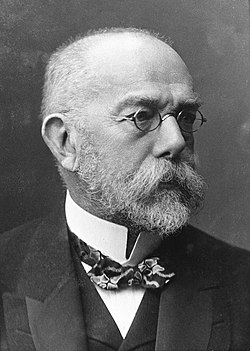
Robert Koch (1843–1910) was a German physician and microbiologist widely regarded as one of the founders of modern bacteriology. He developed Koch's postulates, a set of criteria for linking specific microorganisms to specific diseases, and discovered the causative agents of tuberculosis, cholera, and anthrax. His groundbreaking work earned him the Nobel Prize in Physiology or Medicine in 1905 and revolutionized the understanding and treatment of infectious diseases. More Less
Dec 11, 1843
% complete
Heinrich Hermann Robert Koch was born in Clausthal, Germany, on 11 December 1843, to Hermann Koch (1814–1877) and Mathilde Julie Henriette (née Biewend; 1818–1871). He would grow up to become one of the most influential physicians and microbiologists in history.
1848
% complete
Before entering school in 1848, Robert Koch had already taught himself how to read and write, showing early signs of the intellectual curiosity and self-discipline that would define his scientific career.
1862
% complete
In 1862, Koch completed his secondary education, having excelled in science and math. His strong academic performance set the stage for his entry into university studies in the natural sciences and medicine.
1862
% complete
At the age of 19, in 1862, Koch entered the University of Göttingen to study natural science. He would later transfer to medical school, where he trained under prominent scientists of the era.
Image source: University of Göttingen

1865
% complete
During his fifth semester at the medical school, Jacob Henle, an anatomist who had published a theory of contagion in 1840, asked Koch to participate in his research project on uterine nerve structure. This early research experience shaped Koch's approach to scientific inquiry.
Image source: Friedrich Gustav Jakob Henle
Jan 1866
% complete
In January 1866, Koch graduated from the medical school at the University of Göttingen, earning honours of the highest distinction, maxima cum laude, marking the beginning of his professional medical career.
1866
% complete
After graduating in 1866, Koch briefly worked as an assistant in the General Hospital of Hamburg, gaining practical clinical experience before moving on to other positions.
Jul 1867
% complete
In July 1867, Koch married Emma (Emmy) Adolfine Josephine Fraatz, and the two had a daughter, Gertrude, in 1868. Their marriage would last until 1893.
1868
% complete
In 1868, Koch moved to Neimegk and then to Rakwitz in 1869, taking up various positions as he established himself as a practicing physician.
Image source: Robert Koch
1870
% complete
After the Franco-Prussian War started in 1870, Koch enlisted in the German army as a volunteer surgeon in 1871 to support the war effort, gaining further medical experience under difficult wartime conditions.
Image source: Franco-Prussian War
1893
% complete
Koch's marriage to Emma ended after 26 years in 1893, and later that same year, he married actress Hedwig Freiberg (1872–1945).
1872
% complete
After officially becoming a district physician in Wollstein (today's Wolsztyn, Poland) in 1872, Koch began to study anthrax, launching the research that would make him famous.
1879
% complete
In 1879, Koch was transferred to Breslau as district physician, a position that brought him closer to the academic circles that recognized his growing reputation in bacteriology.
1880
% complete
In appreciation of his work, Koch was appointed as the government advisor at the Imperial Health Office in Berlin in 1880, where he worked from 1880 to 1885. This marked his transition from rural practice to official scientific research.
Jun 1882
% complete
Following his discovery of the tuberculosis bacterium, Koch was promoted to Geheimer Regierungsrat, a senior executive position, in June 1882, recognizing the immense importance of his scientific achievement.
1885
% complete
In 1885, Koch received two appointments as an administrator and professor at Berlin University, becoming Director of the Hygienic Institute and Chair (Professor of hygiene) of the Faculty of Medicine. Since 1885, he had also tried to leave government service and create an independent state-run institute of his own.
Image source: Humboldt University of Berlin
Nov 19, 1890
% complete
On 19 November 1890, Koch was made a Knight Grand Cross in the Prussian Order of the Red Eagle, one of the highest honors conferred by Prussia, in recognition of his outstanding contributions to science and medicine.
Image source: Order of the Red Eagle
1891
% complete
Following the tuberculin disappointment, Koch relinquished his professorship and became director of the Royal Prussian Institute for Infectious Diseases (now the Robert Koch Institute) in 1891, which consisted of a clinical division and beds for the division of clinical research. The Prussian Ministry of Health insisted that any of Koch's inventions would unconditionally belong to the government and he would not be compensated.
Image source: Robert Koch Institute
1897
% complete
In 1897, Koch was elected a Foreign Member of the Royal Society (ForMemRS), joining one of the most prestigious scientific academies in the world in recognition of his groundbreaking contributions to microbiology.
Image source: Royal Society
1905
% complete
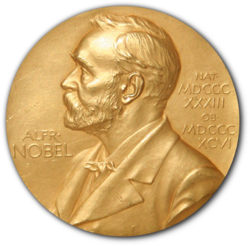
In 1905, Koch won the Nobel Prize in Physiology or Medicine 'for his investigations and discoveries in relation to tuberculosis,' the highest recognition of his monumental contributions to medical science.
Image source: Nobel Prize in Physiology or Medicine
1908
% complete
In 1908, Koch received the Robert Koch Medal, established to honour the greatest living physicians, adding to his long list of prestigious awards and recognitions.
1876
% complete
In 1876, Koch discovered that anthrax was triggered by one singular pathogen, Bacillus anthracis. This discovery is considered the birth of modern bacteriology, and by understanding the pathogen better, he shed light on the bacterium's resistance to environmental factors.
Image source: Bacillus anthracis
1876
% complete
Koch published his anthrax discovery in a booklet titled 'Die Ätiologie der Milzbrand-Krankheit, Begründet auf die Entwicklungsgeschichte des Bacillus Anthracis' (The Etiology of Anthrax Disease, Based on the Developmental History of Bacillus Anthracis) in 1876 while working in Wollstein. Ferdinand Julius Cohn helped him publish the work.
1877
% complete
Koch's publication in 1877 on the structure of the anthrax bacterium marked the first photography of a bacterium, a milestone in microbiological documentation and communication.
1877
% complete
Cohn, who had been hugely impressed by Koch's discovery of the anthrax bacillus, had established the Institute of Plant Physiology at the University of Breslau and invited Koch to demonstrate his new bacterium there in 1877.
Image source: Ferdinand Cohn
1881
% complete
As suggested by his post-doctoral assistant Walther Hesse, who got the idea from his wife Fanny Hesse, in 1881 Koch started using agar to grow and isolate pure cultures, revolutionizing bacteriological technique.
Image source: Agar plate
1881
% complete
Koch's booklet published in 1881 titled 'Zur Untersuchung von pathogenen Organismen' (Methods for the Study of Pathogenic Organisms) has been known as the 'Bible of Bacteriology.' In it he described a novel method of using a glass slide with agar to grow bacteria.
1881
% complete
A conflict developed when Koch interpreted his 1876 discovery of the anthrax bacillus as proof of causality, while Pasteur argued that Koch's discovery was not full proof of causality but that Pasteur's own anthrax vaccine developed in 1881 was. Koch published his conclusion: 'anthrax never occurs without viable anthrax bacilli or spores.'
Image source: Louis Pasteur
Aug 1881
% complete
Koch publicly demonstrated his plating method at the Seventh International Medical Congress in London in August 1881. It was also at this congress that Koch and Louis Pasteur first met and were friendly towards each other.
Aug 1883
% complete
In August 1883, the German government sent a medical team led by Koch to Alexandria, Egypt, to investigate a cholera epidemic there. This expedition led to one of his most important discoveries.
Image source: Vibrio cholerae
1884
% complete
Building on Koch's methods, Friedrich Loeffler discovered the bacteria of glanders (Burkholderia mallei) in 1882 and diphtheria (Corynebacterium diphtheriae) in 1884, while Georg Theodor August Gaffky discovered the bacterium of typhoid (Salmonella enterica) in 1884.
Image source: Friedrich Loeffler
Jan 7, 1884
% complete
Koch isolated the cholera bacterium in pure culture on 7 January 1884. It was later realized that the bacterium had already been described by Italian physician Filippo Pacini in 1854, and observed by Catalan physician Joaquim Balcells i Pascual around the same time.
1887
% complete
Koch's assistant Julius Richard Petri developed an improved method and published it in 1887 as 'Eine kleine Modification des Koch’schen Plattenverfahrens' (A minor modification of the plating technique of Koch), giving rise to the Petri dish still used worldwide today.
Image source: Julius Richard Petri
1896
% complete
Koch's colleague Richard Friedrich Johannes Pfeiffer correctly identified the comma bacillus as Pacini's vibrioni and renamed it as Vibrio cholera in 1896, clarifying the taxonomy of the cholera pathogen Koch had isolated.
Image source: Richard Friedrich Johannes Pfeiffer
Dec 26, 1900
% complete
On 26 December 1900, Koch arrived as part of an expedition to German New Guinea, which was then a protectorate of the German Reich, continuing his research into tropical diseases.
Image source: Territory of New Guinea
1906
% complete
In 1906, Koch moved to East Africa to research a cure for trypanosomiasis (sleeping sickness). That same year, research on tuberculosis and tropical diseases won him the Order Pour le Merite.
Image source: African trypanosomiasis
1906
% complete
Koch established the Bugula research camp, where up to 1000 people a day were treated with the experimental drug Atoxyl in his efforts to find a cure for trypanosomiasis.
Image source: Arsanilic acid
Mar 24, 1882
% complete
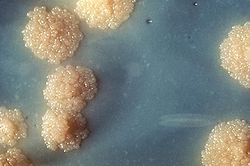
On 24 March 1882, Koch presented 'Die Ätiologie der Tuberkulose' (The Etiology of Tuberculosis) before the German Physiological Society at Berlin, reporting that the causative agent of tuberculosis was the slow-growing Mycobacterium tuberculosis. This date is now observed annually as World Tuberculosis Day.
Image source: Mycobacterium tuberculosis
1884
% complete
Koch expanded his tuberculosis report and published it under the same title as a booklet in 1884, concluding that the discovery fulfilled three principles eventually known as Koch's postulates, which had been formulated by his assistant Friedrich Loeffler in 1883. Paul Ehrlich later called the original announcement his 'single greatest scientific experience.'
Image source: Koch's postulates
1888
% complete
In 1888, Koch turned his attention to synthetic dyes as antibacterial chemicals. By February 1890, according to his notebook, he had tested hundreds of compounds in search of effective treatments against bacteria.
Aug 1890
% complete
Koch made a vague announcement in August 1890 at the Tenth International Medical Congress in Berlin about a substance that could make laboratory animals insensitive to tubercle bacilli inoculation and halt tuberculous processes in infected animals. He kept the experiment secret and avoided disclosing the source of what became known as tuberculin.
Image source: Tuberculin
Nov 1890
% complete
In November 1890, Koch demonstrated the effectiveness of the extract in treating humans by administering the vaccine through the Bacillus Calmette-Guerin (BCG) technique. However, if injected into a guinea pig previously infected with tuberculosis, the injection site becomes dark and eventually heals normally and quickly.
1891
% complete
The first report on the clinical trial in 1891 was disappointing. By then, 1061 patients with tuberculosis of internal organs and 708 patients with tuberculosis of external tissues had been given the treatment. Based on experiments from April to July 1891, Koch concluded the extract did not kill the tuberculosis bacterium but destroyed infected tissues by necrosis. The German official report in late 1891 declared tuberculosis was not cured with tuberculin.
Jan 7, 1891
% complete
Rudolf Virchow's autopsy report of 21 subjects treated with tuberculin, presented to the Berlin Medical Society on 7 January 1891, revealed that instead of healing tuberculosis, the subjects died because of the treatment, sparking a major scandal.
Image source: Rudolf Virchow
Jan 15, 1891
% complete
Koch published his experiments in the 15 January 1891 issue of Deutsche Medizinische Wochenschrift, and The British Medical Journal immediately published the English version simultaneously, spreading awareness of his controversial remedy.
Image source: Deutsche Medizinische Wochenschrift
1898
% complete
Although Koch initially believed human (Mycobacterium tuberculosis) and cattle tuberculosis bacilli (now Mycobacterium bovis) were different pathogens when he made his discovery in 1882, it was American veterinarian Theobald Smith who in 1898 published a detailed comparative study finding the bacteria differ based on structure, growth patterns, and pathogenicity.
Image source: Theobald Smith
Jul 1901
% complete
Speaking at the Third International Congress on Tuberculosis, held in London in July 1901, Koch said that cattle tuberculosis is not dangerous to humans and there is no need for medical attention, a controversial claim that contradicted the findings of Theobald Smith's comparative study.
Image source: Mycobacterium bovis
Apr 9, 1910
% complete
On 9 April 1910, Koch suffered a heart attack and never made a complete recovery, marking the decline of the great scientist's health in his final weeks.
May 27, 1910
% complete
Robert Koch died on 27 May 1910, leaving behind a legacy that transformed medicine and microbiology. The Royal Prussian Institute for Infectious Diseases he directed was later renamed the Robert Koch Institute in his honour after his death.
1939
% complete
Koch's life was the subject of a 1939 German-produced motion picture that featured Oscar-winning actor Emil Jannings in the title role, cementing his status as a cultural icon in Germany.
Image source: Robert Koch (film)
1940
% complete
Koch and his relationship to Paul Ehrlich, who developed a mechanism to diagnose TB, were portrayed in the 1940 movie Dr. Ehrlich's Magic Bullet, further popularizing the story of their scientific collaboration.
Image source: Dr. Ehrlich's Magic Bullet
1959
% complete
In 1959, Indian scientist Sambhu Nath De discovered the cholera toxin, building upon the foundation laid by Koch's isolation of the cholera bacterium decades earlier and advancing understanding of how cholera causes disease.
Image source: Cholera toxin
Mar 24, 1982
% complete
The day Koch announced the discovery of the tuberculosis bacterium, 24 March 1882, has been observed by the World Health Organization as 'World Tuberculosis Day' every year since 1982, commemorating his enduring contribution to the fight against tuberculosis.
Image source: World Tuberculosis Day
Or browse the full history timeline directory, with more than 2,000 topics.
This Robert Koch timeline was generated with the help of AI, using information found on the internet.
We work hard to keep these timelines accurate, but mistakes do get through. If you spot one, email us at [email protected] and we'll fix it for future visitors.
Generate yours with AI or build it from scratch, for free.
Export your timeline, add your own events, edit or remove AI-generated events, and much more
No credit card required.
Cancel anytime.
Cancel anytime.
You can create an unlimited number of timelines with up to 10 events on each one, customize how they look, export them to PDF, PNG, PowerPoint, CSV, and Excel, and share them with a link. Paid plans raise the event limit and add features like spreadsheet imports and collaborators.
Yes. You can cancel your subscription from your account page at any time, and you will not be charged again. Your subscription stays active for the rest of the period you already paid for.
Yes. We will email you a reminder before the annual renewal, and we will also email you a receipt.
Yes. You can email us within 15 days of any payment, and we will issue you a full refund.
Check out our pricing docs or send us an email anytime: [email protected].