-
Use Cases
-
Resources
-
Pricing
The Roosevelt Corollary was a 1904 addition to the Monroe Doctrine that asserted the United States' right to intervene in Latin American nations facing instability or financial problems. More Less
Build a timeline like this one in minutes, for free. Start Yours →
1893
The San Domingo Improvement Company, a New York firm, took over the finances of the Dominican Republic, creating a lasting connection between U.S. commercial interests and Dominican financial affairs.
1897
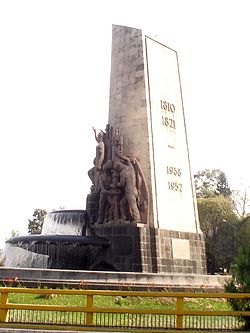
The San Domingo Improvement Company defaulted on payments to European bondholders. The resulting financial crisis pushed the Dominican Republic into economic disaster and encouraged the United States to seek arbitration.
Image source: Dominican Republic

1897
Following the Dominican financial collapse, the United States called for arbitration, attempting to manage the dispute while limiting the prospect of direct European intervention.
Image source: Roosevelt Corollary

1900 - 1904
By the early twentieth century, manifest destiny had increasingly become an expression of American exceptionalism. This outlook portrayed the United States as possessing superior virtue and a duty to assist supposedly lesser states in their development.
Image source: Manifest destiny

1901
In his 1901 annual message, Theodore Roosevelt expressed a broader view that international police duties should be performed for the welfare of mankind. This statement reflected ideas about a continuing U.S. policing role in the Western Hemisphere.
Image source: Theodore Roosevelt

1902 - 1903
The Venezuelan crisis became a major immediate context for the Roosevelt Corollary. U.S. policymakers feared that European coercion over debts could lead to renewed European political or territorial intervention in Latin America.
Dec 1902 - Feb 1903
Britain, Germany, and Italy imposed a naval blockade on Venezuela after President Cipriano Castro refused to pay foreign debts and compensation claims arising from a recent civil war.
Image source: Venezuelan crisis of 1902–1903

1903
The dispute arising from the Venezuelan crisis was referred to the International Court of Arbitration at The Hague, shifting the conflict from naval coercion toward international legal settlement.
Image source: Permanent Court of Arbitration

1904
The Roosevelt Corollary extended the earlier Monroe Doctrine. Whereas the original doctrine responded to European efforts to recolonize the Western Hemisphere, the new interpretation promoted a more active U.S. role in Latin America.
Image source: Monroe Doctrine

1904
The 1904 declaration transformed the Monroe Doctrine from primarily a warning against European colonization into a justification for U.S. intervention in the domestic and financial affairs of Latin American states.
Build a timeline like this one in minutes, for free. Start Yours →
This Roosevelt Corollary timeline was generated with the help of AI, using information found on the internet.
We work hard to keep these timelines accurate, but mistakes do get through. If you spot one, email us at [email protected] and we'll fix it for future visitors.
Generate yours with AI or build it from scratch, for free.