-
Use Cases
-
Resources
-
Pricing
Theodore Roosevelt (1858–1919) was the 26th President of the United States, serving from 1901 to 1909. A dynamic leader known for his 'Square Deal' domestic policies, trust-busting efforts, and conservation initiatives that established national parks and forests, Roosevelt also won the Nobel Peace Prize for mediating the end of the Russo-Japanese War. His energetic leadership and progressive reforms reshaped the modern American presidency. More Less
Oct 27, 1858
% complete
Theodore Roosevelt Jr. was born on October 27, 1858, at 28 East 20th Street in Manhattan, New York City, to Theodore Roosevelt Sr. and Martha Bulloch Roosevelt. The second of four children, he grew up in a wealthy, prominent Dutch-American family.
Image source: Theodore Roosevelt
Jan 1, 1869
% complete
As a sickly child plagued by severe asthma, young Roosevelt embraced a regimen of physical exertion encouraged by his father. He took up boxing, wrestling, hiking, and horseback riding, building the robust physique and vigorous persona for which he became famous.
Image source: Theodore Roosevelt Jr.
Sep 27, 1876
% complete
Roosevelt entered Harvard College in 1876, excelling in science, history, and debate while boxing competitively. He graduated magna cum laude in 1880 and was elected to Phi Beta Kappa.
Image source: Harvard University
Feb 9, 1878
% complete
Roosevelt's beloved father died of stomach cancer on February 9, 1878, while Theodore was still at Harvard. The loss devastated him and deepened his resolve to live a life of strenuous effort and public service.
Image source: Theodore Roosevelt Sr.
Oct 27, 1880
% complete
On his twenty-second birthday, Roosevelt married Alice Hathaway Lee, a beautiful Boston banking heiress. Their happiness was short-lived, as tragedy struck just over three years later.
Image source: Alice Hathaway Roosevelt
Feb 14, 1884
% complete
On Valentine's Day 1884, Roosevelt suffered a devastating double loss: his mother died of typhoid fever and his wife Alice died of Bright's disease two days after giving birth to their daughter. He wrote a single X in his diary that day and later retreated to the Dakota Badlands.
Jun 1, 1884 - Dec 31, 1886
% complete
Grief-stricken, Roosevelt moved to the Badlands of North Dakota, where he ran cattle ranches, hunted, wrote books about frontier life, and cultivated the cowboy image and conservation ethic that shaped his later career.
Image source: Theodore Roosevelt's Maltese Cross Cabin
Dec 2, 1886
% complete
Roosevelt married his childhood friend Edith Kermit Carow in London in December 1886. They raised five children together, plus his daughter Alice, at their home Sagamore Hill on Long Island.
Image source: Edith Roosevelt
Jan 1, 1889 - Jun 1, 1896
% complete
Between 1889 and 1896 Roosevelt published his four-volume historical work 'The Winning of the West,' celebrating American expansionism and cementing his reputation as a serious historian and writer.
Image source: Winning of the West
Nov 8, 1881
% complete
At age 23, Roosevelt won election to the New York State Assembly from Manhattan, becoming its youngest member. He quickly made a name for himself as an energetic reformer fighting machine politics and corruption.
Image source: New York State Assembly
Nov 2, 1886
% complete
Fresh from the Badlands, Roosevelt campaigned as the Republican candidate for mayor of New York City but finished third behind Democrat Abram Hewitt and labor candidate Henry George, though the campaign kept him politically visible.
Image source: 1886 New York City mayoral election
May 7, 1889 - Apr 30, 1895
% complete
President Benjamin Harrison appointed Roosevelt to the U.S. Civil Service Commission, where he served with vigor under Harrison and Cleveland, aggressively enforcing merit-based hiring laws and earning a reputation as a fearless reformer.
Image source: United States Civil Service Commission
May 16, 1895 - Apr 19, 1897
% complete
As president of the NYPD board of commissioners, Roosevelt patrolled the streets at night to catch sleeping officers, fought corruption, reformed recruitment, and hired the first female police department employees and Jewish officers.
Image source: New York City Police Commissioner
Apr 19, 1897 - May 10, 1898
% complete
Under President McKinley, Roosevelt served as Assistant Secretary of the Navy, modernizing the fleet and advocating aggressively for war preparations against Spain, famously urging readiness during the Cuban crisis.
Image source: Assistant Secretary of the Navy
Feb 25, 1898
% complete
While Acting Secretary of the Navy, Roosevelt cabled Commodore George Dewey instructing him to be ready to strike the Spanish Philippines if war broke out. Dewey's subsequent victory at Manila Bay made both men heroes.
Image source: George Dewey
May 6, 1898 - Aug 14, 1898
% complete
Resigning his naval post, Roosevelt formed and led the 1st U.S. Volunteer Cavalry Regiment, known as the Rough Riders. His celebrated charge up Kettle Hill during the Battle of San Juan Heights made him a national war hero.
Image source: Rough Riders
Nov 8, 1898 - Jan 1, 1900
% complete
Capitalizing on his war fame, Roosevelt was elected governor of New York in November 1898. As governor he championed civil service reform, corporate regulation, and progressive legislation, alienating party bosses like Thomas Platt.
Image source: Governor of New York
Mar 4, 1901 - Sep 14, 1901
% complete
Party boss Mark Hanna opposed it, but Platt and others pushed Roosevelt onto the McKinley ticket as vice president to sideline him. He was inaugurated on March 4, 1901, serving only six months before tragedy intervened.
Image source: Presidency of Theodore Roosevelt
Sep 14, 1901
% complete
President William McKinley was shot by anarchist Leon Czolgosz in Buffalo and died on September 14, 1901. At age 42, Roosevelt became the youngest person ever to assume the U.S. presidency.
Image source: Assassination of William McKinley
Jan 1, 1902
% complete
Roosevelt articulated his Square Deal philosophy promising fair treatment for consumers, workers, and businesses. It rested on conservation of natural resources, control of corporations, and consumer protection.
Image source: Square Deal
Mar 10, 1902
% complete
Roosevelt ordered the Justice Department to sue J.P. Morgan's Northern Securities railroad trust, signaling his trust-busting agenda. The Supreme Court upheld dissolution in 1904, establishing federal power over monopolies.
Image source: Northern Securities Co. v. United States
Oct 3, 1902 - Mar 22, 1903
% complete
When a strike by anthracite miners threatened a winter coal famine, Roosevelt broke precedent by mediating between mine operators and the United Mine Workers, threatening federal intervention and securing a settlement that boosted wages.
Image source: 1902 anthracite coal strike
Feb 19, 1903
% complete
Roosevelt signed the Elkins Act, which strengthened regulation of railroads by outlawing rebates to favored shippers, an early move toward federal transportation oversight.
Image source: Elkins Act
Mar 14, 1903
% complete
Roosevelt designated Florida's Pelican Island as the first national wildlife refuge, launching a conservation legacy that ultimately protected roughly 230 million acres of public land through parks, forests, monuments, and refuges.
Image source: Pelican Island National Wildlife Refuge
Nov 8, 1904
% complete
Roosevelt crushed Democrat Alton B. Parker in the 1904 election, winning 56 percent of the popular vote and 336 electoral votes — the largest share of any presidential candidate to that time.
Image source: 1904 United States presidential election
Aug 5, 1905 - Sep 5, 1905
% complete
Roosevelt personally mediated negotiations at Portsmouth, New Hampshire, ending the Russo-Japanese War. His peacemaking earned him the Nobel Peace Prize in 1906, the first American laureate of any kind.
Image source: Treaty of Portsmouth
Jun 29, 1906
% complete
The Hepburn Act empowered the Interstate Commerce Commission to set maximum railroad rates, marking a major expansion of federal regulatory authority over private industry.
Image source: Hepburn Act
Jun 30, 1906
% complete
Spurred by Upton Sinclair's exposé 'The Jungle,' Roosevelt pushed through the Meat Inspection Act and Pure Food and Drug Act, creating federal oversight of food safety and the precursor to the FDA.
Oct 1, 1907 - Jan 1, 1908
% complete
A financial crisis triggered by failed speculation nearly collapsed markets. Roosevelt allowed J.P. Morgan to coordinate bank rescues, and the crisis exposed weaknesses in the banking system that later led to the Federal Reserve.
Image source: Panic of 1907
Nov 16, 1907
% complete
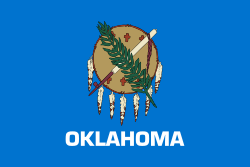
During Roosevelt's administration, Oklahoma Territory and Indian Territory were combined and admitted to the Union as the state of Oklahoma, continuing the nation's westward consolidation.
Image source: Oklahoma
Dec 16, 1907 - Feb 22, 1909
% complete
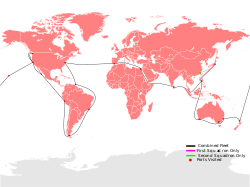
Roosevelt dispatched sixteen battleships of the Great White Fleet on a circumnavigation of the globe, showcasing American naval power and projecting U.S. influence across the Pacific and beyond.
Image source: Great White Fleet
Mar 4, 1909
% complete
Having promised in 1904 not to run again, Roosevelt left office in March 1909, handing power to his chosen successor William Howard Taft. He departed for an African safari shortly afterward.
Image source: Presidency of Theodore Roosevelt
Apr 23, 1909 - Jun 5, 1910
% complete
Roosevelt led a year-long scientific expedition across British East Africa collecting specimens for the Smithsonian Institution, publishing accounts of his adventures that enthralled American readers.
Image source: Smithsonian–Roosevelt African expedition
Jun 22, 1912 - Nov 5, 1912
% complete
Disillusioned with Taft, Roosevelt ran for president again as nominee of the new Progressive ('Bull Moose') Party, campaigning for the New Nationalism. Woodrow Wilson won; Roosevelt finished second, ahead of Taft — the best showing ever for a third-party candidate.
Image source: Progressive Party (United States, 1912–1920)
Oct 14, 1912
% complete
Saloonkeeper John Schrank shot Roosevelt outside a Milwaukee hotel before a speech. With the bullet lodged against his eyeglasses case and folded speech, Roosevelt spoke for over an hour, declaring it would take more than that to kill a bull moose.
Image source: Attempted assassination of Theodore Roosevelt
Dec 9, 1913 - May 19, 1914
% complete
Roosevelt joined Brazilian explorer Cândido Rondon on a harrowing descent of an uncharted Amazon tributary, later named Rio Roosevelt. Illness, injury, starvation, and death tested the party before they emerged alive.
Image source: Roosevelt–Rondon Scientific Expedition
Jan 1, 1915 - Apr 6, 1917
% complete
Roosevelt vocally criticized Wilson's neutrality and demanded military preparedness, seeking to raise volunteer divisions for service in Europe once the United States declared war on Germany in April 1917, though his offer was declined.
Image source: American entry into World War I
Jul 14, 1918
% complete
Roosevelt's youngest son Quentin, a fighter pilot, was shot down and killed over France on July 14, 1918. Another son, Theodore Jr., was severely wounded. The grief visibly aged the former president.
Image source: Quentin Roosevelt
Jan 6, 1919
% complete
Roosevelt died in his sleep at his Oyster Bay home, Sagamore Hill, on January 6, 1919, at age 60, likely from complications of malaria and heart disease. Vice President Thomas R. Marshall said 'Death had to take him sleeping, for if he had been awake there would have been a fight.'
Or browse the full history timeline directory, with more than 2,000 topics.
This Theodore Roosevelt timeline was generated with the help of AI, using information found on the internet.
We work hard to keep these timelines accurate, but mistakes do get through. If you spot one, email us at [email protected] and we'll fix it for future visitors.
Generate yours with AI or build it from scratch, for free.
Export your timeline, add your own events, edit or remove AI-generated events, and much more
No credit card required.
Cancel anytime.
Cancel anytime.
You can create an unlimited number of timelines with up to 10 events on each one, customize how they look, export them to PDF, PNG, PowerPoint, CSV, and Excel, and share them with a link. Paid plans raise the event limit and add features like spreadsheet imports and collaborators.
Yes. You can cancel your subscription from your account page at any time, and you will not be charged again. Your subscription stays active for the rest of the period you already paid for.
Yes. We will email you a reminder before the annual renewal, and we will also email you a receipt.
Yes. You can email us within 15 days of any payment, and we will issue you a full refund.
Check out our pricing docs or send us an email anytime: [email protected].