
-
Use Cases
-
Resources
-
Pricing
1500
By 1500, some Eastern Shoshone had crossed the Rocky Mountains into the Great Plains, extending Shoshone presence eastward from the Intermountain West.
1500 - 1750
Through mastery of horsemanship, the Eastern Shoshone expanded their territory well into the northern plains. During the same broad period, another Shoshone branch moved south toward Texas and emerged as the Comanche by 1700.
1700
By 1700, a Shoshone branch that had moved as far south as Texas had emerged as the Comanche, marking an important division in the later history of Shoshone-related peoples.
Image source: Comanche
1805
In 1805, Meriwether Lewis recorded the tribe as the “Sosonees or snake Indians,” an early written form of a name associated with the Shoshone.
Image source: Meriwether Lewis
1860 - 1869
The displacement and pressure faced by the Eastern Shoshone escalated until the establishment of the Shoshone Reservation on the Wind River in the 1860s.
Image source: Wind River Indian Reservation
1869
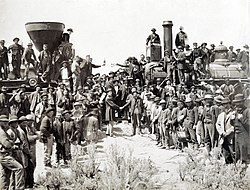
The completion of the first transcontinental railroad in 1869 was followed by European-American immigrants arriving in unprecedented numbers in Shoshone territory.
Image source: First transcontinental railroad
1750 - 1860
After 1750, the Eastern Shoshone's advantage in warfare diminished. Pressure from the Blackfoot, Crow, Lakota, Cheyenne, and Arapaho pushed them south and westward toward the Rocky Mountains.
1850 - 1900
Wars involving Shoshone communities occurred throughout the second half of the nineteenth century, reflecting conflict with neighboring peoples and the United States.
Image source: Shoshone
1859
In 1859, a band of approximately 300 Eastern Shoshone, known as Sheepeaters, became involved in the Sheepeater Indian War.
1863
In 1863, Eastern Shoshone led by Chief Washakie allied with the American government and secured a treaty at Fort Bridger.
Jan 29, 1863
U.S. forces attacked a Northwestern Shoshone winter encampment in present-day Franklin County, Idaho, killing an estimated 250 people in the Bear River Massacre.
1864 - 1868
Allied with the related Bannock, the Northern and Western Shoshone fought against the United States in the Snake War from 1864 to 1868.
1868
In 1868, Chief Washakie's Eastern Shoshone secured another treaty at Fort Bridger as part of their alliance with the American government.
Jun 17, 1876
In 1876, Eastern Shoshone fought alongside the U.S. Army at the Battle of the Rosebud against their traditional enemies, the Lakota and Cheyenne.
Image source: Battle of the Rosebud
1878
The Shoshone fought U.S. forces together with the Bannock in 1878 during the Bannock War.
1911
In 1911, a small group of Bannock led by Mike Daggett, also known as Shoshone Mike, killed four ranchers in Washoe County, Nevada.
1911 - 1992
Mary Jo Estep survived the aftermath of the 1911 conflict. She died in 1992 at around the age of 82.
1911 - 1912
The three older captives taken after the 1911 confrontation died of diseases within a year.
Feb 25, 1911
On February 25, 1911, authorities caught up with the Bannock band. In the resulting gun battle, Mike Daggett and seven members of his band were killed.
1820
In 1820, Jedidiah Morse estimated the total Shoshone population at 60,000, including an estimate of 20,000 Eastern Shoshone.
1820
Jedidiah Morse's 1820 estimate placed the Eastern Shoshone population at 20,000.
1855
According to Alexander Ross, the Shoshone occupied the west side of the Rocky Mountains much as the Sioux occupied the east side. He described them as the most powerful tribe and estimated their population at 36,000 in 1855.
1855
Alexander Ross estimated that the Shoshone numbered 36,000 people in 1855.
1859
Indian Affairs reported 4,500 Shoshones in Utah in 1859.
1866
Indian Affairs reported 4,500 eastern Bannock and Shoshone intermingled in Utah in 1866.
1866
Indian Affairs reported 3,800 western and northwestern Shoshone in 1866.
1866
Indian Affairs reported 2,000 Shoshone in Nevada in 1866.
1866
Indian Affairs reported 2,500 Shoshone in Idaho in 1866.
1875
Indian Affairs gave the combined Shoshone population in Idaho and Montana as 1,740 in 1875.
1875
Indian Affairs reported 1,945 Shoshone in Nevada in 1875.
1875
Indian Affairs reported 700 Shoshone in Wyoming in 1875.
1875
Indian Affairs reported 244 Shoshone in Oregon in 1875, in addition to those intermixed with the Bannock.
1910
The census of 1910 returned a Shoshone population of 3,840.
1937
In 1937, the Bureau of Indian Affairs counted 3,650 Northern Shoshone and 1,201 Western Shoshone.
2000
As of the 2000 U.S. census, approximately 12,000 people identified as Shoshone.
2020
As of 2020, there were 17,918 Shoshone in the United States.
2020
The 2020 figures included 3,638 Shoshone in Nevada.
2020
The 2020 figures included 3,491 Shoshone in Wyoming.
1994
In 1994, the institution holding the remains repatriated them to the Fort Hall Idaho Shoshone-Bannock Tribe.
2008
In 2008, the Northwestern Band of the Shoshone Nation acquired the Bear River Massacre site and some surrounding land.
Or browse the full history timeline directory, with more than 2,500 topics.
This Shoshone History timeline was generated with the help of AI, using information found on the internet.
We work hard to keep these timelines accurate, but mistakes do get through. If you spot one, email us at [email protected] and we'll fix it for future visitors.
Generate yours with AI or build it from scratch, for free.
Export your timeline, add your own events, edit or remove AI-generated events, and much more
No credit card required.
Cancel anytime.
Cancel anytime.
You can create an unlimited number of timelines with up to 10 events on each one, customize how they look, export them to PDF, PNG, PowerPoint, CSV, and Excel, and share them with a link. Paid plans raise the event limit and add features like spreadsheet imports and collaborators.
Yes. You can cancel your subscription from your account page at any time, and you will not be charged again. Your subscription stays active for the rest of the period you already paid for.
Yes. We will email you a reminder before the annual renewal, and we will also email you a receipt.
Yes. You can email us within 15 days of any payment, and we will issue you a full refund.
Check out our pricing docs or send us an email anytime: [email protected].